 EN
EN

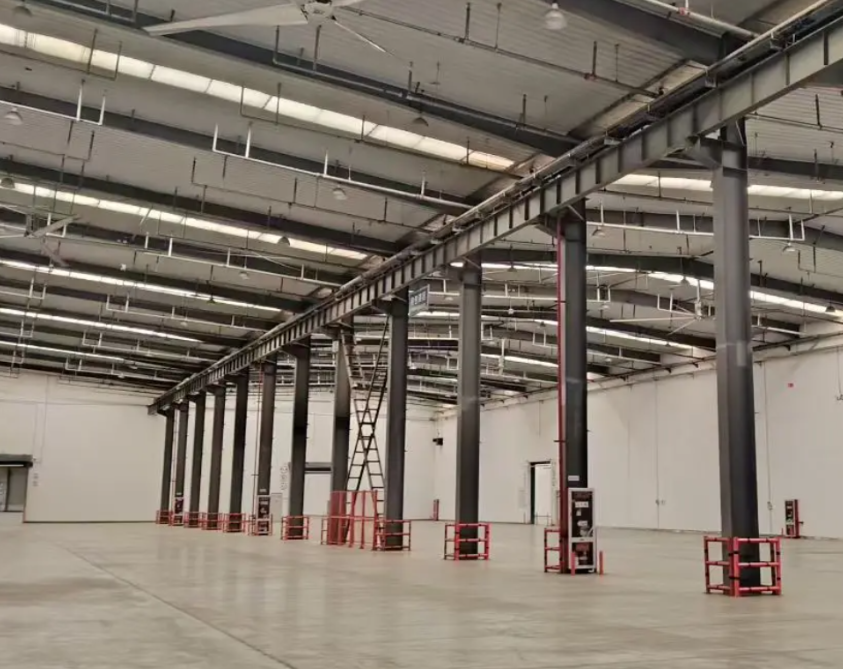
The Hidden Link Between Steel Grade and Frame Longevity
Getting the material selection right for durable rigid frame structures is rarely about choosing the strongest steel on paper. It is about matching the grade to how the frame actually behaves under service loads. A rigid frame works by transferring moment forces through haunches, eaves, and base connections, so ductility and weldability often matter more than raw tensile strength. When a spec stays with a single catch-all grade like ASTM A36 for every plate and profile in the frame, fabrication might look cheaper on the quote, but the long-term penalty shows up in fatigue-prone details and thicker, heavier sections that drive up freight and erection cost. Over a series of industrial projects in the Southeast, switching primary rafters and columns to ASTM A572 Grade 50 while keeping A36 for girts and purlins consistently yielded weight savings around 8% to 12% without reducing safety margins, simply because the higher yield strength allowed the design team to optimize web slenderness and flange thickness in the hot-rolled shapes.
Why Coating Systems Need to Match the Operating Environment
Steel grade sets the mechanical baseline, but the coating system decides whether the frame reaches its design life or starts losing section long before that. The mistake that keeps showing up in field inspections is treating all galvanizing or paint systems as interchangeable. A hot-dip galvanized coating with 3.9 mils of zinc will perform beautifully inside a dry warehouse in an inland climate, yet that same coating exposed to a chemical storage facility with trace acid vapors can degrade in less than a decade. The key is understanding the corrosivity category from ISO 12944. C3 environments, typical of rural or light industrial interiors, are forgiving. C4 and C5-I settings, often found near coastlines or in heavy manufacturing plants, demand a duplex system or a high-build zinc-rich epoxy primer sealed with a chemical-resistant polyurethane topcoat. The table below captures how coating choices stack up across different exposure levels based on data gathered from multiple building envelope assessments.
| Coating System | Typical DFT (mils) | ISO 12944 Category | Expected Durability (Years) | Key Trade-Off |
|---|---|---|---|---|
| Hot-Dip Galvanized (HDG) | 3.5–5.0 | C3, mild C4 | 35–55 | Uniform coverage, limited chemical resistance |
| Zinc-Rich Epoxy + PU Topcoat | 8–12 | C4, C5-I | 18–28 | Requires near-white blast, excellent barrier |
| Thermal Spray Metalizing (Zn/Al) | 10–15 | C5-I, C5-M | 30–50 | Highest upfront cost, very low maintenance |
| Standard Alkyd Enamel | 3–5 | C1–C2 only | 8–15 | Not suitable for humid or corrosive zones |
Bolts and Fasteners: The Small Parts That Trigger Big Failures
A rigid frame can be perfectly rolled and coated, yet still develop structural headaches because of overlooked fasteners. In heavy industrial sites, the combination of high-strength ASTM A325 or A490 bolts and carbon steel base plates sitting on reinforced concrete creates a galvanic cell that quietly eats away at the zinc or the steel itself. What makes this particularly tricky is that the damage often stays hidden beneath bolt heads and washers until a scheduled inspection uncovers rust jacking or cratering. One coastal logistics center in the Gulf region dealt with exactly this pattern. Within 24 months of commissioning, rust bleeding appeared around column base joints where galvanized A325 bolts were tightened against bare steel plates in a humid, salt-laden atmosphere. The fix was not a frame redesign. The replacement bolt assemblies simply switched to mechanically galvanized fasteners paired with insulating neoprene washers, which broke the galvanic path and stopped the localized corrosion. That experience drove home an unwritten rule for durable rigid frame structures: specify the fastener system as a complete assembly, never as isolated components chosen from different catalogs.
Weldability and Formability: Specifying for the Fabricator’s Reality
Material selection documents that ignore the shop floor often look flawless on a desk but become expensive revision orders once the steel lands on the cutting table. Modern rigid frames rely heavily on full-penetration welds at moment connections, and the carbon equivalent of the chosen steel grade directly dictates whether preheat is a minor step or a half-day procedure for every joint. ASTM A992 wide-flange sections have gained traction precisely because mills control the carbon equivalent tightly, usually under 0.45%, which gives fabricators a predictable welding window without needing excessive preheat blankets. On the cold-forming side, purlins and girts punched from high-strength, low-alloy coil need a balance between yield strength and elongation so the punch-and-shear line does not create micro-cracks that spread once the building starts experiencing wind-uplift cycling. A practical benchmark that experienced steel purchasers lean on is the ASTM A1011 SS Grade 55 specification with a minimum elongation of 18%, which typically keeps the cut edge ductile enough for repetitive loading in hurricane-prone zones.
What a Food Processing Plant Taught About Material Compatibility
A few years back, a 70,000-square-foot food processing expansion in the Midwest ran into a corrosion hotspot that had nothing to do with the roof or exterior walls. The rigid frame itself was fabricated from ASTM A572 Grade 50 and coated with a standard zinc-rich primer and acrylic topcoat, a combination that should have performed well indoors. The problem was the cleaning regimen. The facility used a mild chlorinated sanitizer misted across processing zones, and the vapor plume consistently reached the knee area of the rigid frame columns. Within four years, pitting corrosion started appearing exactly in the heat-affected zones of the column base plate welds, where the coating adhesion was slightly weaker. The lesson was not that the steel grade was wrong; it was that material selection for durable rigid frame structures has to account for operational chemicals, not just ambient humidity. A subsequent bay, constructed a year later with the same grade but protected by a high-solids epoxy mastic system designed for splash-zone chemical exposure, showed zero similar pitting after two full sanitation cycles. That repair avoided a six-figure frame remediation and proved that coating specification must be part of the material conversation from day one.
Verification, Traceability, and the Supply Chain Loop
No matter how carefully a material specification is written, its value drops to zero if the delivered steel cannot be traced back to the heat number and certified properties. For rigid frame projects where the engineer of record requires full mill test reports, a common friction point is mixed-stock substitution at the service center level. Plates ordered as A572 Grade 50 sometimes arrive with documentation that shows dual certification to A36 and A572, which can create a paperwork headache if the original design assumed strictly Grade 50 design values. The cleanest path forward is to embed a verification gate right into the procurement workflow: require that all primary frame material arrive with heat-specific CMTRs, perform a handheld XRF check on a random sample of plates in the first shipment, and flag any heat number that does not match the certified mechanical properties within the mill’s reported range. This sequence adds maybe a day to the receiving process but removes the risk of installing a lower-yield plate in a critical moment splice. For building teams that want that traceability without adding internal headcount, partnering with a manufacturer like Zhongwei, which runs integrated quality checks from coil sourcing through final surface preparation, helps keep the paper trail tight and the steel exactly as specified.
Table of Contents
- The Hidden Link Between Steel Grade and Frame Longevity
- Why Coating Systems Need to Match the Operating Environment
- Bolts and Fasteners: The Small Parts That Trigger Big Failures
- Weldability and Formability: Specifying for the Fabricator’s Reality
- What a Food Processing Plant Taught About Material Compatibility
- Verification, Traceability, and the Supply Chain Loop