 EN
EN

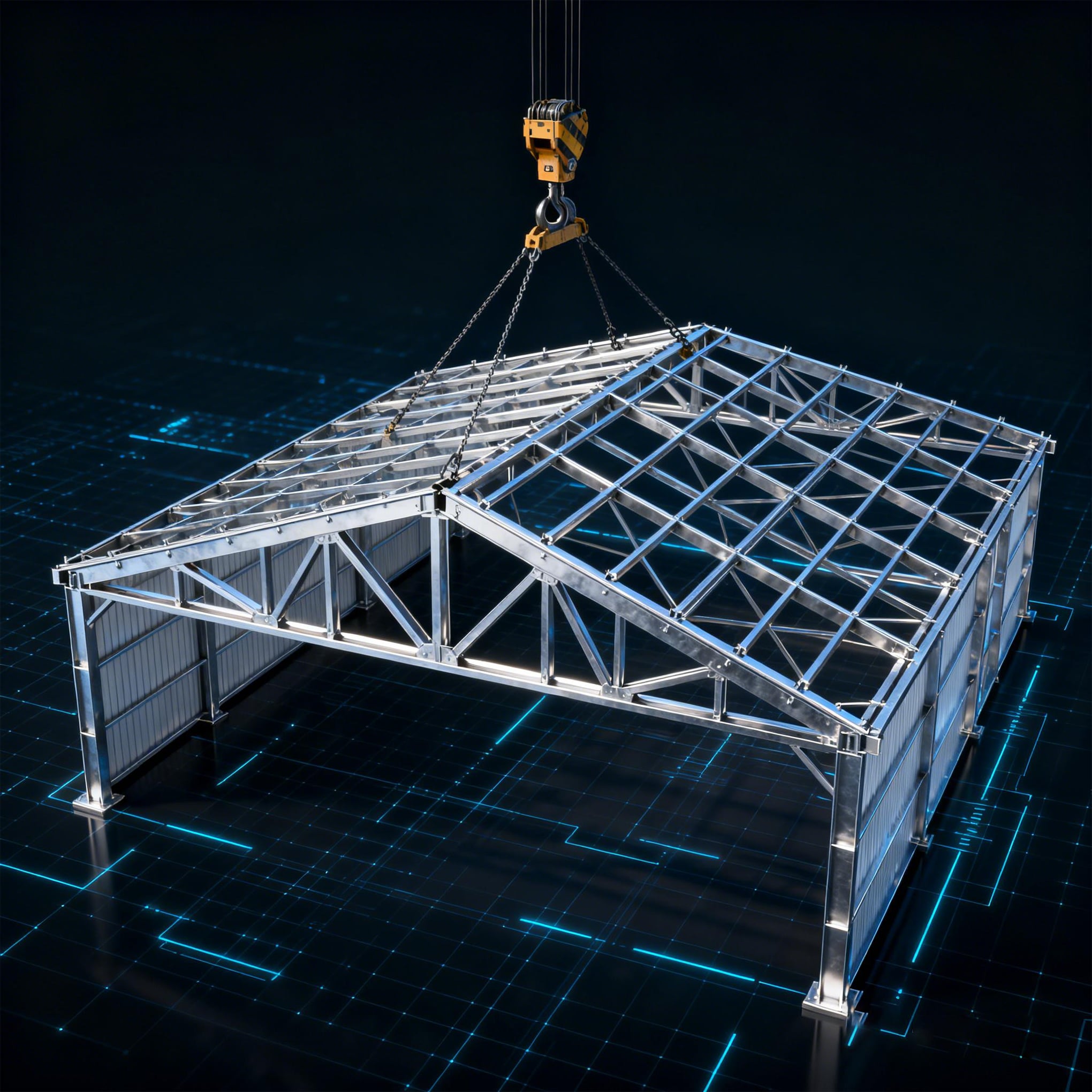
The Temporary-Permanent Paradox
Walk onto almost any active industrial site, and chances are high that at least one building on the premises started life as a "temporary" solution. A fabrication bay here, a maintenance shelter there. What's interesting is how many of those temporary structures never get replaced. They just keep working. That durability has forced a fundamental rethink across the industry about what the words "temporary" and "permanent" actually mean in the context of workshop construction.
The reality is that a well-engineered prefabricated workshop doesn't care much about the label pinned to it. The same structural system that supports a five-year mining camp can easily serve a twenty-year manufacturing operation with minimal adjustment. The distinction has less to do with the building itself and more to do with how the owner chooses to treat it.
What Makes a Workshop Structure Truly Adaptable
Adaptability in workshop construction comes down to three factors: the connection system, the foundation design, and the framing layout. Bolted connections allow disassembly and reassembly without compromising structural integrity. Foundation systems can be designed as either permanent concrete footings or removable ballast blocks depending on the expected service life. And clear-span framing—typically achieved with rigid portal frames or truss systems—provides the open floor space that workshops need regardless of whether they're temporary or permanent.
One project in a remote mining region of Western Australia illustrated this clearly. The client needed a maintenance workshop for a three-year exploration program. Rather than invest in a conventional structure, the team deployed a prefabricated steel workshop with a bolted frame and removable foundation anchors. Three years turned into eight. The operation expanded, and the workshop was relocated twice to follow the extraction path. Each move took about two weeks. The building is still in service today, fifteen years after its initial installation, having outlasted every "permanent" structure on that site.
Material Efficiency and Structural Performance
Steel offers a strength-to-weight ratio that makes it uniquely suited for both temporary and permanent workshop applications. The same structural members that handle heavy crane loads in a permanent factory can be shipped as flat-packed kits to remote locations where access is limited and heavy equipment is scarce.
Factory-controlled fabrication ensures dimensional accuracy that field-built structures rarely achieve. This precision has practical implications beyond just quality control. Bolted connections fit properly the first time. Roof panels align without trimming. Wall girts land exactly where they're supposed to. That translates to faster erection, fewer callbacks, and a structure that performs as designed from day one.
The Metal Building Manufacturers Association has documented that metal building systems can be erected in roughly one-third of the time required for conventional construction, largely due to prefabrication and bolted assembly. Their research also indicates that metal buildings generate about 50% less jobsite waste compared to other construction materials. For temporary installations that may eventually be decommissioned, this reduced waste footprint matters both economically and environmentally.
Cost Considerations Across the Project Lifecycle
The upfront cost of a prefabricated workshop typically runs lower than conventional construction, but the real financial picture requires looking at the full lifecycle. Industry comparisons suggest that pre-engineered steel buildings can offer cost advantages of 10 to 30 percent over conventional steel-frame construction. The savings come from multiple sources: reduced labor hours on site, shorter construction schedules that accelerate revenue generation, and minimized material waste.
Here's a rough comparison based on typical project data:
For a temporary installation with a defined end date, the ability to recover and redeploy the structure creates additional value that conventional buildings simply cannot match. For a permanent installation, the speed of occupancy and predictable cost structure provide advantages that extend well beyond the initial budget.
Where Temporary Meets Permanent: Practical Limitations
No single building system is perfect for every situation. Prefabricated workshops have limitations that are worth acknowledging. For extremely heavy industrial applications involving large overhead cranes or significant vibration loads, a custom-engineered conventional structure may still be the better choice. The bolted connections that make disassembly possible can require more frequent inspection than welded connections in some high-fatigue applications.
Soil conditions also matter. Temporary structures often use shallow foundations or ballasted systems that work well on stable ground but may not be suitable for sites with poor bearing capacity. And while prefabricated workshops can be designed to meet permanent building codes, local jurisdictions sometimes apply different standards to structures classified as temporary. It pays to check the local requirements before committing to a particular approach.
That said, the gap between what's considered temporary and what's considered permanent continues to narrow. Many owners now specify prefabricated workshops with the expectation that they'll serve for decades, even if the original plan called for something shorter. The structural engineering is the same either way.
The Role of Manufacturing Capability in Project Success
The success of any prefabricated workshop project depends heavily on the manufacturer's ability to deliver consistent quality across large volumes of components. Shenyang Zhongwei Heavy Industry has built a reputation around precision fabrication and reliable supply chain management, handling projects that range from short-term installation support to long-term industrial facilities. The company's experience in managing complex logistics and maintaining tight production tolerances has made it a go-to supplier for workshop structures that need to perform reliably regardless of their intended service life.