 EN
EN

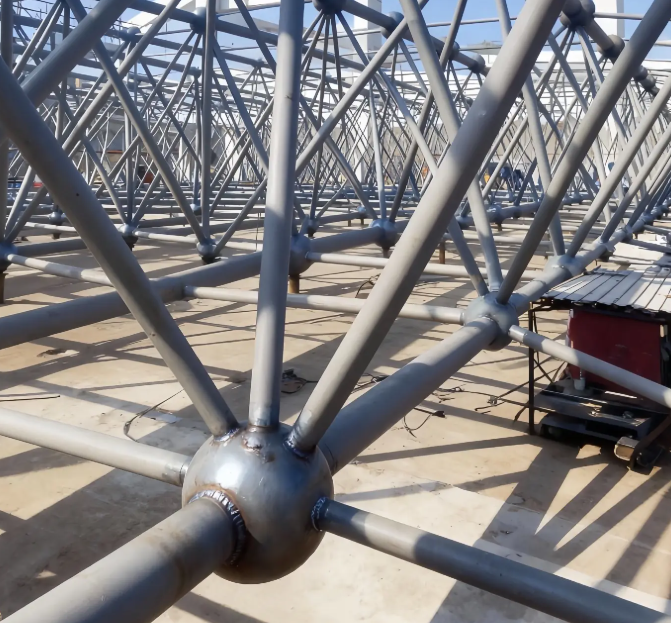
Multae hodie maxime inter interessantes constructiones novatoriae aperte superant limites primitivorum quadrangulorum, quae praeteritis saeculis architectonicas artes dominabantur. Habent contornos complexos, vacua quae ultra visibilem columnarum ambitum extenduntur, et tecta fluitantia quae evanescunt. Constructio spatialis est ratio structurae quae omnes supradictas formas effici permittit. Licet constructio spatialis non sit recens inventio, usus eius et applicatio in architectura hodierna magnopere augentur. Problematibus quae hodiernos architectos adficiunt, cum formam et functionem coniungere conantur, saepe per constructionem spatialem respondetur. In iis designis ubi volumen maximum et praesentia vacuorum desiderantur, saepissime constructio spatialis adhibetur.
Proprietates Constructionum Spatialium
Spatiumframe est systema structurale tridimensionale. Contra structuras consuetas, quae trabes et columnas in schemate reticulato ordinant, spatiumframe rete elementorum structuralium in schemate geometrico utitur. Schemata communissima sunt triangularia et pyramidalis. Differentia principalis est quod trabs traditio portat onus in una directione, dum spatiumframe 'trabs' onus in tribus portat. Dum trabs traditio ita fingitur ut maxime efficiens sit pro onere quod sustinet, spatiumframe onus per totum systema structurale distribuit, permittens valde magnos intervalla absque magnis trabibus aut columnis dense dispositis construere. Hoc spatiumframe structuram valde efficacem facit, saepe efficaciorem quam structura consueta.
Amplificatio Spatiorum Largorum et Formarum Distinctarum
Magnus obstaculum in architectura est spatia magna transire sine columnis, quae spatium interrumpunt, quoniam lineas visus obstruunt et positionem elementorum adiutorum difficiliorem reddunt. Uti spatiis structuris permittit architectis ingentes distantes continuas effingere, quae alioquin per traditionales structuras ferreas perfici impracticabiles essent. Hoc est causa principalis late usurpandorum spatiarum structurarum in aedificatione magnorum aeropertus, amphitheatrorum sportivorum et centrorum conventuum. Tecta eorum magna spatia extensa tegunt sine necessitate trabium tectorum sustentantium. Tamen spatia structurae non sunt tantum functionalia. Structura spatii structurae pulchrum atque mirabilem paternam praebet. In multis casibus spatium structurae aperte relinquitur ut elementum designis, ubi repetita triangulorum aut pyramidum figura rhythmum constituit et spectatores ad participationem invitat. Membra exornantur, dum luce perfunduntur et umbras iaciunt. Spatium structurae in architecturam infunditur et pars designis fit.
Levis, Efficiens, et Prudens in Materialibus
Systemata spatiarum etiam praecipuum habent praevantagium quod ad efficaciam materiae attinet. Quia onera per multos parvos elementorum structurales distribuuntur, sectiones minores adhiberi possunt quam in systematibus tradicionalibus trabium et columnarum. Hoc reducit quantitatem ferri utilisati, quod autem reducit pondus structurae et magnitudinem fundationum sustentantium. Ferri minus etiam significat fundationes minores et commoda tam pecuniaria quam in rebus ipsis. Constructio levis systematum spatiarum eos facit facilius transportandos et etiam celerius conponendos. Id significat ut locus constructionis celerius conponi possit, quod accelerationem constructionis aedificii efficit et perturbationem circa locum minuit. In ambiente ubi semper amplior est multitudo partium mobilium, ubi licitationes contractuales arctae sunt, et ubi tempus admissum semper brevius fit, praevantagia bene dispositi systematis spatiarum manifesta sunt. Ordinario, componentes systematis spatiarum ex ferro fabricantur, quod per se durabile et forte est. Absente corrosionis, systema spatii suum finem multis decenniis servare potest.
Usus Structurarum Spatialis in Diversis Aedificiorum Generibus
Structurae spatiales ad omnia aedificiorum genera applicari possunt, sive haec insignia sive utilitaria sint. In aedificiis industrialibus et commercialibus, ut sunt fabricae, horrea et centra distributionis, saepe requiruntur magnae spatia sine columnis, ut machinaria aut systemata repositi accommodentur. Structurae spatiales tales solutiones praebent. Idem conceptus etiam ad aedificia commercialia, ut sunt centra emporiorum, centra exhibitionum et atria in aedificiis administrativis, pertinet. In architectura hodierna etiam formae complicatae, praesertim in tectis, inveniuntur. Haec formae curvas aut declivitates includere possunt, interdum etiam irregulares sunt. In talibus casibus, structurae traditionales nonnullas limites habent, sed structurae spatiales optime perficiuntur. Structurae spatiales ad fere omnem formam accomodari possunt. Hoc significat quod domus, voltae cylindricae et aliae formae liberae facilius consequi possunt quam per trabs et columnas traditionales.
Plures Praeoccupationes Constructionis per Structuras Spatiales
Praeclarum spatii structurae praevalebit quod optime cum aliis aedificiorum systematibus coniungitur. Spatia inter elementa mechanica, electrica et plumbaria systemata recipere possunt. Lucerna ad ipsam structuram directe adfigi possunt, et aeris ductus HVAC in structuram incorporari possunt. Hoc tectum purum et ordinatum servat; et in aedificiis ubi spatii structura aperta est, ipsa pars tecti designi fit. Cum architectura nuper magis sustentabilitatem proponat, efficacia constructionis spatii structurae etiam praevalebit. Efficiens usus materiae significat minus ferri in productione et transportu consumi, quod carbonis pedem minuit. Levis natura constructionis spatii structurae quantitatem cementi, quae in fundamentis requiritur, minuit. Et facultas magnorum, apertorum spatiorum creandi saepe meliorem lucem naturalem et ventilationem permittit, atque usum energiae minuit.
Prudens Solutio pro Modernis Difficultatibus
Structurae hodiernae altas exspectationes in functione et in aesthetica suscipiunt. Exspectatur ut easdem postulatas mutationes per tempus satisfaciant et ut aedificari possint tam oeconomico quam temporali modo efficienter. Systemata spatiarum (spaceframe) exspectationes implent quas systemata traditiora saepe difficulter adimplere possunt. Ut spatia aperta terminalis aeroportus, stadii sportivi, centri conventuum, vel loci industrialis efficaciter contineantur et libertas designandi permittatur, systemata spatiarum (spaceframe) semper eadem praecipua fortitudinis argumenta praebent. Cum designatio liberius evolvitur, systemata spatiarum (spaceframe) magis magisque cum eiusmodi difficultatibus coniunguntur.
Pro iis operibus quae spatia aperta et structuras tecti complexas postulant, systemata spatiarum (spaceframe) in consiliis habenda sunt. Magnam libertatem designandi praebent, simulque inefficaciam superant; probata sunt feliciter per totum orbem et sunt praecipuum auxilium ad modernam designandi artem efficiendam.
Index Contentorum
- Proprietates Constructionum Spatialium
- Amplificatio Spatiorum Largorum et Formarum Distinctarum
- Levis, Efficiens, et Prudens in Materialibus
- Usus Structurarum Spatialis in Diversis Aedificiorum Generibus
- Plures Praeoccupationes Constructionis per Structuras Spatiales
- Prudens Solutio pro Modernis Difficultatibus