 EN
EN

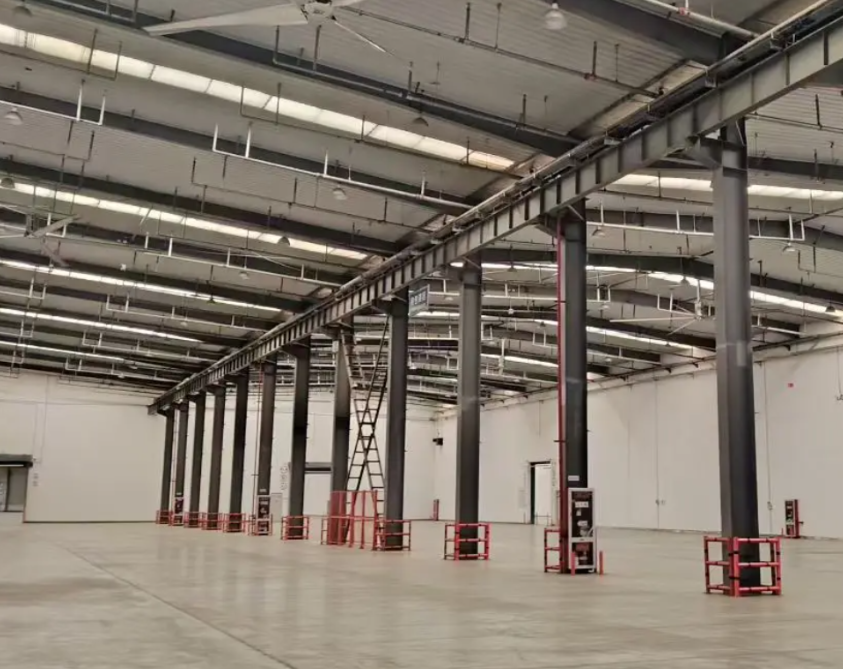
If you've ever looked at the skeleton of a building going up, especially a large warehouse, factory, or agricultural shed, you've probably seen a grid of steel beams and supports. Among these, there's a hardworking component that doesn't always get the spotlight but is absolutely essential: the purlin. Purlins are the horizontal members that run across the main structural frames, providing the direct support for the roof and wall cladding. Without them, you'd have nothing to attach your roof sheets or wall panels to. They are the crucial link between the building's primary frame and its outer skin. Understanding their role and the different types available is key to any successful steel structure project.
The Backbone of the Building Envelope
Think of a building's main frame, the columns and rafters, as the skeleton. The purlins are like the ribs. Their primary job is straightforward but critical: they span between the main frames and provide a continuous, secure surface for attaching the roof deck and wall cladding. This means they carry the weight of the roofing materials themselves, plus any additional loads like rain, snow, wind pressure, and even the weight of maintenance workers or equipment. They transfer these loads back to the main structural frame. But their job doesn't stop there. Purlins also play a vital role in providing lateral bracing to the main rafters and columns, helping to prevent them from buckling under pressure. So, while they might seem like simple supporting actors, they are fundamental to the overall stability and integrity of the entire building. A company with deep experience in steel fabrication, like Zhongwei Heavy Industry with its 20 years in the field, understands that precision in purlin design and placement is non-negotiable for a safe, long-lasting structure.
Meet the Main Players: Types of Purlins
When it comes to choosing the right purlin for a project, you've got options. The most common types you'll encounter in modern steel construction are generally rolled-formed from steel coil. The two heavyweights in this category are the C purlin and the Z purlin. They get their names from their shape, which you can probably guess. A C purlin looks like the letter C, with a simple, open shape. It's a popular and versatile choice, often used in simpler spans and for wall girts (which are essentially vertical purlins for walls). Then there's the Z purlin, shaped like a letter Z. Its design allows for a clever trick: the ends can be nested or overlapped across the main frame. This overlapping creates a continuous beam effect, which is much stronger and allows for longer spans between frames. This makes Z purlins a favorite for larger roofs where you want to minimize the number of main frames needed. Both types are typically made from high-strength galvanized steel to resist corrosion, a key consideration for any building's longevity. The specific choice depends on the span, the load, and the overall design of the structure.
Choosing the Right Purlin for the Job
So, how do you decide between a C and a Z purlin? It really comes down to the engineering demands of your specific project. For shorter spans and simpler roof geometries, C purlins are often perfectly adequate and cost-effective. They are straightforward to install and connect. However, when you're dealing with a large-span structure, like the logistics warehouse project in Bangkok mentioned by Zhongwei Heavy Industry, Z purlins often become the go-to choice. Their ability to overlap at the supports creates a stronger, more continuous member that can handle greater distances and heavier loads without sagging. This efficiency can actually reduce the amount of steel needed overall, which is better for the budget. The decision also involves factors like the slope of the roof and the direction of the wind loads. This is where having an experienced engineering team, like the 255-strong R&D team at a professional fabricator, becomes invaluable. They can run the calculations and recommend the optimal purlin type, size, and spacing to ensure the roof and walls perform perfectly for decades.
Quality and Standards: The Non-Negotiables
Finally, the function of a purlin is only as good as its quality. A purlin that's not made to precise specifications can lead to misaligned cladding, poor load transfer, and even structural issues down the line. That's why reputable manufacturers adhere to strict international standards. A company that prides itself on certified quality, with ISO and CE certifications, ensures that every purlin rolling off their production line meets the required strength and dimensional tolerances. They use high-grade steel and maintain strict quality control throughout the manufacturing process, from the initial coil to the final product. This commitment to quality, backed by advanced production lines and a focus on engineering excellence, gives project owners and builders confidence. When you source your purlins from a partner that treats them as a critical structural element, not just a commodity, you're investing in the long-term safety and performance of the entire building. Whether it's for a modern agricultural park, a specialized industrial workshop, or a large distribution center, choosing quality purlins is a foundational decision.