 EN
EN

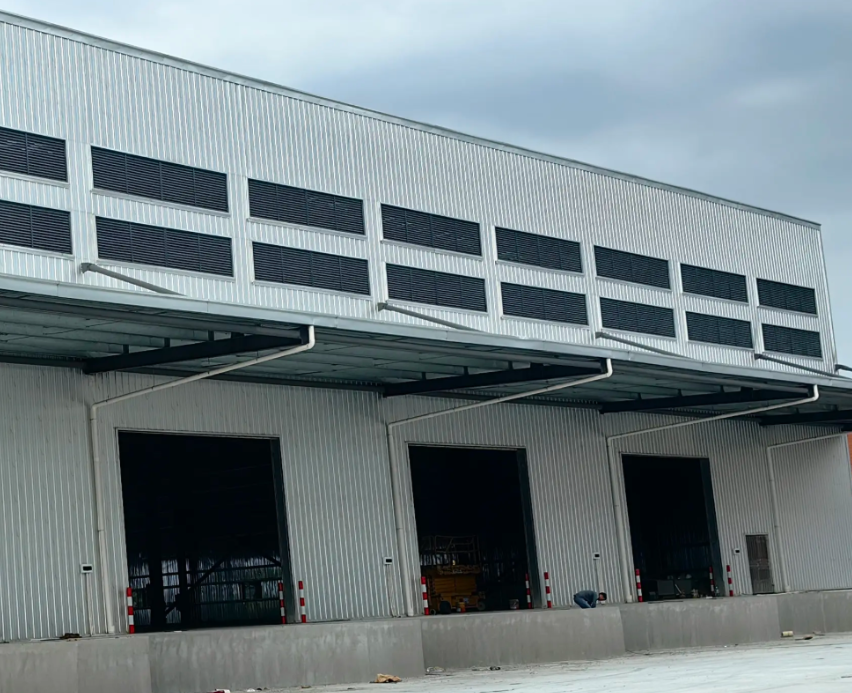
When you look at a massive steel building, a wide-span warehouse, or an industrial workshop, it's easy to see them as solid, monolithic objects. But the truth is, they are assemblies of many smaller pieces—beams, columns, and plates—all joined together to act as one. The glue that holds them together, the thing that makes them a single, strong unit, is welding. Every joint, every connection, is a potential point of strength or a potential point of failure. That's why the quality of that weld, the skill and precision behind it, is absolutely critical to the structural integrity of the whole project. It's not just about sticking metal together; it's about ensuring the building can stand safely for decades.
Welding: The Invisible Backbone of Steel Structures
Think of a steel frame like a human skeleton. The bones are the steel members, but without strong joints—the ligaments and tendons—the skeleton would collapse. In a steel structure, structural welding creates those joints. It fuses the metal at a molecular level, creating a connection that is often stronger than the base metal itself. This is what allows a frame to transfer immense loads from the roof, through the columns, and down to the foundation. Whether it's a C purlin supporting a roof deck or a massive H-beam carrying the weight of several stories, every load path depends on the integrity of the welds. A company with decades of experience, like Zhongwei Heavy Industry with its 20 years in the field, understands that this invisible backbone must be flawless. The entire engineering effort, from the initial design to the final bolt, rests on the assumption that every weld will perform exactly as intended, making weld quality the silent guardian of structural integrity.
Certified Processes: Building Quality into Every Weld
So, how do you ensure that every single weld is up to the task? It's not about luck or just hiring skilled welders, though that's a big part of it. It's about having a certified, controlled process from start to finish. This is where things like ISO and CE certifications come into play. When a fabricator is ISO and CE-certified, like Zhongwei Heavy Industry, it means their entire operation meets strict international standards for quality management. This covers everything from the qualifications of their welders and the procedures they follow, to the inspection of materials and the testing of finished welds. They use advanced production lines and strict quality control to ensure consistency. It’s a systematic approach that minimizes errors and guarantees that the structural welding performed in their factory, whether for a project in Shenyang or for export to a client in Thailand, meets the same high standards of precision and strength. This certified foundation is what gives clients confidence that the building's core connections are sound.
Proven in Practice: Real-World Examples of Reliability
Theory and certification are essential, but the ultimate test of welding quality is in the real world. A structure doesn't face its biggest challenges in the factory; it faces them on site, under load, and in the elements. Look at the projects successfully delivered by experienced fabricators. For example, the large-scale logistics warehouse steel structure completed by Zhongwei Heavy Industry in Bangkok, Thailand. That building, and others like it for overseas factories and warehouses, must withstand local weather conditions, dynamic loads from storage and operations, and the test of time. The fact that these projects are successfully completed and delivered speaks volumes about the quality of the fabrication, and at the heart of that fabrication is reliable structural welding. The welds in that Bangkok warehouse are what keep the frame rigid and secure, protecting the goods inside. Every successful project, whether it's a modern agricultural science and technology park or a specialized industrial workshop, stands as a testament to the sound welds that hold it together.
The Long-Term Value of Prioritizing Weld Quality
Finally, the importance of weld quality extends far beyond the construction phase. It's about the long-term value, safety, and maintenance costs of the building. A structure built with poor-quality welds is at risk for cracks, fatigue, and premature failure. This can lead to expensive repairs, dangerous inspections, and even catastrophic collapse. On the other hand, a building where weld quality was a top priority, backed by strict quality control and engineering excellence, is an asset that provides reliable service for decades. It requires less maintenance and offers peace of mind. For the owner of a standardized warehousing and storage warehouse, or a public medical building, knowing that the steel frame was fabricated with certified, high-quality structural welding means they can focus on their core business without worrying about the integrity of their building. It's an investment in safety, durability, and long-term operational success, proving that the strongest structures are built one perfect weld at a time.