 EN

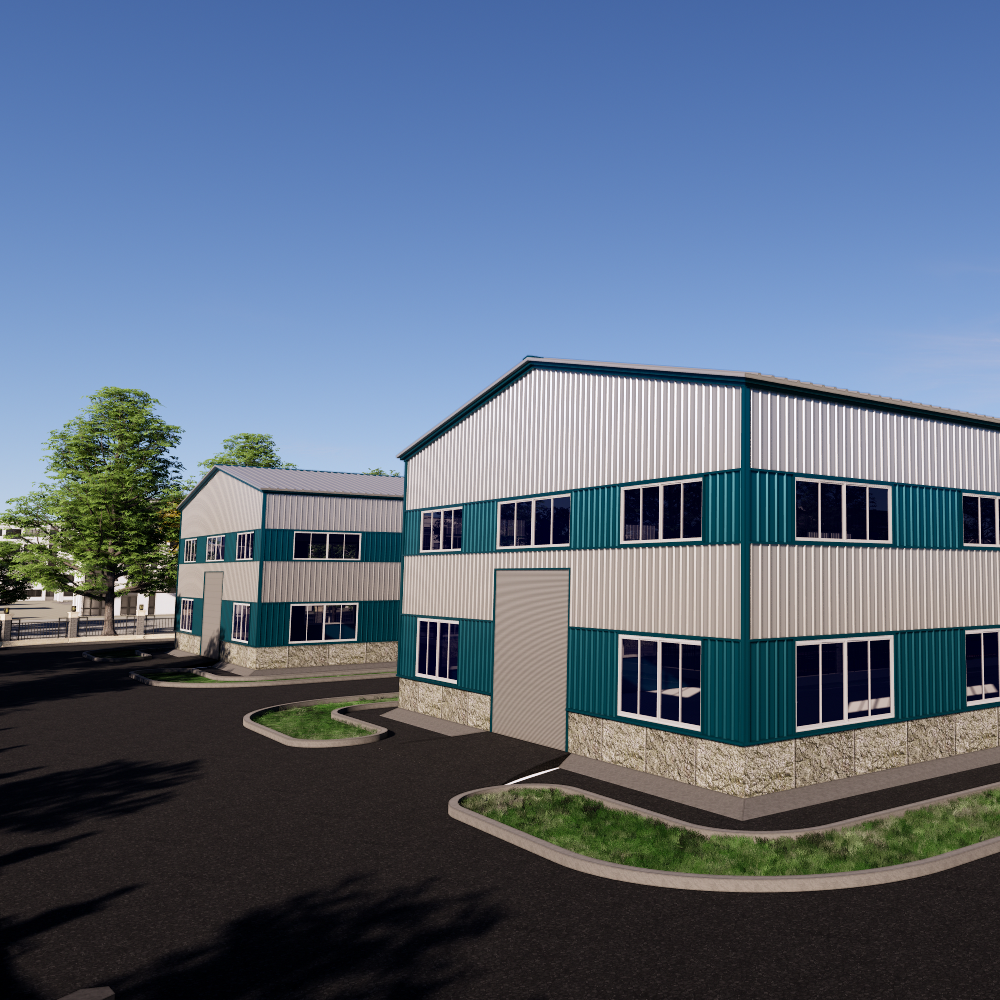
Accelerated Project Timelines with Prefabricated Workshops
Parallel manufacturing and site preparation cuts total project duration by up to 50%
A prefabricated workshop compresses delivery by enabling site preparation and structural fabrication to proceed simultaneously. While ground crews clear, grade, and pour foundations, factory teams cut, weld, and assemble steel modules indoors—eliminating the sequential delays inherent in stick-built construction. Instead of waiting for drawings, permits, and materials to move through a single path, owners gain time by overlapping independent tasks. For a typical workshop, foundation crews and factory welders work on separate critical paths that converge only at final assembly. Industry data show total project durations falling 30–50% compared with conventional methods. The following phase comparison illustrates typical schedule compression:
| Phase | Traditional Duration | Prefabricated Workshop Duration |
|---|---|---|
| Design approval | 8 weeks | 3 weeks |
| Material procurement | 6 weeks | 0 weeks (pre-packaged kits) |
| On-site construction | 26 weeks | 9 weeks |
By aligning design, production, and site preparation, prefabricated workshops eliminate bottlenecks that slow conventional builds. Procurement becomes nearly instantaneous because building kits are pre-engineered and packaged before ground is broken. On-site construction shrinks from twenty-six weeks to nine, reducing labor exposure and coordination overhead. Businesses often start operations four to eight weeks earlier—lowering carrying costs and accelerating revenue generation. With financing costs averaging 8% annually, a ten-week earlier completion on a $5 million project saves roughly $77,000 in interest alone. A 2024 modular construction analysis found 89% fewer schedule revisions when parallel workflows are used, because fewer on-site variables disrupt the critical path.
Reduced weather dependency ensures schedule adherence in volatile climates
Factory-controlled production protects most structural work from rain, snow, and extreme temperatures. Factory roofs and climate-controlled bays keep welding and coating operations within specification regardless of external humidity. Only site preparation and final assembly remain exposed to weather—shrinking the weather-sensitive portion of the schedule. Traditional sites often lose one to two days per week to rain or high winds in storm-prone regions. Prefabricated workshop construction moves most structural work indoors, so only final bolting and sealing require clear conditions. Enclosed production lines maintain a 98% schedule adherence rate, versus 63% for traditional sites. This gap is especially important in regions with short building seasons or unpredictable rainfall. Because modules are completed indoors, moisture-related defects and thermal delays are reduced. When components arrive on site, crews can erect them quickly—often within days—limiting the window for weather interruptions. This results in more reliable milestone achievement and less need for schedule float. Owners can therefore plan commissioning, staffing, and logistics with greater confidence, meeting handover dates and avoiding penalty clauses even when local conditions deteriorate.
Factory Precision and Efficiency in Prefabricated Workshop Production
CNC-controlled fabrication and QA-controlled environments enhance consistency and reduce rework
Inside a prefabricated workshop, CNC-controlled fabrication cuts steel plates, holes, and profiles to tolerances that manual methods rarely match. Automated welding in QA-controlled environments keeps every joint consistent, while multi-stage inspections verify dimensional accuracy, weld integrity, and surface treatment before components leave the factory. This controlled process reduces the design drift and field corrections that often delay traditional builds. When components arrive on site, they fit together more predictably—reducing time spent reworking misaligned connections or patching coating damage. Factory-based quality systems also standardize material traceability and documentation, making compliance verification more efficient. Because each component is measured after fabrication, errors are caught before shipping rather than during assembly. CNC cutting supports complex geometries and identical repeated parts without cumulative error. Protective coatings applied evenly indoors avoid the dust, moisture, and temperature variation that often compromise site-applied finishes. The result is a building shell with fewer latent defects and fewer costly change orders.
30–40% fewer on-site man-hours compared to traditional construction methods
Prefabricated workshop construction typically requires 30–40% fewer on-site man-hours than conventional methods. Pre-sized components and pre-assembled frames reduce cutting, welding, and scaffolding work at the project location. Smaller crews can complete structural erection faster because most fabrication labor has already been performed in the factory. This shift lowers labor costs, eases site congestion, and reduces safety exposure. It also helps project managers maintain schedule certainty when skilled site labor is scarce. With fewer on-site processes, supervision and quality control become more manageable. According to 2023 industry data, the labor-saving effect is most visible in repetitive industrial buildings, where identical bay spacing and connection details allow crews to install multiple modules per shift. The remaining site work focuses on bolting, alignment, and finishing—not heavy fabrication. Fewer workers on site also reduce temporary facilities, supervision overhead, and daily coordination burden. With less cutting and welding in the field, project managers can sequence trades more tightly and avoid idle time.
Schedule Certainty and Risk Mitigation for Time-Sensitive Projects
Fixed lead times, milestone-driven delivery, and predictable handover windows
A prefabricated workshop reduces schedule uncertainty because manufacturing lead times are fixed at order confirmation, while site preparation proceeds under a separate milestone plan. Delivery windows are tied to production slots, allowing teams to sequence foundation, utility, and assembly tasks without waiting for weather-sensitive site work to catch up. Milestone-driven delivery and predictable handover windows make completion forecasts more reliable: each module inspection, shipment, and installation step is tracked against agreed targets. If a delay appears, project managers can adjust downstream milestones or use buffer time on non-critical tasks instead of reworking the full schedule. This structured approach supports realistic completion dates and helps time-sensitive projects avoid cascading overruns.
Cost and Resource Advantages of Prefabricated Workshops
A prefabricated workshop delivers direct cost and resource savings across the project lifecycle. Factory-based fabrication reduces the number of on-site workers needed, and automated workflows lower labor costs per square meter. Precise component production minimizes offcuts and material waste, while reusable steel scraps are recycled rather than discarded. These controls also make budgets more predictable by limiting on-site variations, delays, and rework.
Long-term economics strengthen the case further. A 2022 lifecycle cost study found that prefabricated steel buildings achieve 20–30% lower total lifecycle costs than conventional structures. The savings come from lower maintenance, faster operational launch, and reduced insurance premiums. Energy efficiency adds another advantage: precision manufacturing and high-performance insulation cut operational energy consumption and align with current sustainability goals.
| Cost category | Prefabricated workshop advantage |
|---|---|
| Labor | Fewer on-site workers and automated production lower cost per m² |
| Materials | Precision fabrication and recycling reduce waste and offcuts |
| Budget control | Predictable factory workflows limit variations and rework |
| Lifecycle cost | 20–30% lower total costs compared with conventional buildings |
| Energy use | Efficient insulation and precise assembly lower operating consumption |
FAQ
What is a prefabricated workshop?
A prefabricated workshop is a building structure manufactured in factory-controlled environments and assembled on-site. This approach reduces construction timelines and improves precision compared to traditional methods.
How much time can be saved using prefabricated workshops?
Prefabricated workshops can reduce total project durations by up to 50%, enabling businesses to start operations four to eight weeks earlier in many cases.
Do prefabricated workshops perform well in volatile climates?
Yes, most structural work is done indoors under factory-controlled conditions, minimizing weather dependencies and ensuring reliable schedules.
How do prefabricated workshops lower costs?
Automated factory production reduces labor costs, minimizes material waste, and lowers lifecycle costs, while accelerating project completion can save financing expenses.
What are the environmental benefits of prefabricated workshops?
Precision manufacturing reduces resource waste and operational energy consumption, supporting sustainability goals.