 EN

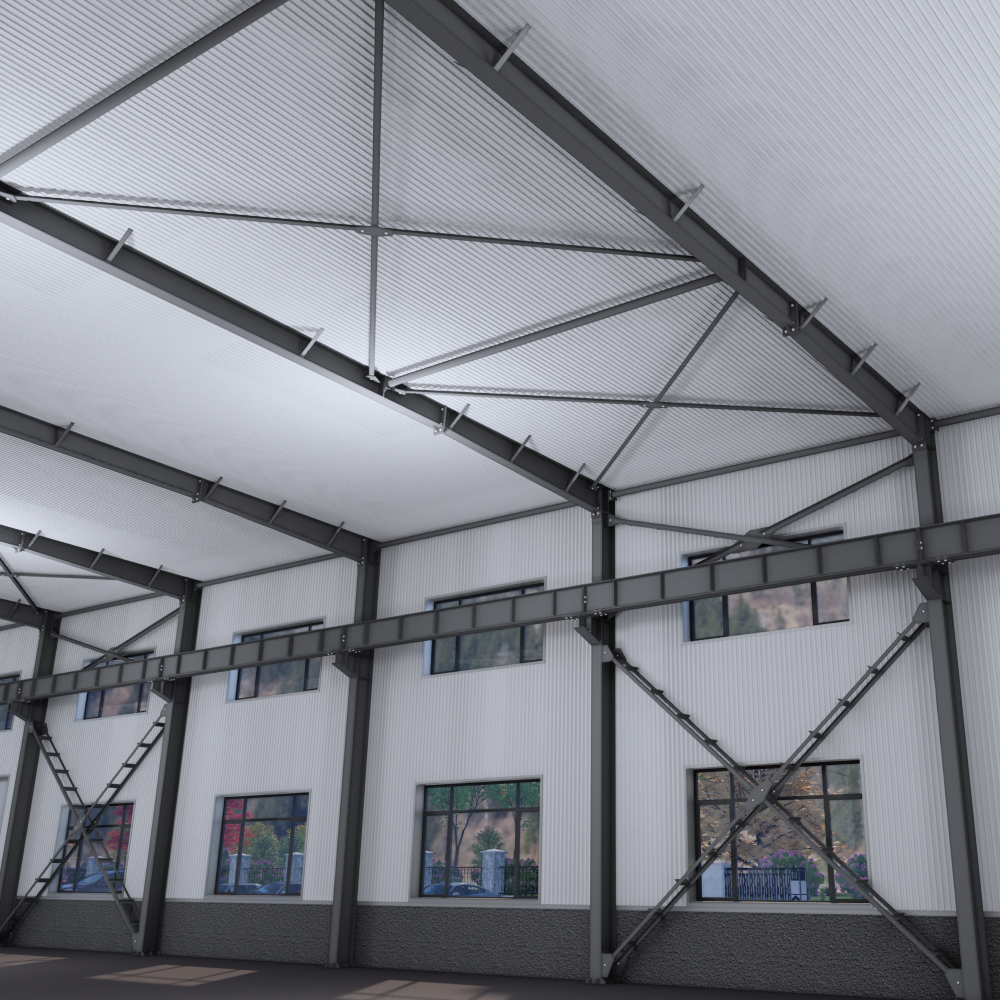
Conducting Strategic Inspections to Detect Early Degradation
Rust and Corrosion Mapping: Prioritizing High-Risk Zones in Steel Structure Warehouses
A strategic inspection program for a steel structure warehouse begins with rust and corrosion mapping—ranking zones by moisture exposure, coating damage, and airflow restriction. Inspectors should record the exact location, size, and depth of any rust bloom or paint failure. High-risk zones include roof-to-wall junctions, panel laps, column bases, eave struts, and areas around penetrations such as vents or downspouts. Repeatedly damp zones near grade-level splash lines and poorly drained door openings also require priority attention. While visual checks identify surface staining, ultrasonic thickness testing quantifies remaining steel thickness where corrosion is suspected. Mapping results should feed a simple severity matrix—cosmetic, moderate, and structural—so maintenance teams address the most critical areas first. Inspection intervals should shorten where salt spray, chemical storage, or high humidity accelerates corrosion. This targeted approach prevents scattered repair work and reduces long-term costs by intercepting degradation before it spreads.
Fastener Integrity, Weld Inspection, and Load-Bearing Component Assessment
Fasteners and welded connections often fail before primary framing members show visible corrosion. Inspectors should check bolt torque, missing or loose nuts, and signs of galling or thread corrosion. Weld joints at beam-to-column connections, base plates, and bracing gussets need close visual review for hairline cracks, undercut, or rust bleeding from the weld toe. For load-bearing components such as crane runway brackets, mezzanine columns, and moment frames, non-destructive testing (NDT) may be needed to detect subsurface defects. Magnetic particle and dye penetrant testing are practical for surface-breaking cracks. Any cracked weld or deformed plate requires immediate engineering review. Document all findings with photos and location tags. This shifts inspection from a visual checklist to an evidence-based condition assessment—helping maintenance teams plan repairs before a small fracture becomes a structural safety issue.
Applying Corrosion-Resistant Protective Coatings Systematically
Coating Lifecycle Management: When and How to Recoat Steel Structure Warehouse Surfaces
For a steel structure warehouse, protective coatings typically last 10–15 years—but age is less important than measurable film loss, edge rust, chalking, and blistering. Plan recoating around condition, not calendar age. Recoat before rust spreads beneath intact film, because hidden underfilm corrosion can force costly abrasive blasting later. Start by cleaning surfaces to remove grease, salts, and loose rust; standard practice aims for near-white metal or a sound, tightly adhered prepared surface, depending on the selected system. Apply a compatible primer first to improve adhesion and create a base barrier. Then add the intermediate or topcoat in thin, even passes, allowing proper drying between coats. After curing, inspect dry film thickness (DFT), pinholes, and sagging; touch up damaged areas immediately. Record coating dates, DFT readings, and environmental exposure in a maintenance log. In coastal or humid zones, inspect film integrity every six months. This condition-based scheduling reduces downtime and prevents structural steel loss more effectively than fixed repainting cycles.
Zinc-Rich Primers vs. Epoxy/Polyurethane Topcoats: Matching Coating Systems to Warehouse Exposure Conditions
Zinc-rich primers protect steel through sacrificial action—zinc corrodes before steel at scratches and edges—and perform best in humid, coastal, or chemically aggressive environments where barrier coatings alone may fail early. Epoxy topcoats offer strong chemical and abrasion resistance but chalk under UV light, making them better suited for interior or shaded areas. Polyurethane topcoats provide excellent gloss and color retention, ideal for exterior roof and wall panels exposed to sunlight. In moderate inland conditions, an epoxy primer plus polyurethane finish often balances durability and cost. For aggressive marine or industrial settings, a zinc-rich primer, epoxy intermediate, and polyurethane topcoat forms a more robust system. Always match the full coating stack to the warehouse’s moisture, chemical, and UV exposure profile. Testing small patch areas before full application helps confirm adhesion and compatibility.
Controlling Moisture Intrusion Through Roof, Joint, and Drainage Systems
For a steel structure warehouse, moisture control begins at the building envelope. Water that bypasses roof or wall interfaces can quietly trigger hidden corrosion before stains become visible.
Sealing Critical Interfaces: Roof-to-Wall Junctions, Panel Laps, and Foundation Flashing in Steel Structure Warehouses
Roof-to-wall junctions are high-risk zones because thermal movement and wind uplift can break rigid sealants. Use non-hardening sealant and flexible butyl tape at these transitions, and inspect them after major storms. At panel laps, check side-lap sealant and fasteners for gaps—capillary action can pull rainwater into the lap joint even without visible leakage. Foundation flashing must direct water away from anchor bolts and base plates. Look for missing kick-out flashing, open joints at door thresholds, and soil that has risen above the base trim. A capillary break between concrete and steel should be maintained to stop moisture wicking through porous materials. Replace cracked or brittle sealant immediately; minor gaps can channel water into insulation and fastener lines, accelerating section loss.
Proactive Drainage Maintenance and Leak Response Protocols to Prevent Hidden Corrosion
Clear roof drains, gutters, and downspouts of debris before rainy seasons. Verify that downspout outlets discharge at least three feet from the foundation, and keep grade sloped away from the building. For low-slope roof areas, check for standing water after rainfall—ponding points commonly align with future coating failure. When a leak appears, map the stain path first rather than patching only the ceiling. Inspect the upstream roof-to-wall junction, panel lap, or penetration to find the true entry point. Treat early moisture signals—such as efflorescence, rust streaks, or wet insulation—as urgent. Repair the source first, then dry the cavity before resealing. A swift, documented response reduces the risk of hidden corrosion spreading through purlins, clips, and connection plates.
Implementing a Data-Driven Preventive Maintenance Schedule
A steel structure warehouse requires a preventive maintenance schedule that evolves from real performance data—not static calendar assumptions. Industry benchmarks consistently show that planned work costs three to nine times less than emergency repairs, making a structured, data-backed schedule essential for long-term durability.
To build this schedule:
- Maintain an asset hierarchy: Break the facility into roof panels, structural columns, fasteners, drainage components, and coating systems; record location, material, exposure level, and last service date.
- Combine OEM intervals with real-world history: Start with manufacturer recommendations, then adjust based on corrosion rates, coating wear, and leak history from prior inspections.
- Prioritize critical assets: Use a criticality analysis to focus budgets on load-bearing frames, high-stress connections, and areas with recurring moisture exposure.
- Track work orders and KPIs in a CMMS: A computerized maintenance management system (CMMS) centralizes due dates, labor hours, and inspection results, making overdue tasks visible.
- Review and refine quarterly: Compare planned versus actual failure rates, downtime, and recoating frequency; shift intervals or add tasks for zones where early degradation was found.
Once active, teams should log actual coating thickness measurements, fastener torque readings, and leak events after each task. Over time, this creates a condition history that makes future maintenance windows more precise. The schedule becomes a closed loop: inspection data from the current cycle sets the next cycle’s tasks—reducing corrosion risk before it spreads and extending the service life of the steel structure warehouse.
FAQ Section
What is rust and corrosion mapping?
Rust and corrosion mapping involves identifying and ranking high-risk zones in steel structure warehouses based on factors like moisture exposure, coating damage, and airflow restriction. It helps prioritize maintenance and prevent further degradation.
Why is the inspection of fasteners and welds important in steel structures?
Fasteners and welds are critical points in steel structures and often fail before primary framing components. Inspecting them ensures early detection of issues such as corrosion or cracks, which could jeopardize the structural integrity of the warehouse.
When should steel structure warehouse surfaces be recoated?
Recoating should be based on the condition of existing protective coatings rather than a fixed timeline. Signs such as film loss, edge rust, chalking, and blistering signal it's time to recoat to prevent further corrosion damage.
What are some best practices for controlling moisture intrusion in a steel structure warehouse?
Key practices include sealing critical interfaces like roof-to-wall junctions and panel laps with non-hardening sealants, maintaining proper drainage systems, and regularly inspecting for leaks or gaps in seals to prevent moisture infiltration.
Why is a data-driven preventive maintenance schedule important?
By basing maintenance schedules on performance data instead of fixed timelines, warehouses can address emerging issues proactively, reduce repair costs, and extend the service life of structural components.
Table of Contents
- Conducting Strategic Inspections to Detect Early Degradation
- Applying Corrosion-Resistant Protective Coatings Systematically
- Controlling Moisture Intrusion Through Roof, Joint, and Drainage Systems
- Implementing a Data-Driven Preventive Maintenance Schedule
-
FAQ Section
- What is rust and corrosion mapping?
- Why is the inspection of fasteners and welds important in steel structures?
- When should steel structure warehouse surfaces be recoated?
- What are some best practices for controlling moisture intrusion in a steel structure warehouse?
- Why is a data-driven preventive maintenance schedule important?