 EN
EN

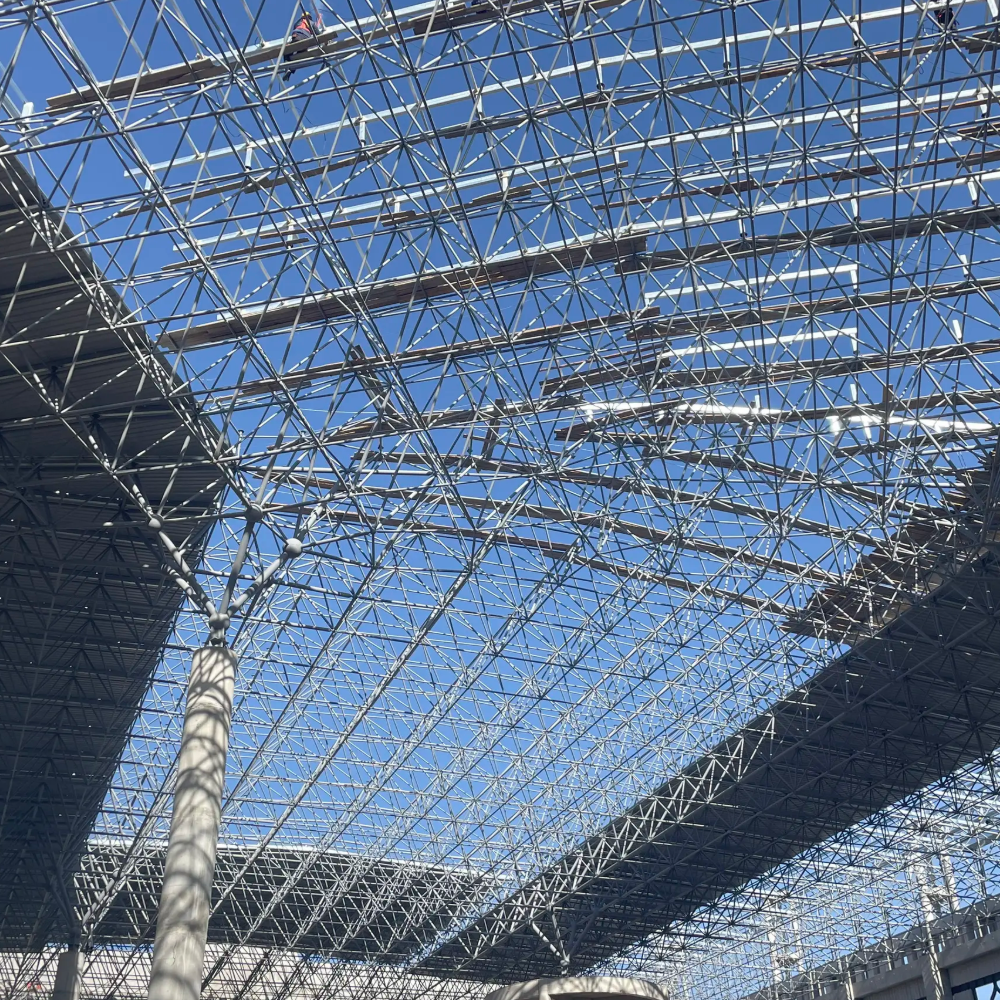
What Makes Spaceframe Technology So Strong
If you have ever walked into a big airport terminal, a sports stadium, or a huge warehouse and wondered how the roof stays up without a forest of columns blocking your view, chances are you were looking at a spaceframe. It is one of those engineering solutions that just makes sense once you see how it works. Basically, a spaceframe is a three dimensional truss like structure built from interlocking steel tubes or struts arranged in geometric patterns. Instead of relying on a few heavy beams to carry all the weight, a spaceframe spreads everything out across many smaller members that work together like a team. This is where the magic happens. Because the load gets distributed in multiple directions at once, no single member has to carry an overwhelming amount of weight. That is why spaceframe technology has become such a popular choice for buildings that need to cover wide open spaces without internal pillars getting in the way.
The Secret Behind Its Rock Solid Stability
So how does spaceframe technology enhance structural stability? The answer lies in geometry. The triangle is the strongest shape you can get in construction. Try pushing on a square frame and it will easily fold over, but push on a triangle and it stays put. A spaceframe takes this idea and runs with it by linking triangles together in three dimensions. Every joint connects several members that pull or push against each other, so forces get passed along through the whole network instead of building up in one spot.
Think of it like a spider web. A single strand is pretty weak by itself, but when you weave thousands of them together into a web, the whole thing becomes incredibly strong and resistant to tearing. A spaceframe works the same way but with steel. The web like structure distributes weight evenly in all directions, which is why spaceframes can be about 30 percent lighter than conventional steel support systems while actually being more stable. That is a big deal because less weight means cheaper foundations, easier shipping, and faster installation.
Another reason spaceframes stay so stable is that they handle forces from every angle. Traditional beam and column structures are great at handling loads that come straight down, but they can struggle when winds start pushing sideways or when the ground starts shaking during an earthquake. A spaceframe does not care which direction the force comes from. Its three dimensional grid catches loads from above, below, and all sides, then spreads them out so no single connection gets overloaded. This multidirectional strength makes spaceframes a favorite for buildings in earthquake zones or hurricane prone areas.
Saving Material Without Losing Strength
Let me share a number that might surprise you. A comparative study looked at two different ways to build a long span warehouse roof. One used a conventional truss system and the other used a space truss. The conventional truss needed 88 tons of steel to get the job done. The space truss? Only 57 tons. That is 35 percent less material. Think about what that means for your budget. Less steel means lower material costs, lighter foundations, and smaller cranes needed for installation. And because spaceframes are usually prefabricated in a factory, the pieces show up ready to bolt together, which cuts way down on construction time.
Spaceframes also hold up incredibly well over time. Corrosion is always a worry with steel buildings, especially in coastal areas where salt spray eats away at unprotected metal. But because spaceframes use so many smaller members instead of a few giant ones, it is easier to protect every surface with proper coatings. Some spaceframe systems use a triple layer protection system that includes a zinc rich primer, an epoxy barrier, and a UV resistant topcoat. That kind of treatment can keep a building standing strong for 50 years or more even in harsh environments.
Where You See Spaceframes Working Every Day
You have probably walked under a spaceframe more times than you realize. Airports love them because terminal buildings need huge open spaces for passengers to move around freely without columns getting in the way of baggage carts, security lines, or moving walkways. Some airport spaceframes span up to 300 meters, which is almost as long as three football fields end to end. That is a whole lot of column free space.
Stadiums are another perfect example. The SoFi Stadium in California, which hosts NFL games, uses an enormous spaceframe substructure that incorporates 55,000 forged nodes. Each node is a custom made steel connector that holds several tubes together at specific angles. Every single node had its own unique part number to make sure it ended up in exactly the right spot. That kind of precision is what makes spaceframes possible. You cannot just eyeball these things. Everything has to fit perfectly because the whole system depends on every piece playing its role.
Warehouses and factories also benefit big time from spaceframe technology. When you are running automated production lines or stacking pallets with forklifts, the last thing you want is a column right in the middle of your floor space. Spaceframes let you clear out those obstructions so you can use every square meter of your building. A food processing plant in Africa put up a 60 meter column free roof using a spaceframe, which let them run their automation lines without any annoying pillars getting in the way.
Even aircraft hangars use spaceframes. You need a whole lot of clear height and width to park a plane inside a building. Traditional structures would need giant beams and thick columns to span that kind of distance, but a spaceframe does it with much less material. One hangar in Tanzania went up with a 68 meter span and was installed in less than eight weeks. That is fast for such a big building.
A Few Things To Keep In Mind
Of course, no building system is perfect for every situation. Spaceframes are amazing at covering large areas with minimal supports, but they do require careful design and precise fabrication. Every joint matters. If the connection nodes are not made to exact specifications, the whole structure can end up out of alignment. That is why working with an experienced steel structure provider makes such a difference. Someone who has been doing this for 20 years knows how to handle the details that make or break a project.
You also need to think about corrosion protection, especially if your building is near the ocean or in a humid climate. A good coating system is non negotiable. And while spaceframes are generally lighter than conventional steel structures, they still need a solid foundation. You cannot just set them on the ground and call it a day.
Another thing worth mentioning is that spaceframes are not just functional, they also look really cool. Lots of architects choose them for the visual appeal. The exposed steel tubes and nodes create a kind of industrial art that you do not get from plain old beam and column buildings. Some buildings leave the spaceframe completely exposed inside as a design feature, which saves money on ceiling materials and gives the space a modern, high tech vibe.
Wrapping It Up
So to answer the original question: how does spaceframe technology enhance structural stability? It does it by using the natural strength of triangles, spreading loads across a three dimensional network, and handling forces from any direction without breaking a sweat. It is lighter than traditional steel systems, uses less material, and can cover huge spans without columns blocking your view. From airports and stadiums to warehouses and hangars, spaceframes are proving themselves every single day as one of the smartest ways to build big, open spaces that stand the test of time.
If you are planning a project that needs wide open floor space and rock solid reliability, spaceframe technology is definitely worth a serious look. Just make sure you partner with a team that knows what they are doing. The engineering is solid, but the execution has to match.