 EN
EN

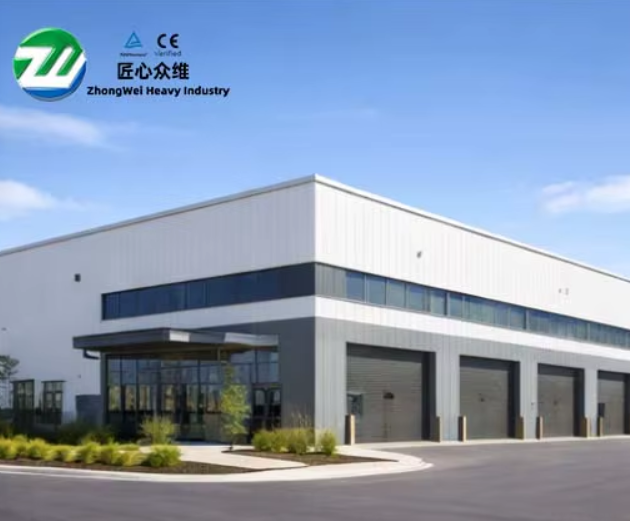
Making the Most of Every Square Foot
So you are putting up a new steel structure warehouse. You have the land, you have the budget, and you have big plans. But here is the thing. A warehouse that just sits there is not doing you any favors. What you really want is a building that squeezes every last bit of storage out of the space you paid for. The good news is that steel is the perfect material for this job. With the right design moves, you can pack a whole lot more inventory into the same footprint. Let us walk through how to design a steel structure warehouse for maximum storage capacity.
Start with the Purpose of the Building
Before you draw a single line on a blueprint, you need to ask yourself some hard questions. What exactly are you storing in that steel structure warehouse? Is it raw materials that come in odd shapes and sizes? Or finished goods that sit neatly on pallets? The answers will shape everything that comes next. If you are storing heavy machinery parts, your floor needs to handle serious weight. If you are dealing with lightweight consumer goods, you can go taller with your racking. Another thing to think about is how fast the inventory moves. Fast movers that go in and out every day should live near the shipping dock. Slow movers can sit further back. Taking the time to understand your own operation saves a lot of headaches later. It is like cooking a good meal. You would not start chopping onions before you even know what you are making, right?
Go Big on Clear Spans to Kill the Columns
Here is the biggest trick in the book for a steel structure warehouse. Use clear span design. That means the steel frame spans from one outer wall to the other without any columns in the middle. Why does this matter so much? Because interior columns are the enemy of storage density. Every column takes up floor space that could have held a pallet. Worse than that, columns break up your racking runs. You end up with weird gaps and wasted corners. With a clear span design, you get a wide open floor from wall to wall. You can run your pallet racks in long, continuous lines. Forklifts move straight down aisles without dodging steel poles. Modern steel structure warehouses can easily achieve clear spans of 30 to 60 meters or even more. That is a whole lot of usable floor. Yes, clear span trusses cost a bit more upfront than putting in a few columns. But the extra storage you gain over the life of the building pays for that difference many times over. Think of it as buying yourself more real estate without actually buying more land.
Go Vertical to Capture Overhead Space
Once you have opened up the floor, do not stop there. Look up. That empty space between the top of your tallest rack and the roof is just sitting there, doing nothing. In a well designed steel structure warehouse, the vertical space is just as valuable as the floor space. The math is simple. If you raise your roof height from 20 feet to 30 feet, you just added 50 percent more cubic volume to the same building footprint. That is like getting half a warehouse for free. Most modern steel warehouses can easily accommodate racking heights of 30 to 45 feet. Some go even higher with specialized high bay designs. Of course, you need to make sure the foundation and the steel frame are designed to handle the extra loads from taller racks. And you need the right equipment to reach those upper shelves. But once you have those pieces in place, the gain in storage capacity is huge. You are basically stacking your inventory on top of itself instead of spreading it out. That is how you get maximum density.
Pick the Right Racking System for Your Goods
The steel frame is just the skeleton. The racking is the muscle that actually holds your stuff. And not all racking is the same. You need to match the system to the products you are storing. For standard palletized goods, selective pallet racking is the most common choice. It gives you direct access to every pallet, which is great for fast moving inventory. But if you have a lot of the same product, you might want drive in racking. That lets a forklift drive right into the racking structure to load and unload, which packs product in much tighter. For long items like pipes or lumber, cantilever racking is the way to go. It has arms that stick out from upright columns, so nothing blocks the length of the product. Another smart move in a steel structure warehouse is to use double deep racking. That puts two pallets back to back on each side of the aisle. You lose a little bit of direct access, but you gain a lot more storage density. The key is to look at what you store most of and design your racking layout around that. Do not just buy a standard system off the shelf and hope it works. Customize it to your actual inventory.
Make Your Aisles Work for You, Not Against You
Aisle width is one of those things that people overlook, but it makes a huge difference. Wide aisles are easy to drive through, sure. But they eat up a ton of space. In a typical warehouse, aisles can account for 30 to 50 percent of the total floor area. That is a lot of real estate that is not holding any product. So how do you fix that? Use narrow aisle forklifts. These machines are designed to work in aisles as tight as 8 to 10 feet wide. Compare that to standard forklifts that need 12 to 15 feet of clearance. The difference adds up fast. For every 100 feet of aisle length, you save five feet of width. That extra space can go right back into more racking rows. Some very narrow aisle systems can even go down to 5 or 6 feet using wire guided trucks. Those get you even more density. But you have to balance aisle width against how fast you need to move product. If you are running a high volume operation, super tight aisles might slow you down. Find the sweet spot for your specific workflow.
Let the Roof Do Double Duty with Natural Light
Here is a tip that saves both money and floor space. Use natural lighting in your steel structure warehouse. Steel buildings can easily incorporate translucent roof panels or skylights. That lets sunlight pour in during the day. Why does that matter for storage capacity? Because you do not have to give up floor space for light fixtures and electrical panels. Every square foot you do not waste on utilities is a square foot you can use for racks. Plus, natural light makes the space feel bigger and less like a cave. Workers can see better, and safety improves. Just be smart about where you put the skylights. Put them over the main aisles, not directly over the racks where the product might get sun damaged. A little bit of planning goes a long way.
Plan for Expansion from Day One
A smart design for a steel structure warehouse does not just think about today. It thinks about tomorrow too. Business grows. Inventory grows. You want a building that can grow with you. That means designing the steel frame with extra capacity built in. Use slightly heavier columns and beams than you strictly need for the current load. That way, when you want to add another row of racking or go higher with your storage, the building is already ready for it. You can also design the end walls to be removable. That makes it easy to bolt on an expansion bay later without tearing down half the building. Some steel structure warehouses are designed with a modular layout. You just unbolt one wall and attach a new section. It is like adding a room to a house, but way faster. Planning for expansion from the beginning costs a little extra upfront. But it saves a huge amount of money and downtime later when you actually need that extra space.
The Bottom Line on Getting More Storage
So here is what you take away from all of this. To get maximum storage capacity out of a steel structure warehouse, you need to do five things right. First, know exactly what you are storing and how it moves. Second, use clear span design to eliminate interior columns. Third, build tall and use every foot of vertical space. Fourth, pick racking that matches your products, not just what is cheap. Fifth, size your aisles carefully and think about expansion from the start. None of these moves are complicated on their own. But when you put them all together, the difference is night and day. A well designed steel structure warehouse can hold twice as much product as a poorly designed one of the same size. That is not an exaggeration. That is just good engineering. At Xinlongteng, we see customers make these choices every day. The ones who take the time to design for density always end up happier in the long run. They get more storage, lower operating costs, and a building that works as hard as they do. So take these tips, go design your warehouse, and start packing in that inventory.
Table of Contents
- Making the Most of Every Square Foot
- Start with the Purpose of the Building
- Go Big on Clear Spans to Kill the Columns
- Go Vertical to Capture Overhead Space
- Pick the Right Racking System for Your Goods
- Make Your Aisles Work for You, Not Against You
- Let the Roof Do Double Duty with Natural Light
- Plan for Expansion from Day One
- The Bottom Line on Getting More Storage