Following the official commencement of trench excavation and earthworks, the Meide Shangpin Furniture Metal Components Manufacturing Plant, undertaken by Shenyang Zhongwei Heavy Industry Steel Structure Engineering Co., Ltd., has now entered the foundation grade-beam construction stage. As a critical transition point between the civil foundation works and erection of the main steel structure, grade-beam construction affects not only overall gridline control, foundation load transfer, and the accuracy of subsequent steel-column installation, but also the quality of the later building-envelope system, roofing system, and overall project delivery.
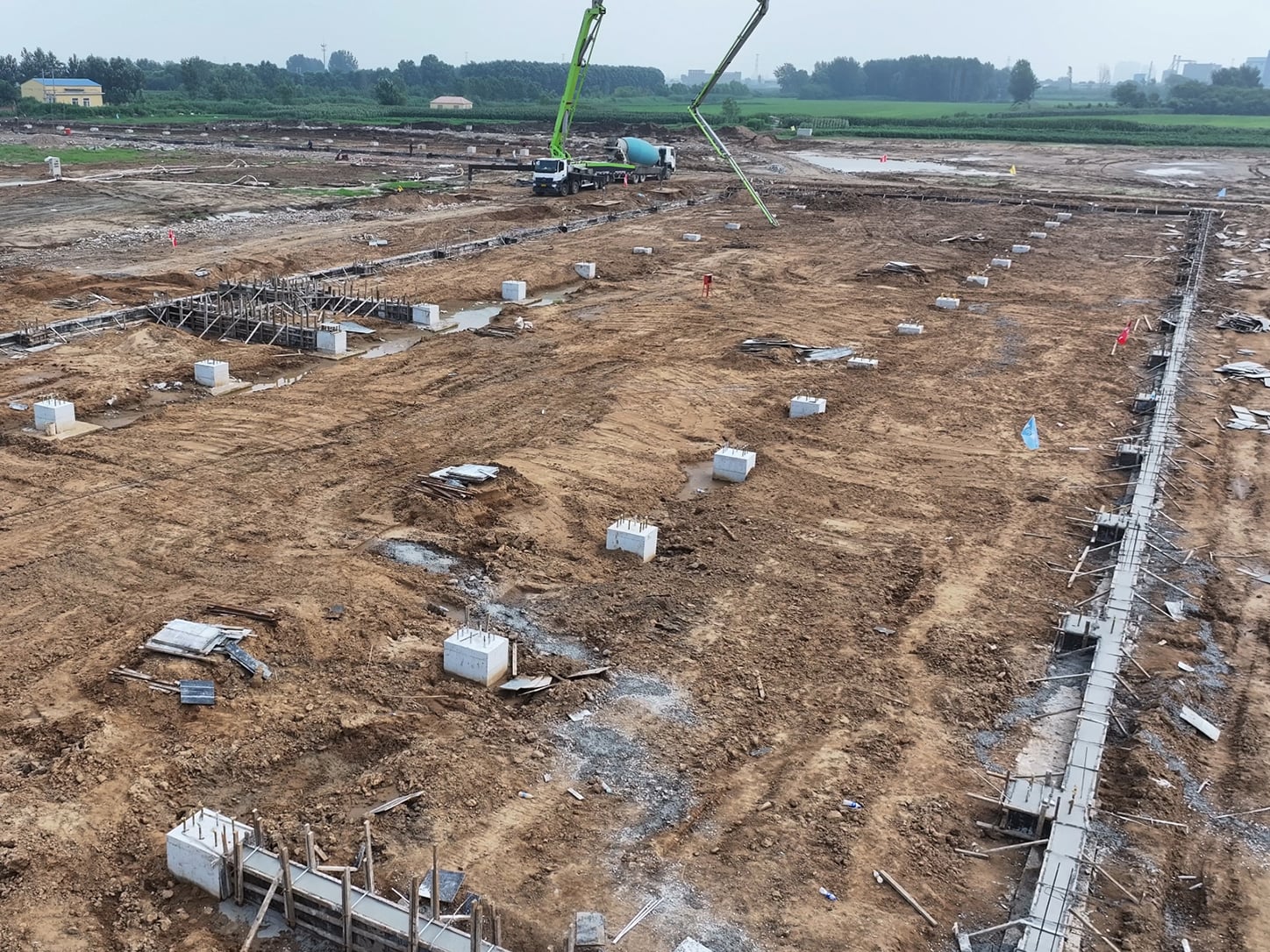
With a total gross floor area of approximately 10,000 m², the project is designed as a supporting manufacturing plant for metal components. Since construction began, the project team has followed the principles of "foundations first, quality assurance up front, controlled milestones, and coordinated progress." Earth excavation, preparation of foundation work areas, formwork erection, reinforcement fixing, and concrete placement have been advanced in sequence to create stable, reliable, and verifiable foundation conditions for the subsequent erection of the main steel frame.
Steel-structure industrial plants are characterized by short construction cycles, a high degree of component prefabrication, and rapid on-site erection. However, the greater the efficiency of assembly-based construction, the higher the required accuracy and stability of the foundation works. As an important part of the foundation system, grade beams connect individual foundation caps, coordinate the overall stiffness of the foundation, help control differential settlement, and maintain continuity in the load path of the upper steel structure.
Based on current site conditions, the preliminary foundation-trench excavation and local preparation work have been completed, while grade-beam formwork, reinforcement installation, and concrete placement are proceeding in an orderly manner. Key operations visible on site include formwork erection, timber-brace strengthening, reinforcement-cage installation, concrete pumping, and coordinated work by construction personnel. This indicates that the project has progressed beyond the single earthwork stage and entered the foundation-forming stage, where structural accuracy, node control, and coordinated construction organization are increasingly important.
For a steel-structure plant, the foundation grade-beam stage is not simply "underground work." It is an essential prerequisite for the smooth installation of steel columns, steel beams, purlins, wall cladding, and the roofing system. The foundation stage is therefore treated as the first quality-control gateway of the project. Measures including gridline rechecking, elevation control, formwork-stability inspection, control of reinforcement spacing and concrete cover, and management of concrete-placement continuity are used to ensure an effective interface between the foundation works and subsequent steel-structure erection.
The Meide Shangpin Furniture Metal Components Manufacturing Plant uses a steel-structure building system. Subsequent erection of the main structure places high requirements on embedded foundation items, gridline positioning, elevation control, and connection-node accuracy. The main control priorities during the grade-beam stage are outlined below.
First, gridline and elevation control. Column-base installation in a steel-structure plant must correspond accurately with the foundation setting-out. Any deviation in the foundation gridlines can be amplified during main-structure erection, affecting steel-column verticality, steel-beam connection accuracy, and the flatness of wall-panel installation. Survey checks must therefore be conducted continuously before, during, and after grade-beam construction to confirm that foundation centerlines, beam-top elevations, and reserved or embedded positions conform to the design drawings.
Second, overall foundation stiffness and coordinated load transfer. Grade beams connect separate foundation units into a relatively integrated load-bearing system, improving overall foundation integrity and helping control local settlement differences. During operation, a production plant may be subjected to equipment loads, logistics and vehicle loads, personnel loads, and building-envelope loads. The stability of the foundation system is therefore directly related to the long-term safety and serviceability of the plant.
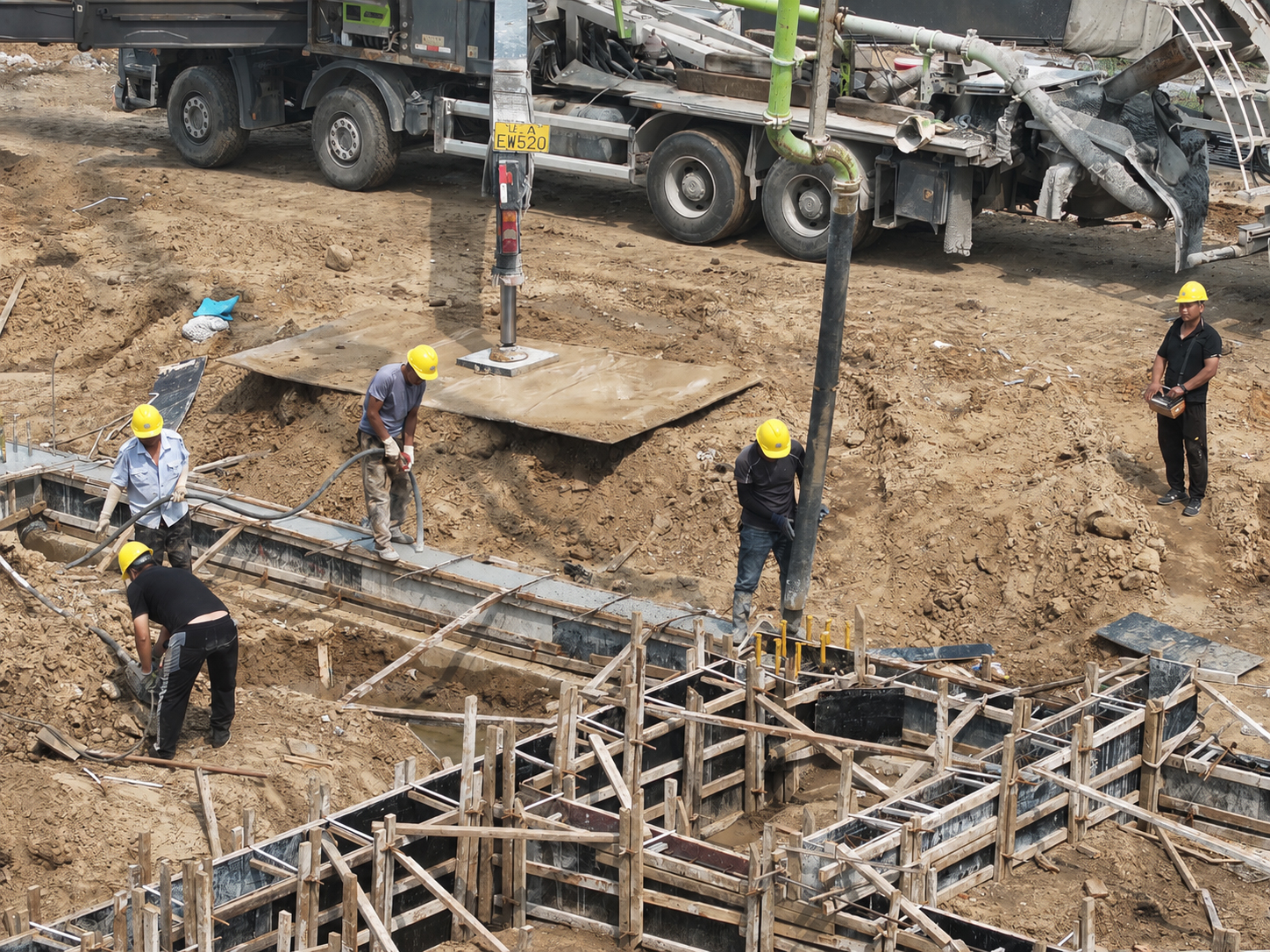
Third, quality control of formwork and reinforcement. Grade-beam formwork must maintain accurate dimensions, secure supports, and tightly sealed joints to prevent bulging, grout leakage, or cross-sectional deviation during concrete placement. Reinforcement work must focus on the positions of longitudinal bars, stirrup spacing, lap lengths, anchorage lengths, and concrete-cover thickness to ensure that the reinforced-concrete members achieve the required structural performance and durability.
Fourth, concrete placement and curing management. Grade-beam concrete should be placed continuously and uniformly, with appropriate vibration to reduce defects such as honeycombing, surface voids, and internal cavities. After placement, curing must be carried out in accordance with site climatic conditions and applicable construction requirements. This helps control early-age shrinkage cracking, supports proper strength development, and provides a reliable foundation for the subsequent upper-structure works.
While advancing grade-beam construction, the project team is coordinating the on-site foundation works with factory fabrication of steel components, material-supply planning, and the allocation of resources for subsequent erection. This integrated approach is intended to prevent situations in which the site waits for components or completed components wait for the foundation works.
In steel-structure engineering, the core of project management is not simply the speed of any single operation, but the efficiency of interfaces between disciplines. After the foundation works are completed, steel-column erection, steel-beam lifting, purlin installation, roofing work, wall-envelope installation, and door, window, and curtain-wall works will proceed in sequence. The more stable the quality of the grade-beam stage, the less rework and adjustment will be required during erection of the main structure, thereby improving overall construction efficiency.
The grade-beam stage is therefore treated as a key project-control milestone. On one hand, the construction team carries out the foundation works strictly in accordance with the design drawings and approved method statements. On the other hand, project-management personnel dynamically track quality, safety, progress, and site coordination to ensure that each operation can be inspected, documented, and traced.
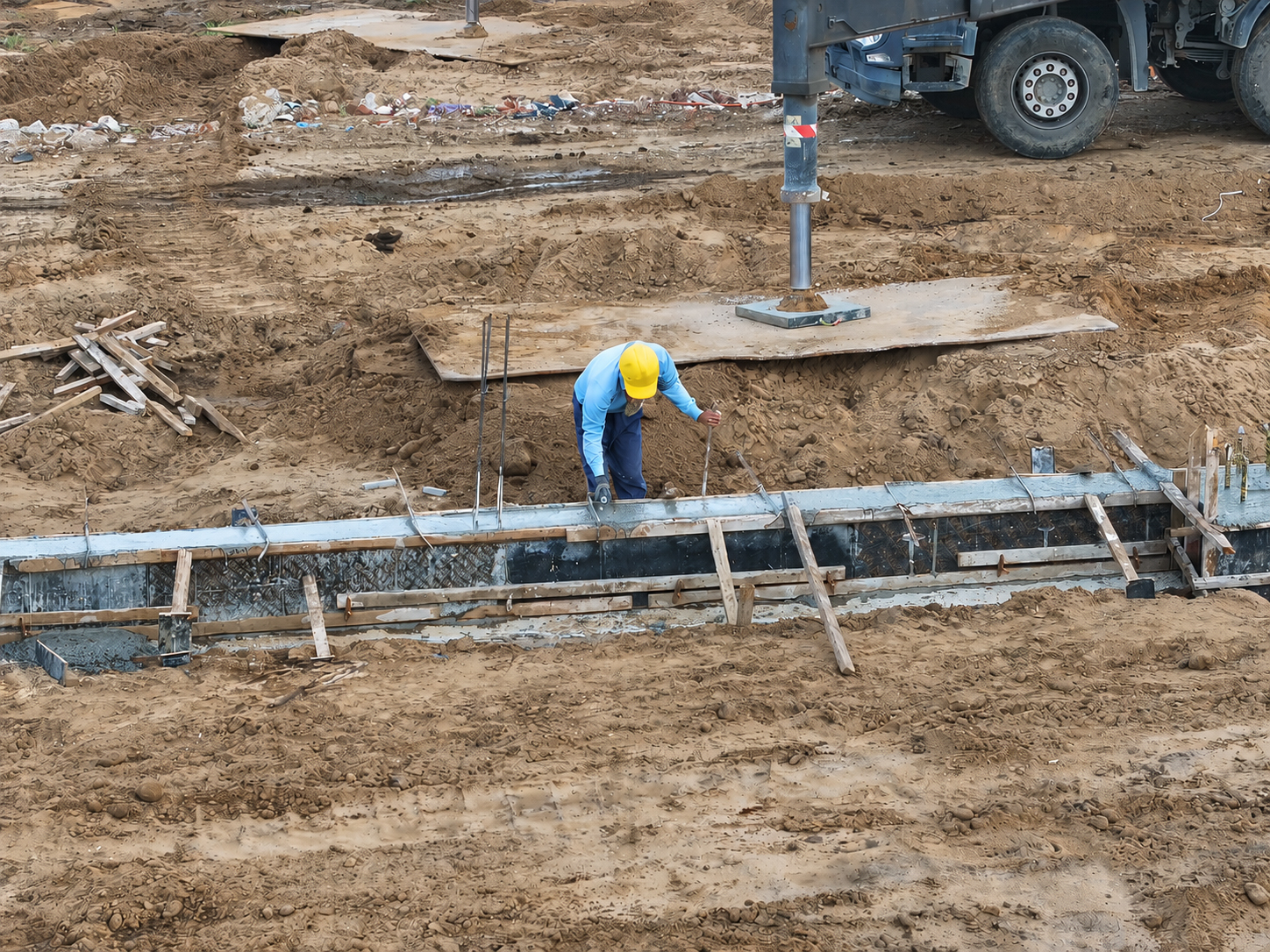
For construction-industry clients and project partners, grade-beam work may not have the same immediate visual impact as lifting and erecting the main steel structure. Nevertheless, it provides an important view of a contractor's engineering-management capability. Only when the foundation stage is executed solidly can subsequent structural erection, building-envelope closure, and final project delivery achieve genuine reliability.
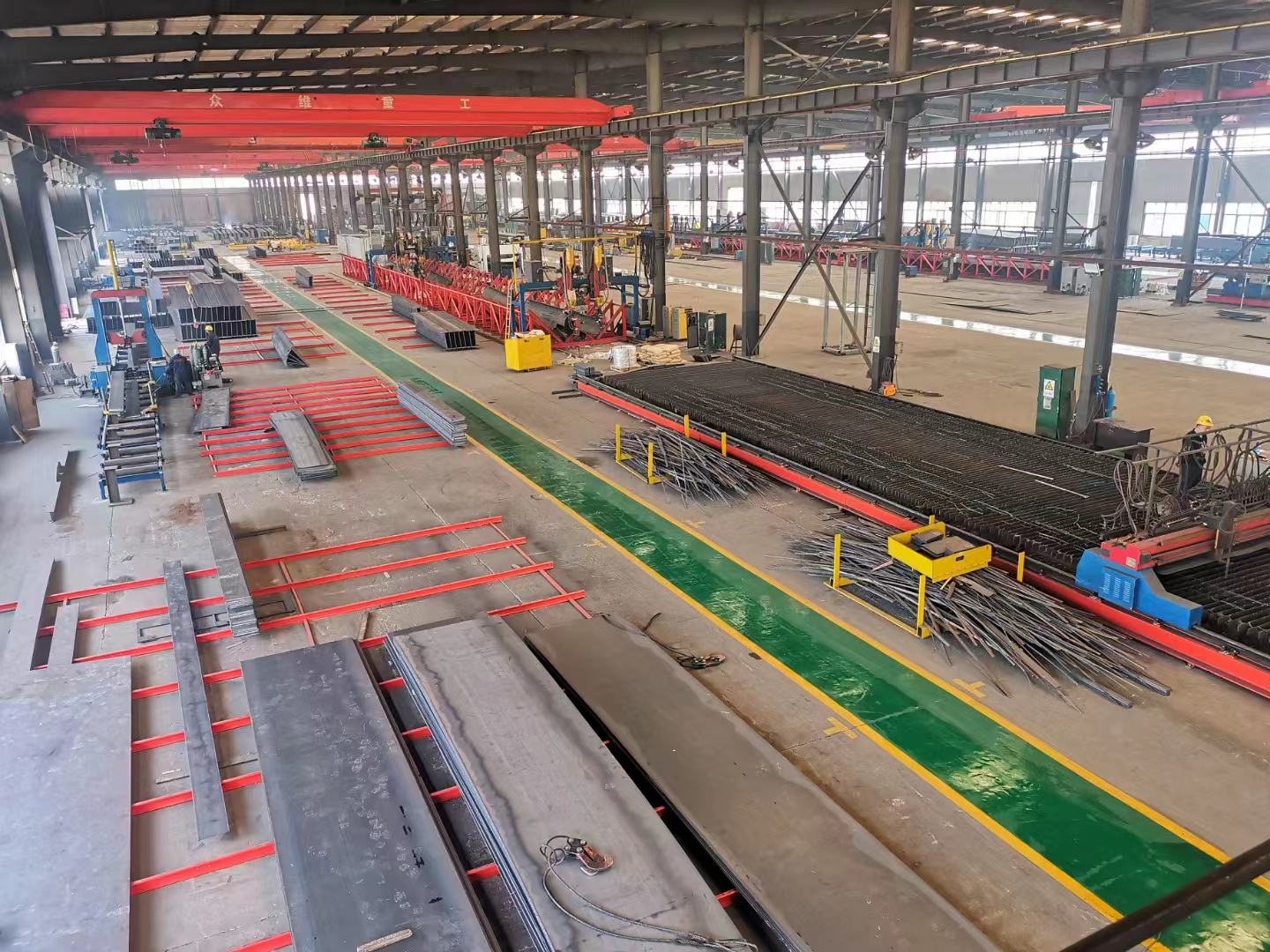
Zhongwei Heavy Industry has long focused on steel-structure warehouses, industrial plants, industrial buildings, and related steel-structure engineering. The company provides integrated services covering design development, material coordination, component fabrication, on-site installation, and project delivery. For the Meide Shangpin Furniture Metal Components Manufacturing Plant, the company is responsible not only for on-site construction, but also for translating the design intent into a stable and executable building outcome through professional engineering management.
During the foundation grade-beam stage of this project, three capabilities are particularly evident:
First, front-end engineering management. From the start of trench excavation, the project team coordinated foundation dimensions, construction sequencing, site work areas, machinery deployment, and workforce cooperation to establish the conditions required for grade-beam construction.
Second, interface coordination. Grade-beam construction is not an isolated activity; it is the key link between the foundation works and the main steel-structure works. By coordinating on-site construction with the subsequent steel-erection plan, the project team is maintaining continuity throughout project execution.
Third, in-process quality control. The quality of a steel-structure plant is reflected not only in its exterior appearance and the speed of main-structure erection, but also in system details involving foundations, nodes, connections, enclosure, waterproofing, and thermal insulation. Implementing quality management from the foundation stage establishes a sound basis for final project delivery.
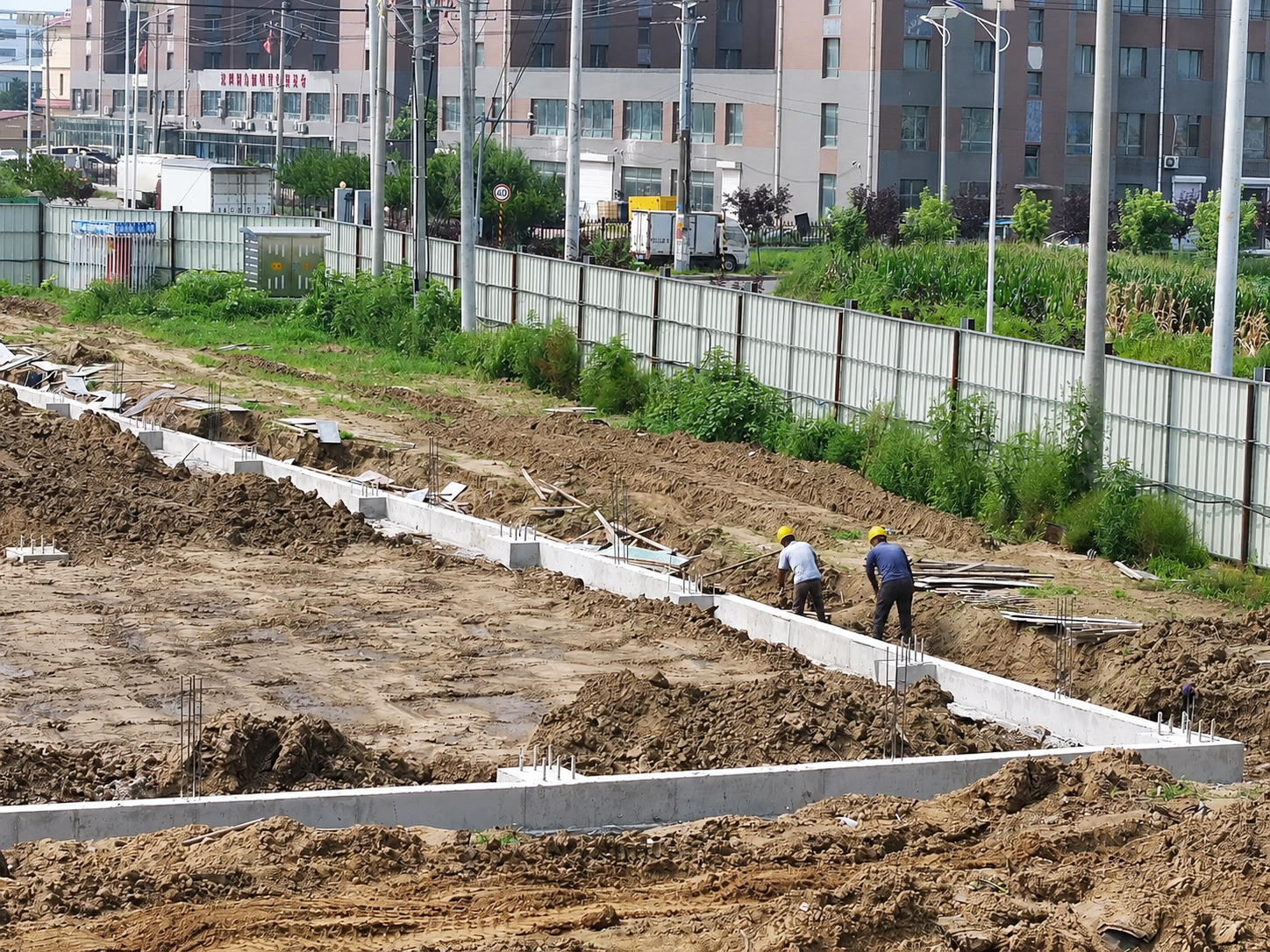
"Zhongwei Heavy Industry - Innovation and Precision" is more than a corporate philosophy; it is applied at every construction milestone. "Innovation" means improving delivery efficiency through more effective organization, a more professional steel-structure technical system, and clearer project-management processes. "Precision" means implementing quality requirements in specific operations, including surveying, formwork, reinforcement, concrete placement, installation, and acceptance inspection.
As grade-beam construction continues, the project will gradually move into foundation acceptance, reinspection of embedded items, organization of steel-component deliveries, and preparation for erection of the main structure. The next-stage priorities will include steel-column installation accuracy, steel-beam connection quality, high-strength-bolt installation, purlin erection, and coordinated interfaces between the roof and wall enclosure systems.
For a production-plant project with a total gross floor area of approximately 10,000 m², erection of the main steel structure will further demonstrate the efficiency advantages of prefabricated steel construction. After factory fabrication, steel components can be lifted and connected on site according to the planned erection sequence. This reduces the proportion of wet trades on site, improves construction organization, and supports effective control of the overall project schedule.
At the same time, the curtain-wall facade and the roof insulation and waterproofing systems will become important indicators of quality in the subsequent works. The facade system affects not only the overall appearance of the plant, but also daylighting, enclosure performance, wind and rain resistance, and long-term maintenance. The roofing system must provide thermal insulation, waterproofing, drainage, and durability. Zhongwei Heavy Industry will continue to advance the project in accordance with systematic, standardized, and detail-oriented construction principles.
The progression of the Meide Shangpin Furniture Metal Components Manufacturing Plant from project commencement to the current grade-beam construction stage confirms that the works are advancing steadily in accordance with the established plan. As an important milestone in the construction of a steel-structure plant, the foundation grade beams carry fundamental responsibilities for structural safety, installation accuracy, and long-term service quality.
Zhongwei Heavy Industry will continue to uphold its corporate philosophy of "Innovation and Precision." The company will apply professional technical expertise to project execution, use process management to safeguard quality, and employ milestone control to drive progress. Subject to ensuring construction quality and site safety, the subsequent erection of the main steel structure and installation of the building-envelope systems will be advanced in an orderly manner.
Looking ahead, Zhongwei Heavy Industry will continue to serve industrial plants, steel-structure warehouses, production workshops, and commercial steel buildings. By leveraging its integrated capabilities in steel-structure engineering design, manufacturing, construction, and delivery, the company aims to provide more clients with efficient, high-quality, and sustainable steel-building solutions.
#GradeBeamConstruction #SteelStructureFoundationWorks #IndustrialPlantConstruction #MetalComponentsManufacturingPlant #10000SqmSteelStructurePlant #SteelStructureEngineering #MeideShangpinProject #ConstructionCommencement #PlantConstructionProgress #SteelBuildingDelivery
Reference Standards for Engineering Terminology
• Standard for Acceptance of Construction Quality of Building Foundation Engineering, GB 50202
• General Code for Construction Quality Control of Building and Municipal Engineering, GB 55032
• Code for Quality Acceptance of Concrete Structure Construction, GB 50204
• Code for Construction of Concrete Structures, GB 50666
• Standard for Acceptance of Construction Quality of Steel Structures, GB 50205
• Code for Construction of Steel Structures, GB 50755
• Standard for Construction Safety Inspection, JGJ 59
• Technical Standard for Temporary Electricity Use on Construction Sites of Building and Municipal Engineering, JGJ/T 46
 Hot News
2026-06-29
2026-06-29
2026-06-26
2026-06-26
2025-12-26
2025-08-24
 EN
EN