Development Status and Future Trends of Prefabricated Steel Structures under China's Dual-Carbon Goals
Policy constraints, diverging applications, and the reshaping of low-carbon supply chains
Lead: Under China's dual-carbon goals, prefabricated steel structures are moving from being a tool for construction efficiency to becoming a tool for low-carbon construction and supply-chain certainty. Policy has already established hard constraints: by 2025, prefabricated buildings are expected to account for more than 30% of new buildings; by 2030, prefabricated buildings are expected to account for 40% of new urban buildings completed in that year. At the industry level, applications are diverging. Industrial plants, logistics warehouses, cultural and sports venues, transport hubs and super high-rise projects are relatively mature application scenarios, while residential buildings and ordinary public buildings still face constraints in cost, standardization, fire protection and corrosion-protection systems.
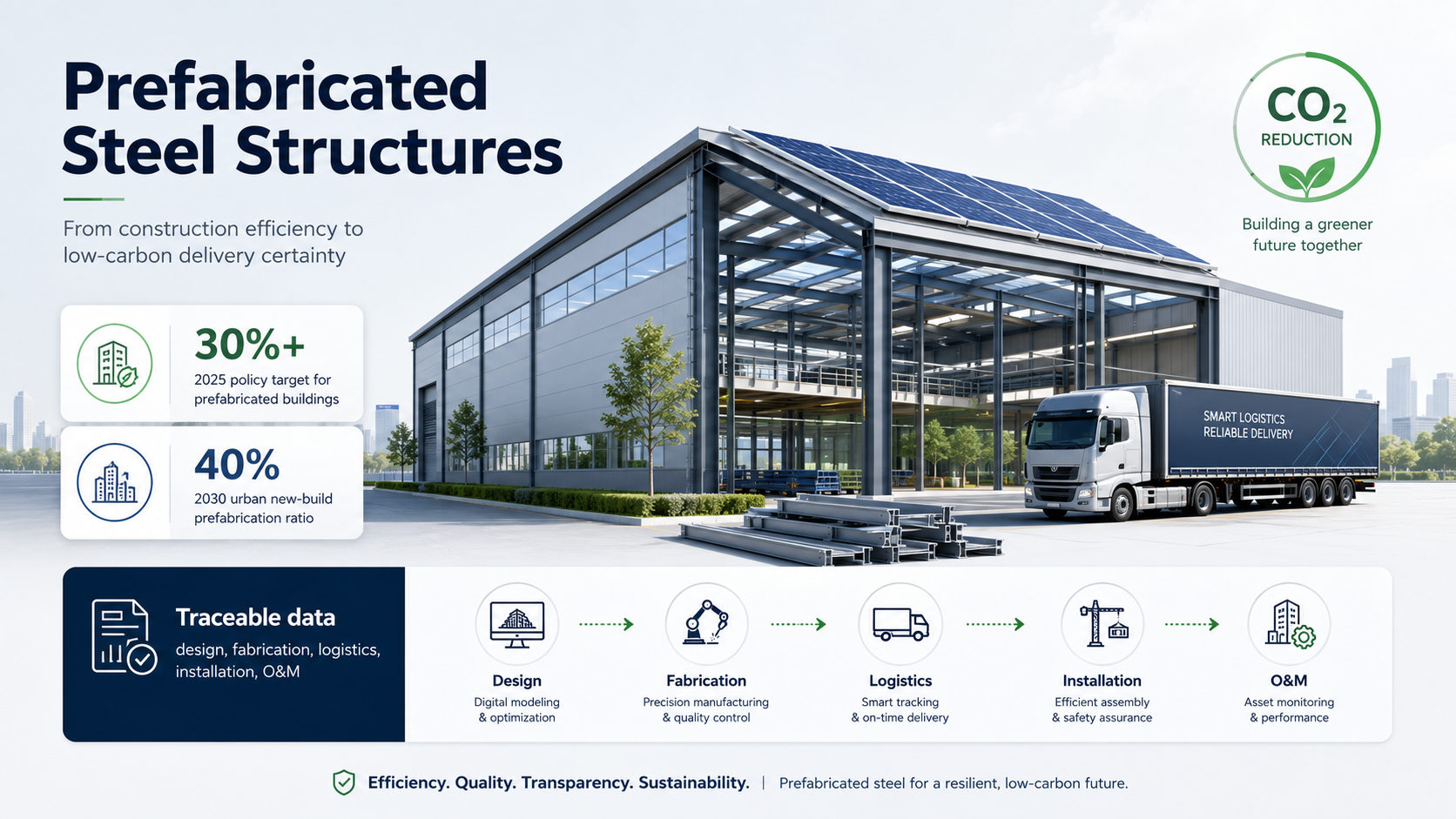
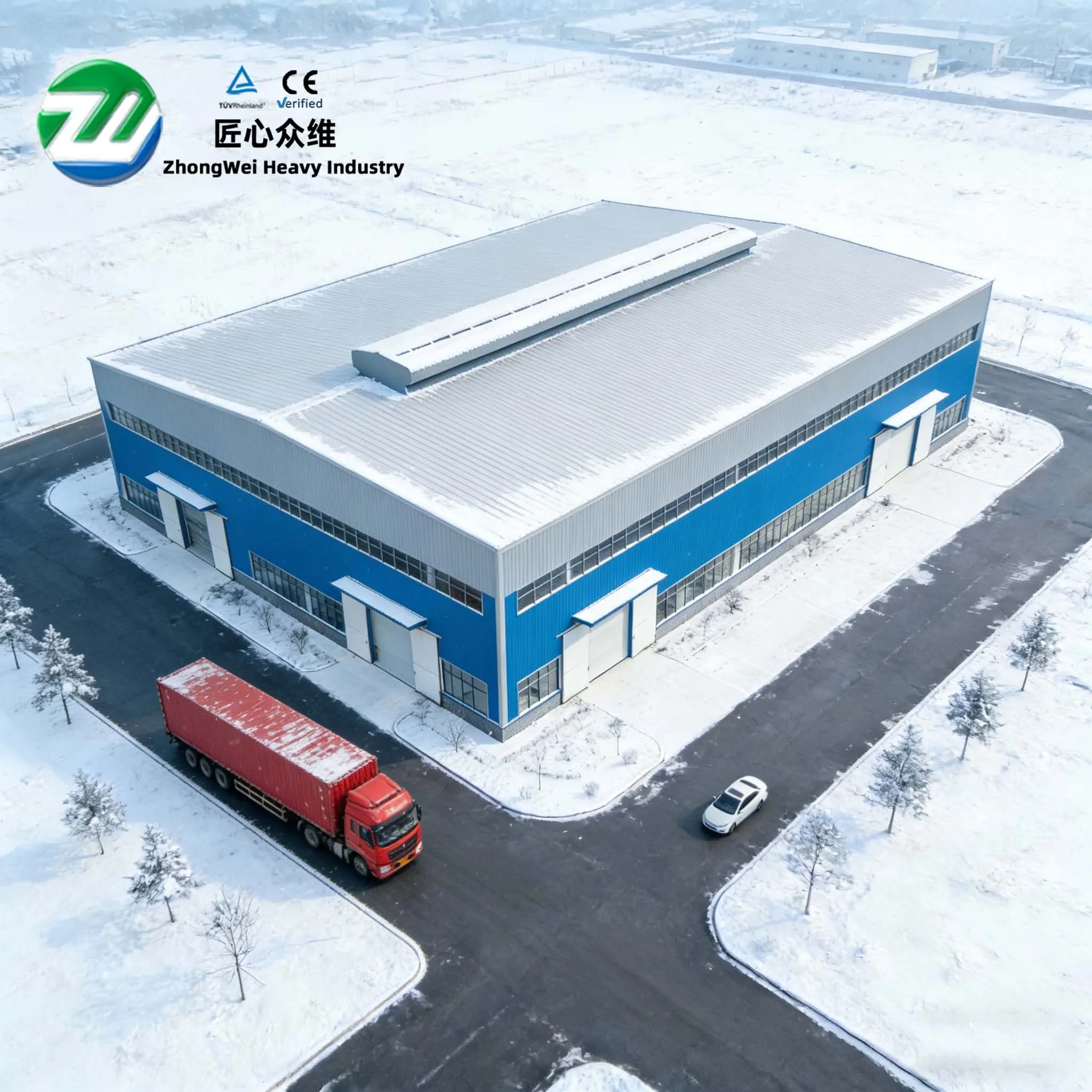
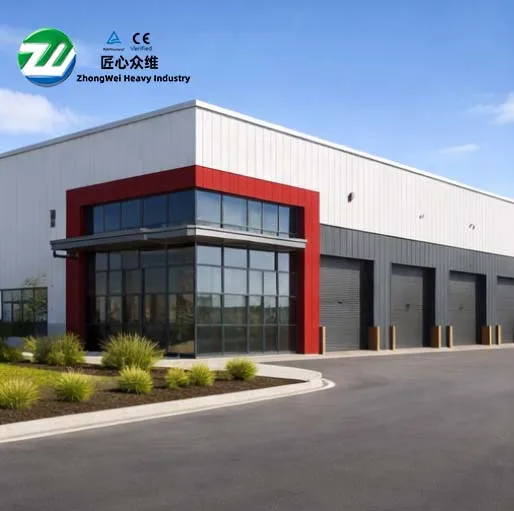
Figure 1. Prefabricated steel structures are increasingly evaluated through low-carbon delivery, traceability and supply-chain certainty.
From both policy and market perspectives, the logic behind prefabricated steel structures has changed. In the past, buyers mainly focused on schedule, cost and span. Today, project owners, government buyers and overseas customers are also concerned with embodied carbon per unit of building area, component traceability, waste emissions at the construction site, compliance with green building-material requirements and cross-standard delivery capabilities. This means that competition among steel-structure enterprises is no longer limited to component-processing capacity; it is increasingly about the ability to digitize the entire chain of design, manufacturing, transportation, installation, operation and maintenance.
At the national level, the 14th Five-Year Plan for the Construction Industry proposes that by 2025 prefabricated buildings should account for more than 30% of new buildings. The Implementation Plan for Carbon Peaking in Urban and Rural Construction further proposes that by 2030 prefabricated buildings should account for 40% of new urban buildings completed in that year, while also promoting steel-structure housing, intelligent construction, green building materials and factory-based precision processing of building materials. Government procurement policy for green building materials has expanded from pilot programs to 48 cities, including the previous six pilot cities, and requires full policy coverage of government-procured construction projects by 2025.
Dimension |
Key data / conclusion |
Basis and scope |
Policy target |
By 2025, prefabricated buildings should account for more than 30% of new buildings; by 2030, the prefabrication ratio for new urban buildings should reach 40%. |
National policy documents. |
Industry scale |
In 2024, national steel-structure output reached 91.48 million tonnes, and total output value of steel-structure buildings was about RMB 2.69 trillion. |
Cited from the China Construction Steel Structure Industry Development Report 2023-2024. |
Application structure |
In the 2024 key-project sample, super high-rises and offices accounted for 28%; large exhibition, cultural and sports venues and shopping centers accounted for 25%; industrial plants and high-end manufacturing plants accounted for 16%. |
Enterprise-reported key-project sample, not an absolute industry-wide proportion. |
Company observation sample |
Public information from Shenyang Zhongwei Heavy Industry indicates one-stop export services covering design, manufacturing, logistics and installation guidance. |
Company public disclosure. |
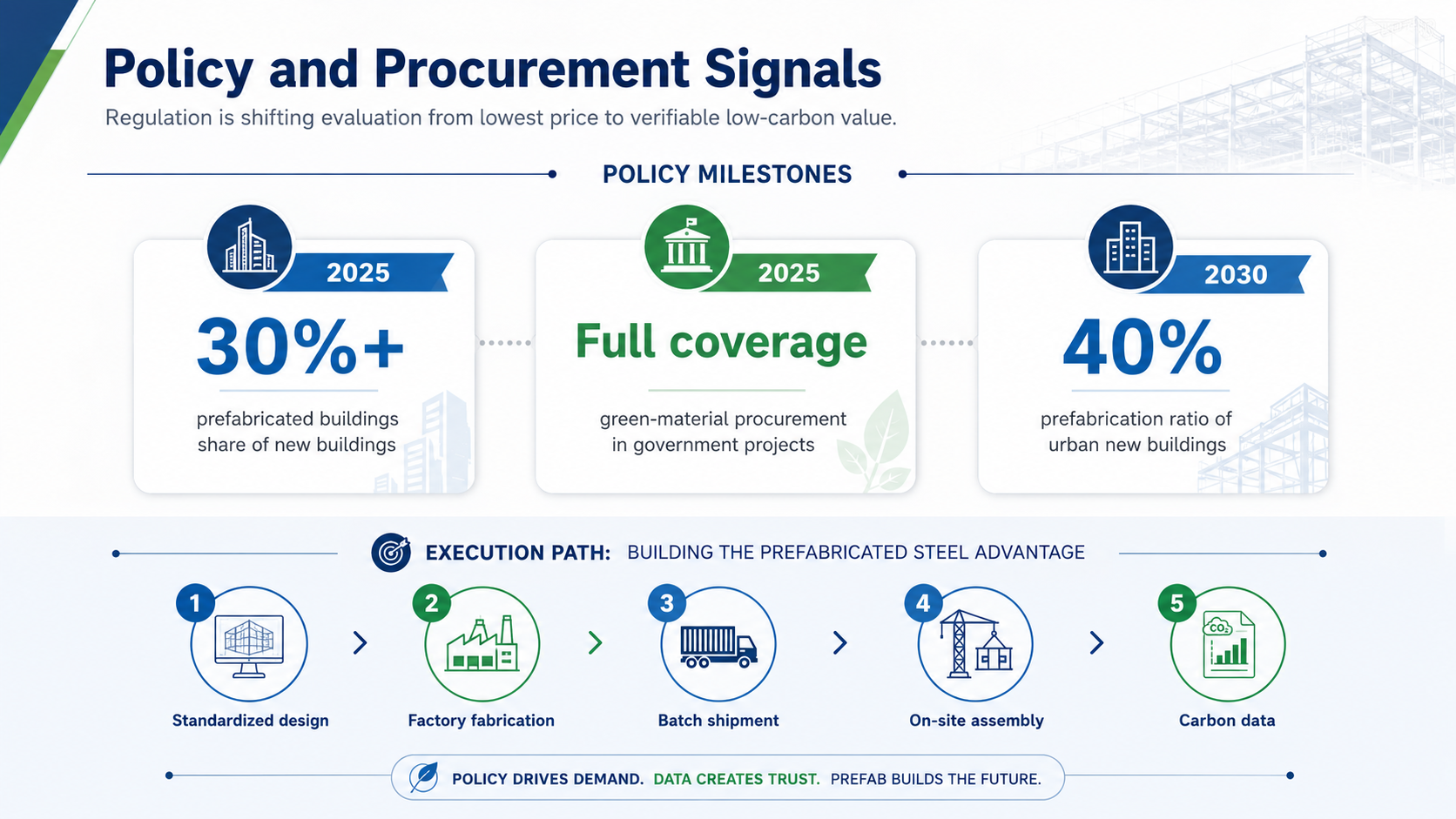
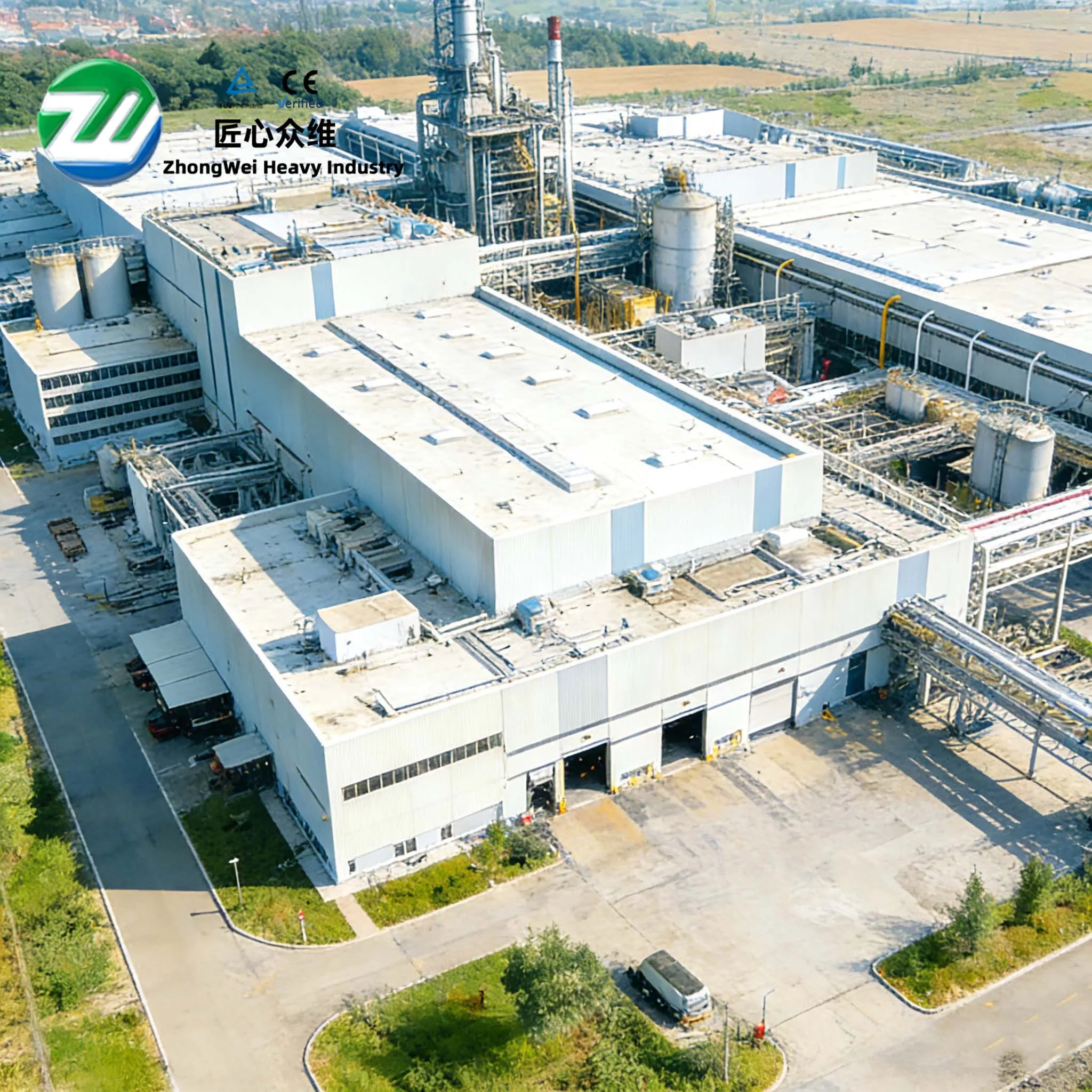
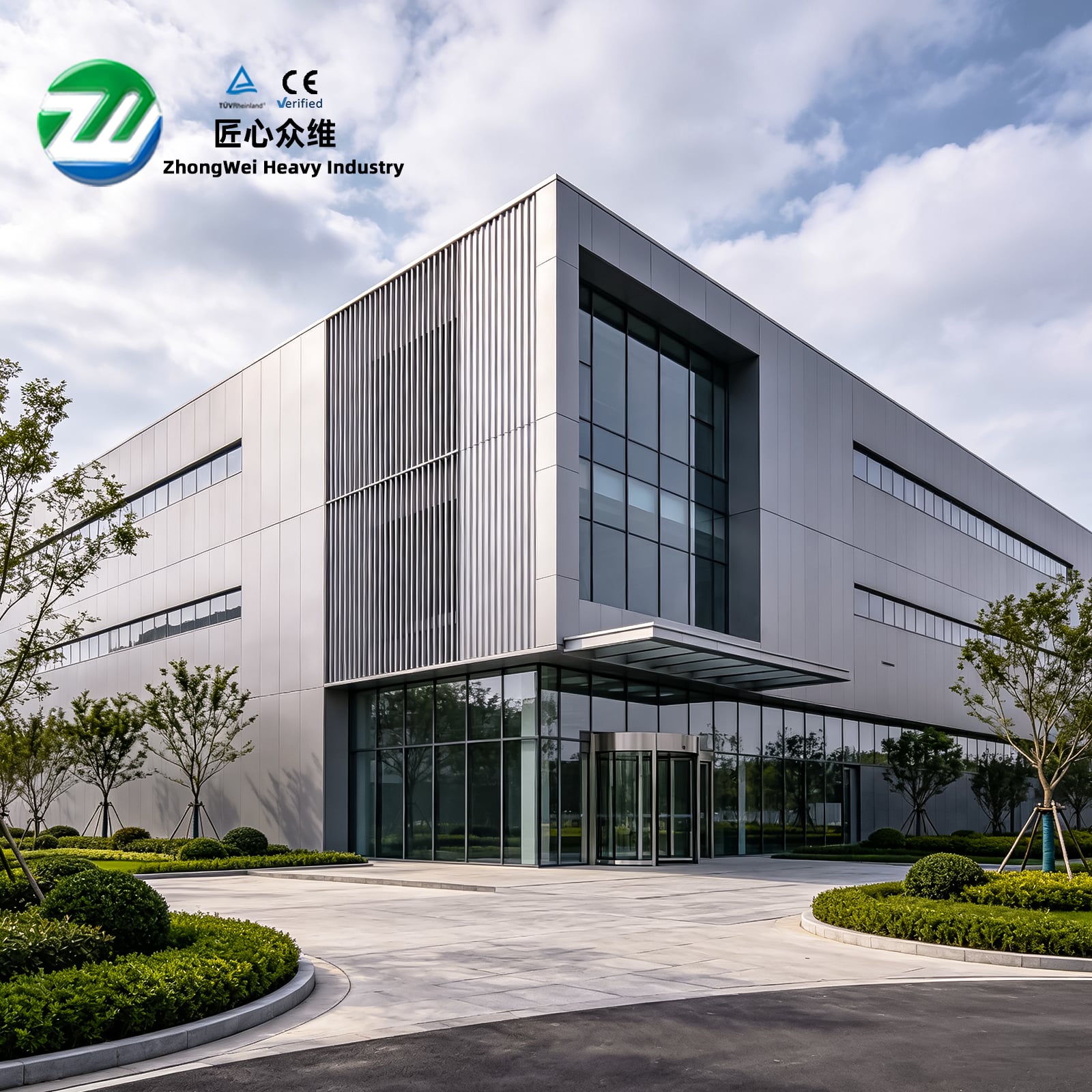
Figure 2. Policy and procurement rules are making carbon data, compliant materials and auditable documentation part of supplier competitiveness.
The dual-carbon goals are pushing the construction industry away from a traditional investment-driven logic and toward coordinated carbon reduction across energy, materials, construction and operation. For a long time, the construction sector has faced problems such as extensive wet work on site, high material loss, large volumes of construction waste and fluctuating delivery quality. The policy value of prefabricated steel structures lies in moving more processes into factories and reducing on-site energy use, dust, noise and waste emissions through standardized design, industrialized production and on-site assembly.
Green building-material promotion policies are also changing how procurement is evaluated. Document Caiku [2022] No. 35 clearly expands the policy implementation scope to 48 cities and includes hospitals, schools, office buildings, complexes, exhibition halls, convention centers, stadiums and affordable housing projects under government procurement. For projects covered by the policy, building materials listed in the Government Procurement Demand Standards for Green Buildings and Green Building Materials should be purchased and used in compliance with the relevant requirements. For steel-structure plants and warehouses, this is not a direct subsidy. However, it will transmit demand to the market through government-invested projects, public buildings and industrial-park projects.
At the local implementation level, prefabricated-building requirements are often linked with land-transfer conditions, floor-area-ratio incentives, green-building star ratings, low-carbon indicators for industrial parks and technical conditions for government-invested projects. For B2B buyers, this means that steel-structure suppliers must not only provide quotations, but also submit auditable design calculations, material certificates, welding quality records, coating-system documentation, shipment batch records and installation guidance documents.
Steel structures are not expanding evenly across all building types. According to the 2024 key-project sample, super high-rise buildings and office buildings accounted for 28%; large exhibition centers, cultural and sports venues and shopping centers accounted for 25%; industrial plants and high-end manufacturing plants accounted for 16%; transport infrastructure, airport terminals and high-speed railway stations accounted for 9%; schools and hospitals accounted for 8%; and residential projects accounted for less than 1%. This sample reflects enterprise-reported key projects and should not be interpreted as the completed floor-area structure of the entire industry.
This structure is realistic. Plants, warehouses and logistics centers usually require long spans, clear column grids, high clear height, crane beams or heavy-rack load-bearing capacity. Cultural and sports venues and exhibition centers require long-span roof systems and complex nodes. Super high-rise buildings rely more heavily on steel frames, concrete-filled steel tube columns, mega trusses and composite floors to balance height, seismic performance and construction speed. By contrast, ordinary residential buildings must simultaneously address sound insulation, fire resistance, cost, apartment-layout standardization, envelope systems and coordination with interior finishing, making large-scale promotion more difficult.
Taking the public information of Shenyang Zhongwei Heavy Industry Steel Structure Engineering Co., Ltd. as an observation sample, the company's website focuses its products and services on steel-structure warehouses, steel-structure workshops, poultry houses and overseas steel-structure solutions. Its disclosed services include customized steel-structure design and prefabrication, international-standard certification support, global logistics, on-site installation guidance and one-stop export services. The Alibaba company profile also positions the company as an integrated service provider of green building steel-structure systems and architectural metal enclosure systems. For overseas buyers, the key capability is not simply a price per tonne, but whether design standards, factory manufacturing, export packaging, destination-country codes and installation sequencing can be integrated.
Specific projects also show the complexity of steel-structure export projects. Zhongwei Heavy Industry's website discloses that, for a large logistics warehouse project in Bangkok, the company was responsible for approximately 4,150 tonnes of steel-structure production, manufacturing and shipment. The scope covered the main steel structure, large-span roof support system and auxiliary components, and emphasized compliance with relevant Thai standards and building codes. Its overseas plant and warehouse order information states that overseas orders account for more than 60% of its business volume and mentions projects such as an agricultural warehouse in Poland, a food-processing plant in Saudi Arabia and a building-materials warehouse in Kenya. These statements are company self-disclosures and should be used as case observations rather than being generalized as industry averages.
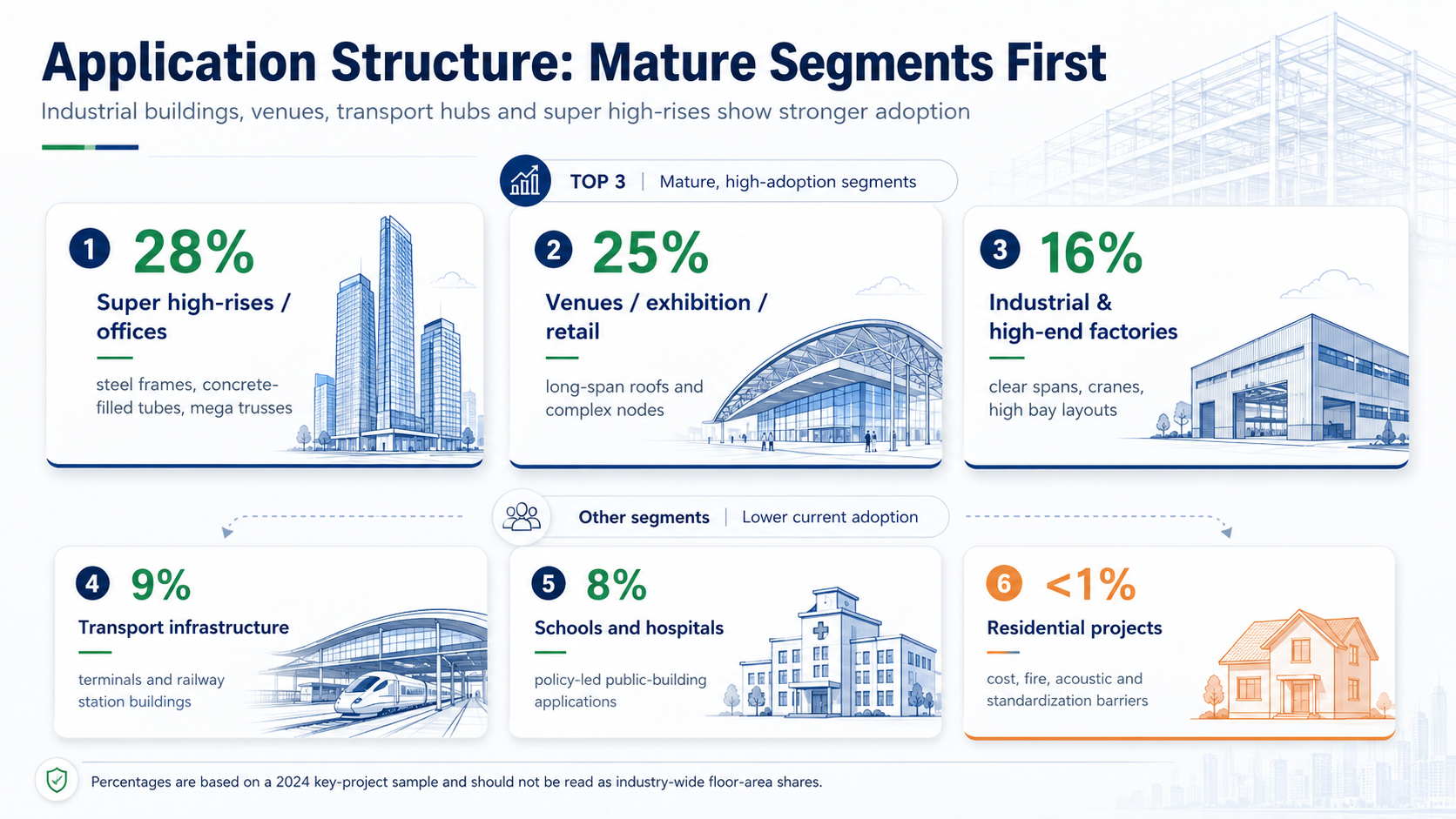
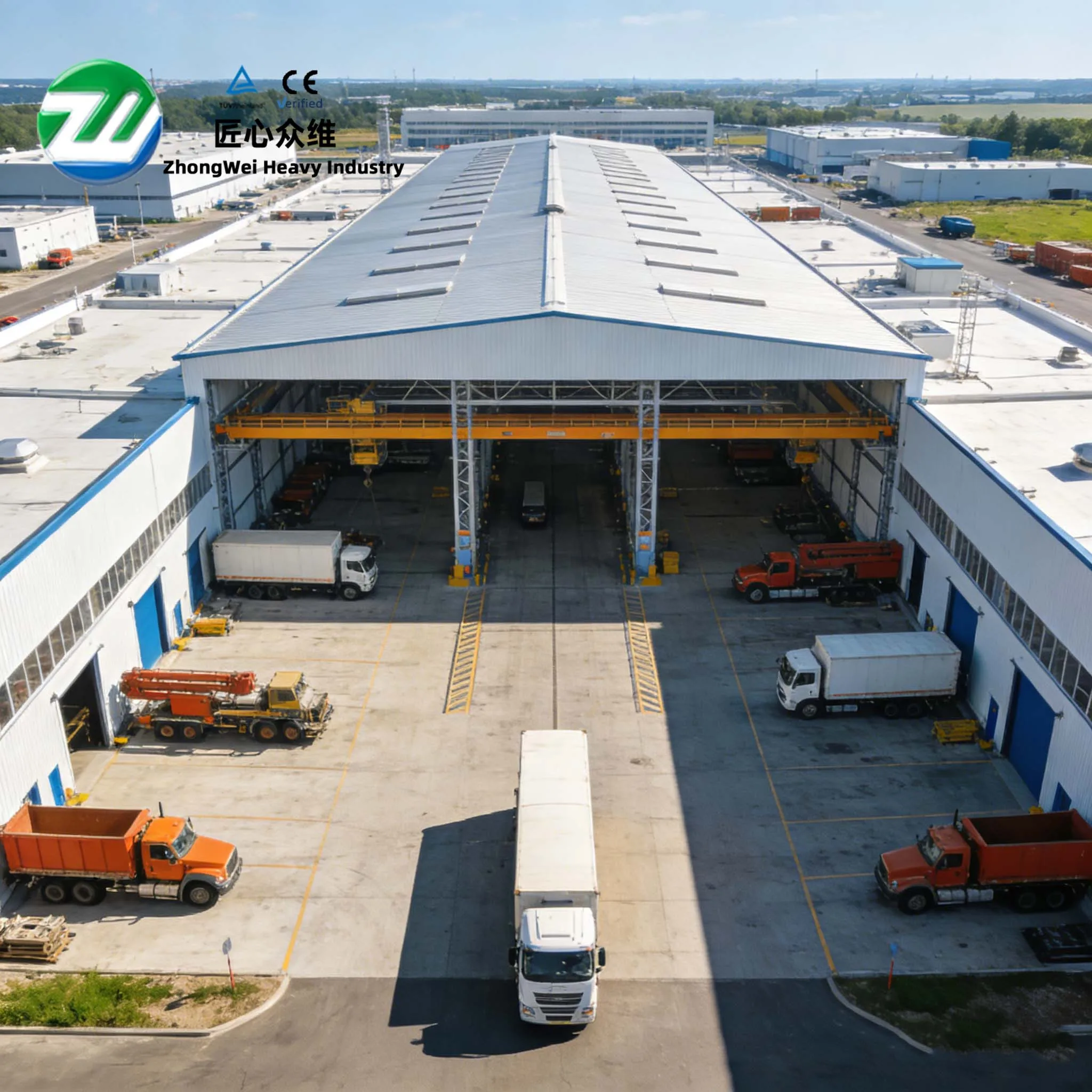
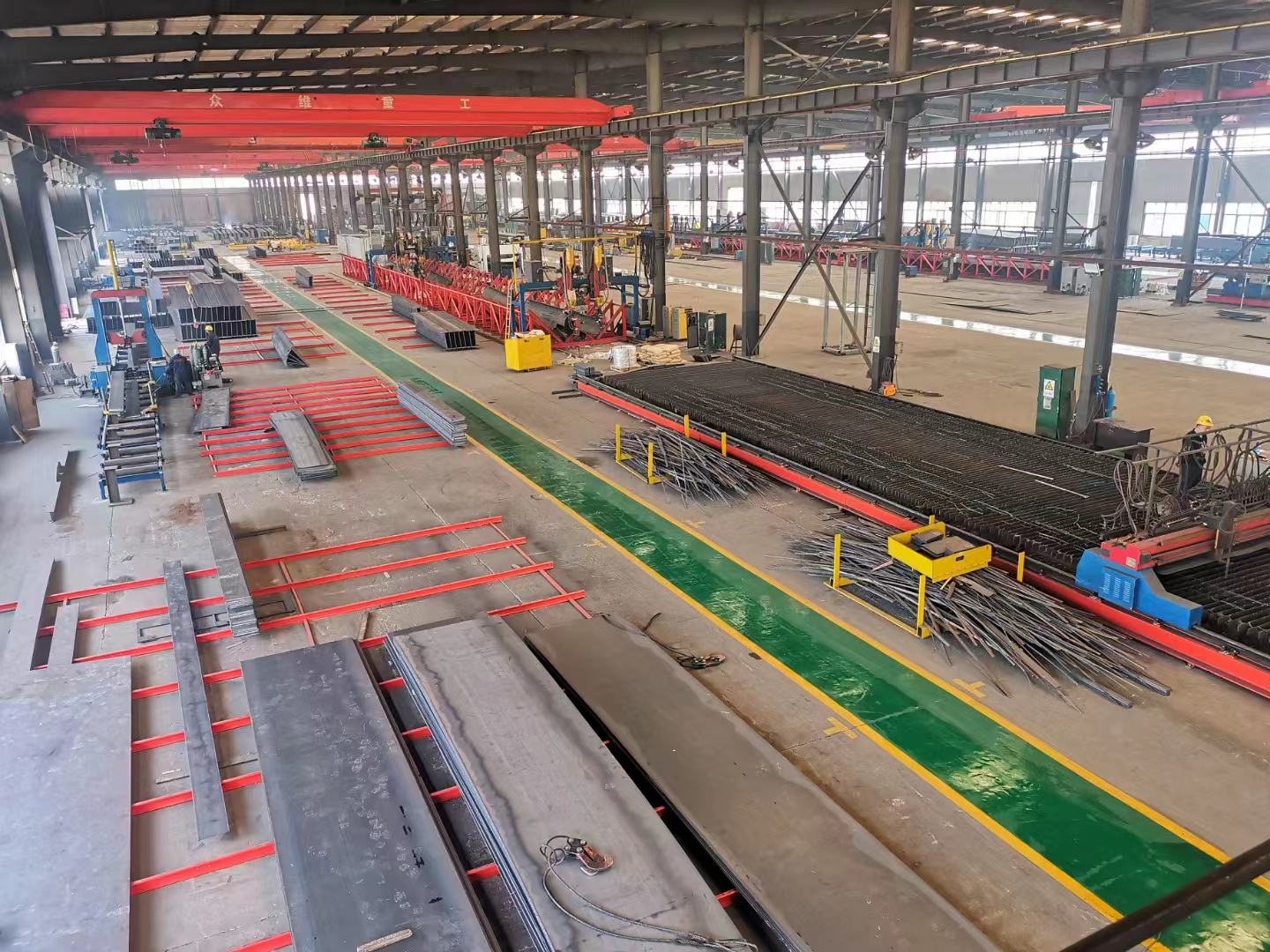
Figure 3. Current adoption is strongest where span, load, height, logistics efficiency and construction certainty create clear value.
On the material side, high-strength steel, weathering steel, stainless steel, low-VOC anti-corrosion coatings and building-integrated photovoltaics are changing lifecycle evaluation for steel structures. Industry reports note that Q690 high-strength steel has a yield strength roughly twice that of conventional Q355 structural steel, while its unit cost is about 1.25 to 1.35 times that of Q355 steel. If section optimization reduces weight and welding volume, its comprehensive cost and carbon emissions may not necessarily be higher than those of traditional solutions. After the use of Q690 steel at the Xiong'an New Area Science and Technology Innovation Center, public reports stated that the main structure weight was reduced by 20% and carbon emissions by 18%, demonstrating the value of high-strength steel for weight reduction and carbon reduction in specific scenarios.
On the manufacturing side, BIM, digital twins, the Internet of Things, robotic welding, automated cutting, CNC drilling and production-management systems are spreading from large enterprises to regional factories. For steel-structure warehouses and plants, the real efficiency gain comes from model-driven manufacturing: the structural calculation model, detailed drawings, component lists, weld information, bolt-hole positions and packaging/shipment codes remain consistent, thereby reducing design changes, missing components and secondary cutting on site.
Envelope systems and mechanical-electrical coordination are also critical for low-carbon buildings. The carbon performance of a steel-structure plant is determined not only by the main steel material, but also by roof and wall insulation, airtightness, daylighting, natural ventilation, rooftop photovoltaics, smoke exhaust and fire-protection systems. The carbon-peaking policy for urban and rural construction proposes that, by 2025, the rooftop photovoltaic coverage rate of new public-institution buildings and new factory buildings should strive to reach 50%. This will push steel-structure roofing from a single envelope function toward an integrated system for bearing, insulation, waterproofing, maintenance access and power generation.
The first challenge is cost control. The cost of a steel-structure project is not simply steel price multiplied by tonnage. What the owner actually pays for is the comprehensive cost of design detailing, processing loss, welding, sandblasting and rust removal, coating, fire protection, transportation, hoisting, envelope systems, node installation and later maintenance. Fluctuations in steel prices amplify quotation risk; too many non-standard nodes increase processing hours; and cross-border projects must also bear packaging, ocean freight, customs clearance and destination-country code adaptation costs. If bidding still focuses on the lowest initial price, low-carbon steel and high-performance coating systems cannot fully reflect their lifecycle value.
The second challenge is insufficient standardization. Domestic steel-structure plant and warehouse projects are often highly customized because of different process flows, equipment layouts, regional climates and owners' expansion plans. Column spacing, purlins, bracing, envelope panel types, gutters, door and window openings, crane beams and mezzanine nodes often lack unified modules. This leads to repeated design work, excessive component types, frequent production-line adjustments and low tolerance for errors during installation. Future competitiveness will not come from making every project the same; it will come from building a system of standardized components, parametric combinations and project-specific verification.
The third challenge is fire protection and corrosion protection. Steel is recyclable, strong and lightweight, but its fire resistance and corrosion resistance must rely on design and protective systems. Warehouses, plants and logistics projects are often located in high-humidity, coastal, chemical, cold-chain or high-temperature environments. Coating systems, hot-dip galvanizing, fireproof coatings, maintenance cycles and protection of connection areas should be determined at the design stage. Standards such as GB 55037-2022 General Code for Fire Protection of Buildings, GB 51249-2017 Technical Code for Fire Safety of Steel Structures in Buildings, ISO 12944 corrosion-protection paint systems and CECS 343:2013 Technical Specification for Anti-Corrosion Coating of Steel Structures should be included in bidding technical conditions rather than treated as remedial measures during construction.
The first main line for the next five years is digital construction. For engineers and supply-chain managers, digitalization should not stop at BIM visualization. It should enter component-level data delivery. Every steel beam, column, brace, purlin and connection plate should have a unique code linked with material grade, heat number, weld record, coating batch, inspection report, package number and installation location. Only in this way can prefabricated steel structures convert factory quality into on-site certainty.
The second main line is low-carbon steel and low-carbon procurement. As green building, green building-material and carbon-accounting systems advance, steel-structure projects will gradually pay more attention to material environmental product declarations, scrap ratio, electric-arc-furnace steel, use of green power, transport distance and recyclability. In the short term, low-carbon steel may face price premiums and supply-stability challenges. However, in export projects, multinational corporate plants, government-invested public buildings and owner projects with strict ESG disclosure requirements, low-carbon material certification will become a bidding advantage and may even become a prerequisite for entry.
The third main line is modular application. Steel-structure warehouses and plants are most suitable for early modularization because their functional units are relatively clear: standard column grids, standard roof slopes, standard envelope panel types, standard purlin and bracing systems, and standard portal-frame or multi-storey frame modules. Mature future solutions will no longer start from zero for every project. Instead, standard modules will meet 80% of repeated needs, while parametric design will address the remaining 20% related to local loads, process equipment and owner preferences.
The fourth main line is compatibility with international standards. For overseas buyers, suppliers need to clarify early in the contract which structural design standards, welding standards, execution standards, corrosion-protection standards and acceptance documents will be used. North American projects typically focus on ANSI/AISC 360 and AWS D1.1. European markets often involve EN 1993, EN 1090 and CE-related requirements. Coastal or highly corrosive environments tend to emphasize ISO 12944 corrosion categories. If Chinese steel-structure enterprises want to upgrade from component export to engineering-solution export, they need to build a standards matrix and a document-template library.
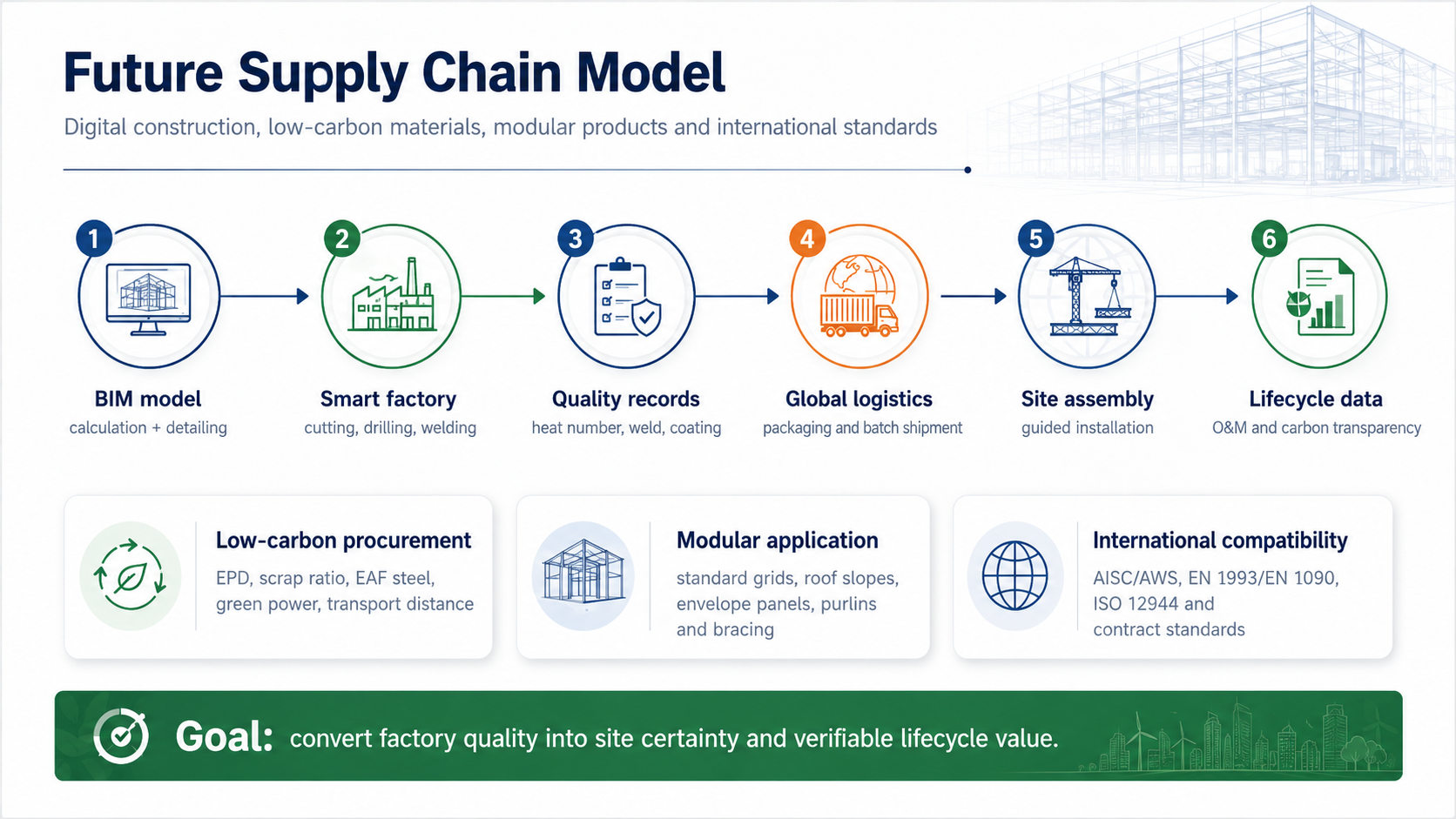
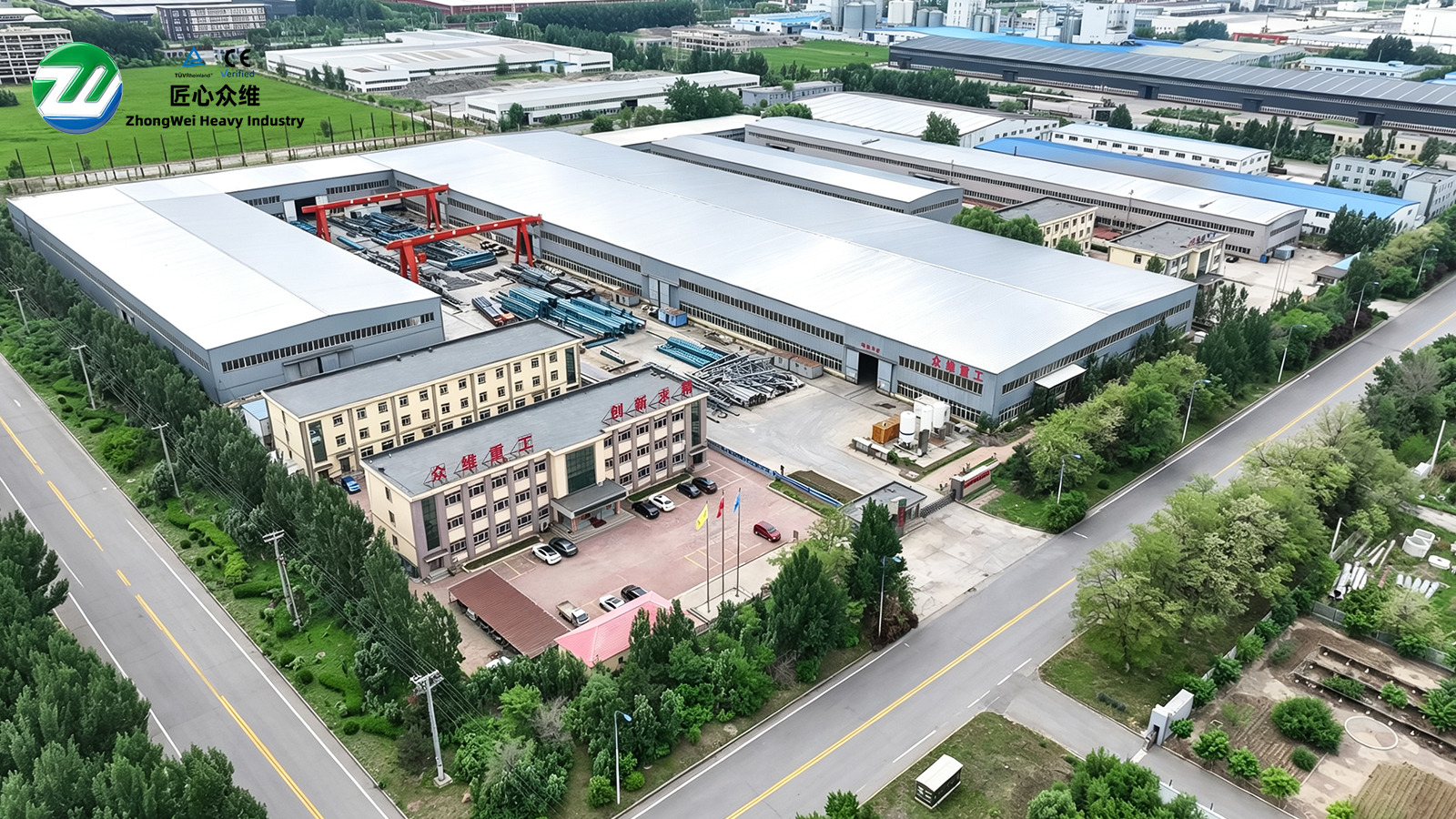
Figure 4. Future competitiveness depends on linking digital data, low-carbon procurement, modular products and international standards into repeatable delivery processes.
The future of prefabricated steel structures is not simply about replacing wood or concrete with steel. It is about using calculable, traceable, assemblable and maintainable methods to improve lifecycle efficiency in suitable building types. Plants, warehouses, venues, transport hubs and super high-rises will remain the main application scenarios. Public projects such as schools, hospitals and affordable housing will continue to pilot under policy support. The residential market is likely to accelerate only after fire-protection, sound-insulation, cost and standardization systems become more mature.
For enterprises, the key capability in the next stage is not a single-point breakthrough. It is the ability to turn design standards, low-carbon materials, digital manufacturing, quality proof, logistics delivery and overseas codes into stable processes. For buyers, supplier evaluation should also shift from price per tonne to lifecycle cost, delivery certainty, completeness of compliance documents and transparency of carbon data. As policy goals, green-material procurement and international project delivery exert pressure together, prefabricated steel structures will gradually move from being an optional solution to becoming an important infrastructure solution for low-carbon industrial buildings.
Policy documents: (1) Ministry of Housing and Urban-Rural Development, 14th Five-Year Plan for the Construction Industry (Jianshi [2022] No. 11), which proposes that by 2025 prefabricated buildings should account for more than 30% of new buildings and promotes the coordinated development of intelligent construction and new-type construction industrialization. (2) Ministry of Housing and Urban-Rural Development and National Development and Reform Commission, Implementation Plan for Carbon Peaking in Urban and Rural Construction, which proposes that by 2030 prefabricated buildings should account for 40% of new urban buildings completed in that year and promotes steel-structure housing, intelligent construction and green building materials. (3) Ministry of Finance, Ministry of Housing and Urban-Rural Development and Ministry of Industry and Information Technology, Notice on Expanding the Implementation Scope of the Government Procurement Policy Supporting Green Building Materials to Improve Building Quality (Caiku [2022] No. 35).
Industry materials: China Construction Steel Structure Industry Development Report 2023-2024 public reporting, covering 2024 steel-structure output, output value, application structure in key-project samples, and cases involving high-strength steel and weathering steel. The proportions cited in this article follow the public reporting scope and are not extrapolated as absolute industry-wide statistics.
Company public information: Shenyang Zhongwei Heavy Industry Steel Structure Engineering Co., Ltd. website regarding company capabilities, service scope, product categories and the Bangkok logistics warehouse project; Alibaba international-site company overview regarding enterprise positioning, production space and integrated service capabilities. Company projects, orders and capability descriptions are based on self-disclosed information.
Chinese standards: GB 55006-2021 General Code for Steel Structures; GB 50017-2017 Standard for Design of Steel Structures; GB/T 51232-2016 Technical Standard for Assembled Buildings with Steel Structure; GB 50205-2020 Standard for Acceptance of Construction Quality of Steel Structures; GB 55037-2022 General Code for Fire Protection of Buildings; GB 51249-2017 Technical Code for Fire Safety of Steel Structures in Buildings; JGJ 82-2011 Technical Specification for High-Strength Bolt Connections of Steel Structures; CECS 343:2013 Technical Specification for Anti-Corrosion Coating of Steel Structures.
International standards: ANSI/AISC 360-22 Specification for Structural Steel Buildings; AWS D1.1/D1.1M:2025 Structural Welding Code-Steel; EN 1993 Eurocode 3 Design of steel structures; EN 1090 Execution of steel structures and aluminium structures; ISO 12944 Paints and varnishes-Corrosion protection of steel structures by protective paint systems. Overseas projects should follow the regulations of the project location and the versions agreed in the contract.
Data-scope statement: Apart from the values clearly listed in policy documents, standard numbers and public reports, this article does not create additional statistical figures. Judgments on application structure, cost changes, modular maturity and low-carbon procurement trends are treated as industry observations or estimates.
 Hot News
2026-06-29
2026-06-29
2026-06-26
2026-06-26
2025-12-26
2025-08-24
 EN
EN