Moving 95% of Construction into the Factory: Zhongwei Heavy Industry Launches a New-Generation Modular Prefabricated Steel Structure Building System
With standardized connections, integrated anti-corrosion and fire-protection processing, and BIM-based digital pre-assembly, the system shifts the delivery of industrial plants, logistics warehouses and office buildings from on-site coordination to factory-based manufacturing capability.
=95% |
40% |
<=2 mm |
and office buildings from on-site coordination to factory-based manufacturing capability.
To meet the demand for rapid delivery of industrial plants, logistics warehouses and office support buildings, Shenyang Zhongwei Heavy Industry Steel Structure Engineering Co., Ltd. has released a new-generation modular prefabricated steel structure building system. The system moves component processing, connection matching, anti-corrosion and fire-protection processing, and digital pre-assembly forward to the factory, creating a closed-loop delivery path from design and manufacturing to on-site installation. According to the release materials, the system can achieve a factory prefabrication rate of more than 95%, shorten on-site installation time by 40% compared with conventional steel structure methods, and control BIM-based digital pre-assembly installation error within 2 mm.
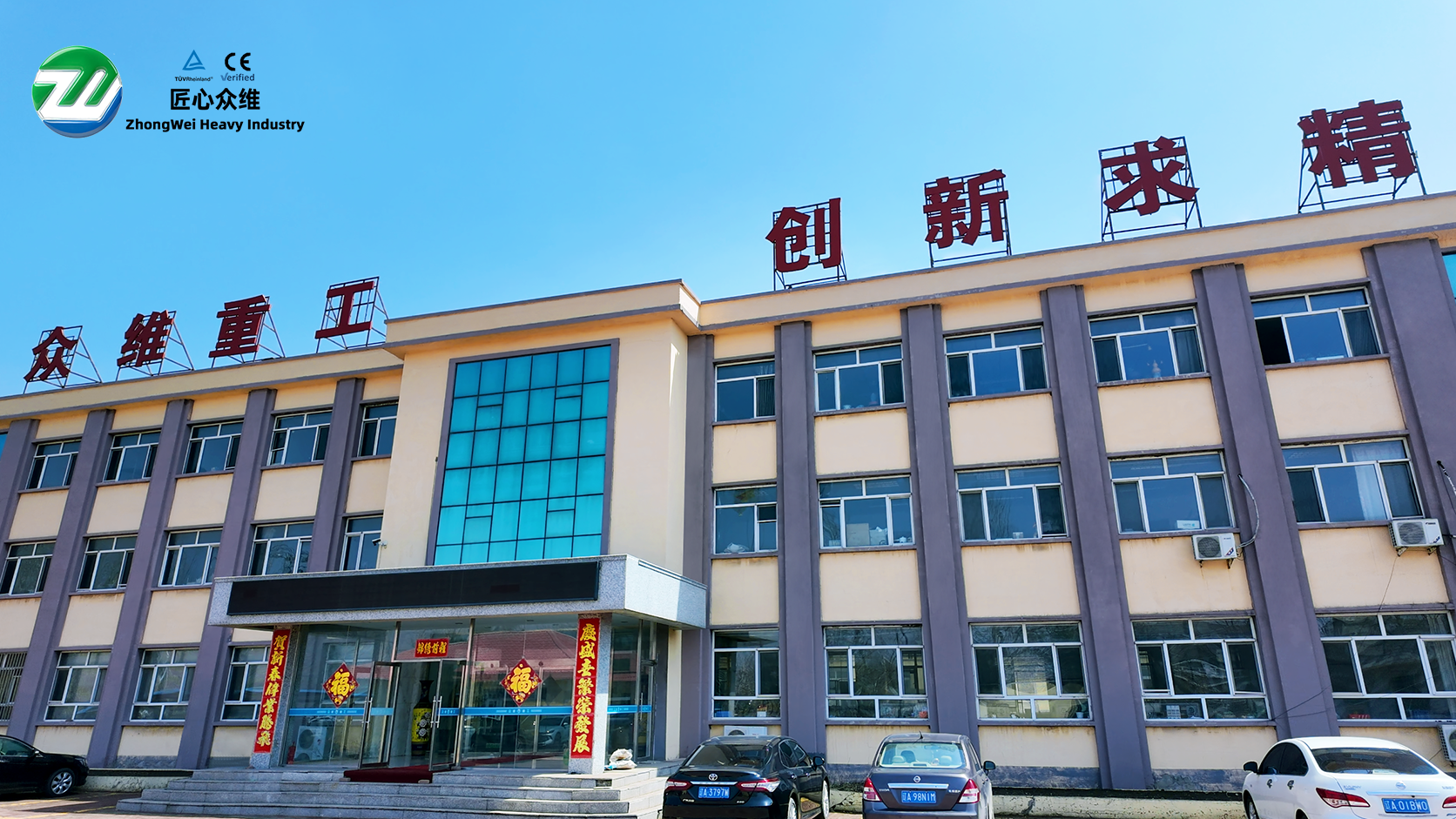
Zhongwei Heavy Industry has long focused on steel structure buildings and metal envelope systems. Its production base is located in Shenyang, with approximately 50,000 square meters of production space. The company has 24 years of experience in the steel structure field and has incorporated BIM technology and digital management into the upgrading of its production model. For steel structure projects targeting international markets, stable coordination between design, manufacturing, transportation and installation is becoming a key factor in procurement decisions.
This modular system is not simply about turning steel components into standard parts. Instead, it establishes a replicable set of technical rules around the pain points of engineering delivery: standardized connections reduce the proportion of non-standard detailing; integrated factory processing reduces secondary work on site; and BIM pre-assembly resolves collision, hole alignment, end-face and installation sequencing issues in advance. For design institutes, contractors and project owners, this means that projects no longer rely entirely on temporary on-site coordination; more certainty is locked into factory manufacturing and the digital model.
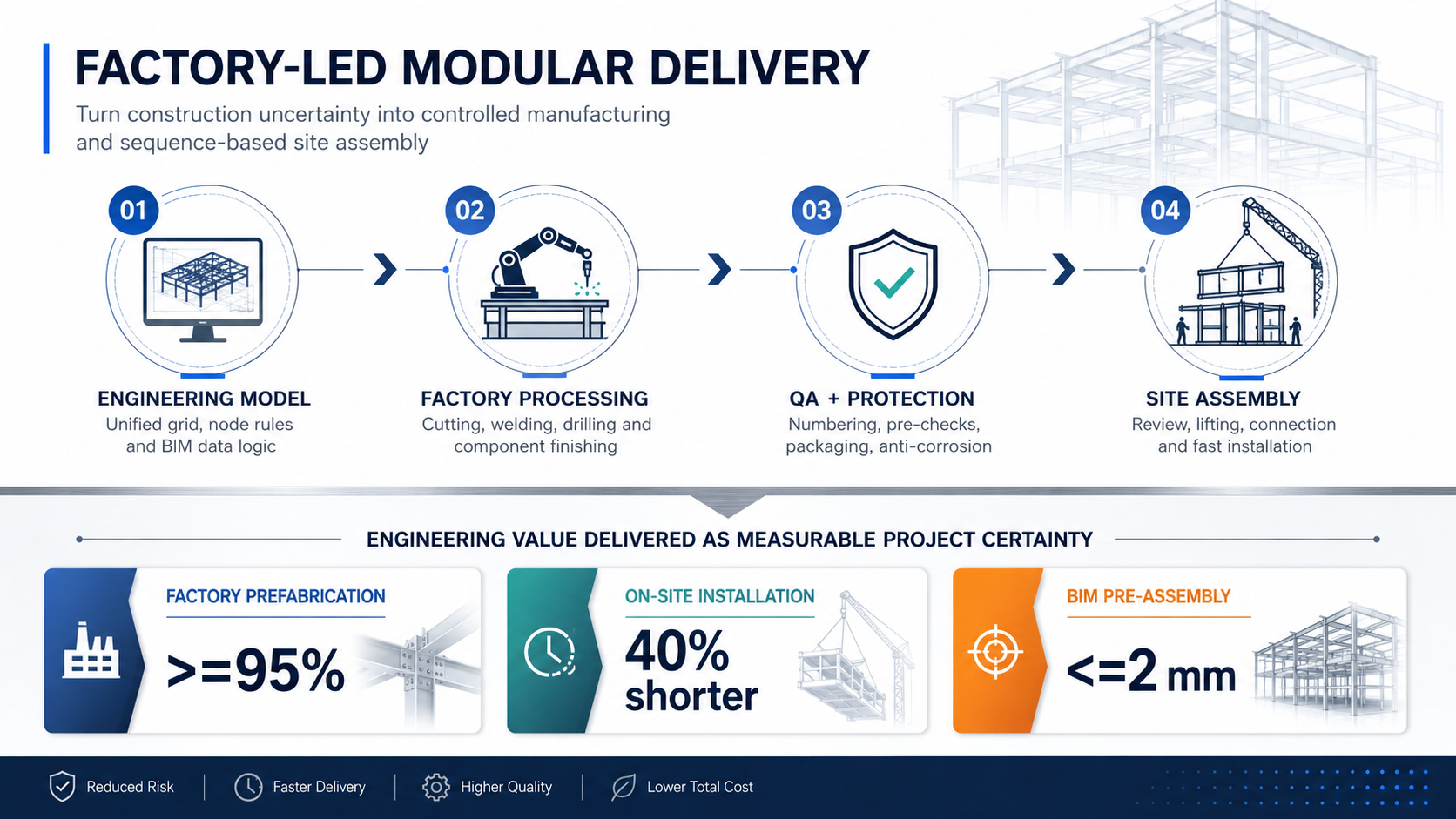
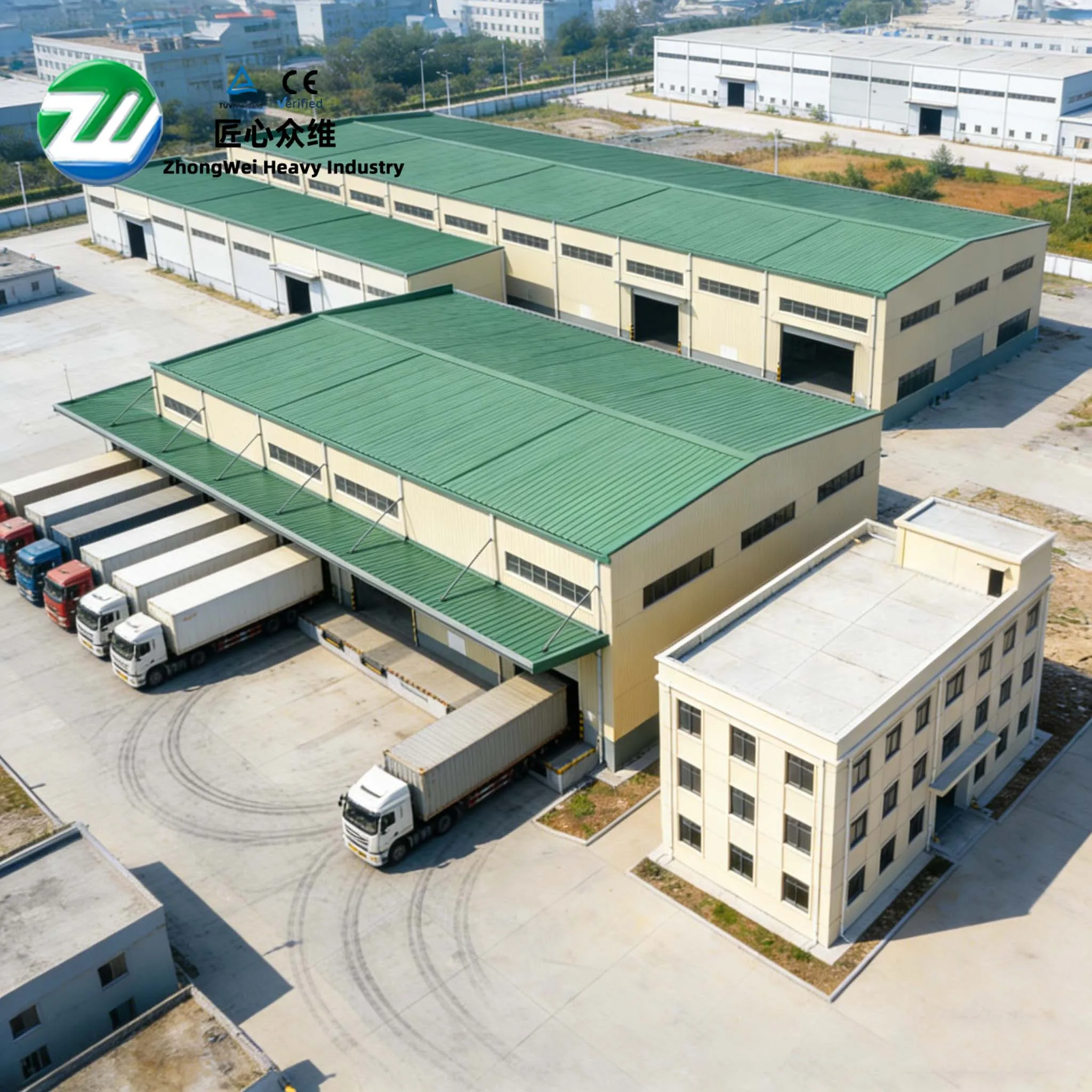
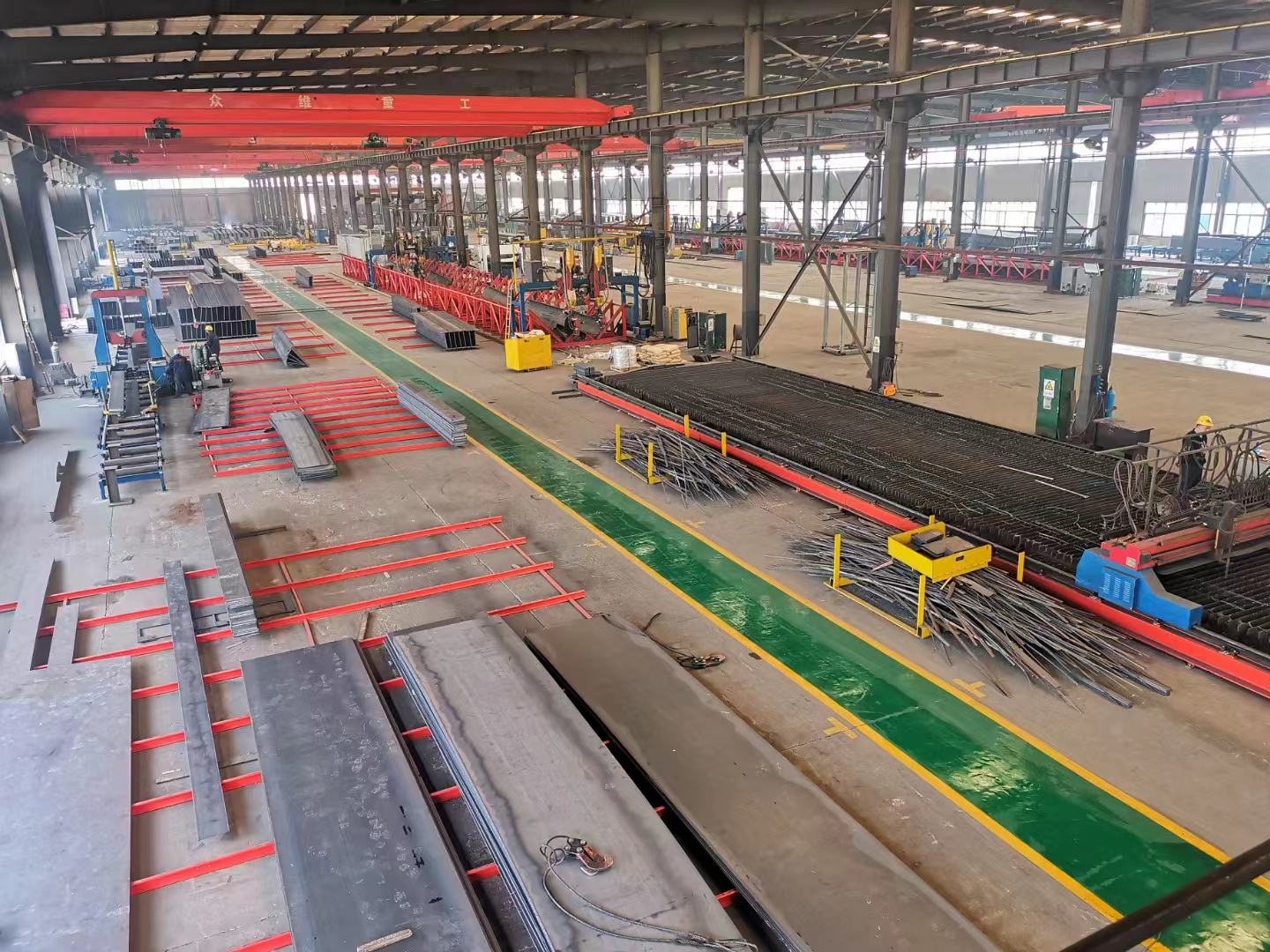
Figure 1. Factory-led modular delivery: components are processed, numbered, inspected and protected in the factory; on site, the work is primarily assembly.
1. Industry Pain Points: Steel Structure Buildings Need More Than Buildability - They Need Stable Delivery
In traditional steel structure projects, delivery efficiency is often constrained not by the supply of main materials, but by details such as non-standard connections, on-site hole drilling and repair welding, segmented anti-corrosion and fire-protection work, unclear component numbering and repeated adjustment of installation sequences. In large-span buildings such as factories and warehouses, the number of connections, component batches and on-site cross-operations is high. Once there is a deviation between the design model and processing data, the downstream result may be lifting delays, secondary correction and rework.
For general contractors and engineering companies, every reduction in an uncontrollable on-site process adds certainty to the project schedule. For project owners, a shorter construction period means not only lower capital occupation during the construction phase, but also earlier commissioning of production lines, warehousing functions or office facilities. Competition in the steel structure industry is shifting from single-price comparison to integrated delivery capability: design that can be manufactured, manufacturing that can be traced and installation that can be predicted.
The system released by Zhongwei Heavy Industry is an engineered response to these pain points. It transfers many judgments, corrections and treatments that were previously completed on site to the factory; converts drawing information into digital models, component codes and process documents; and turns project-by-project experience into reusable connection libraries and process paths.
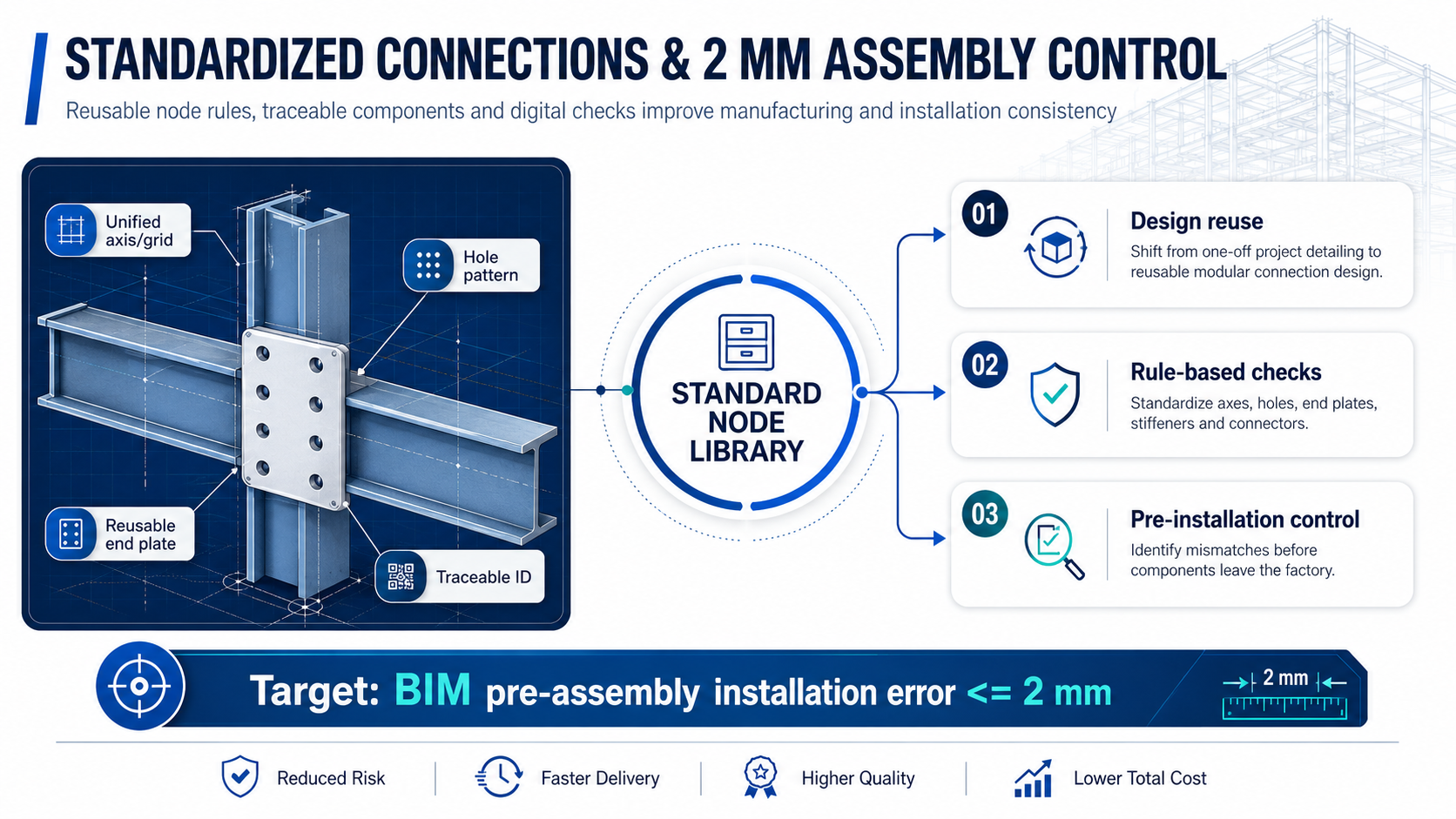
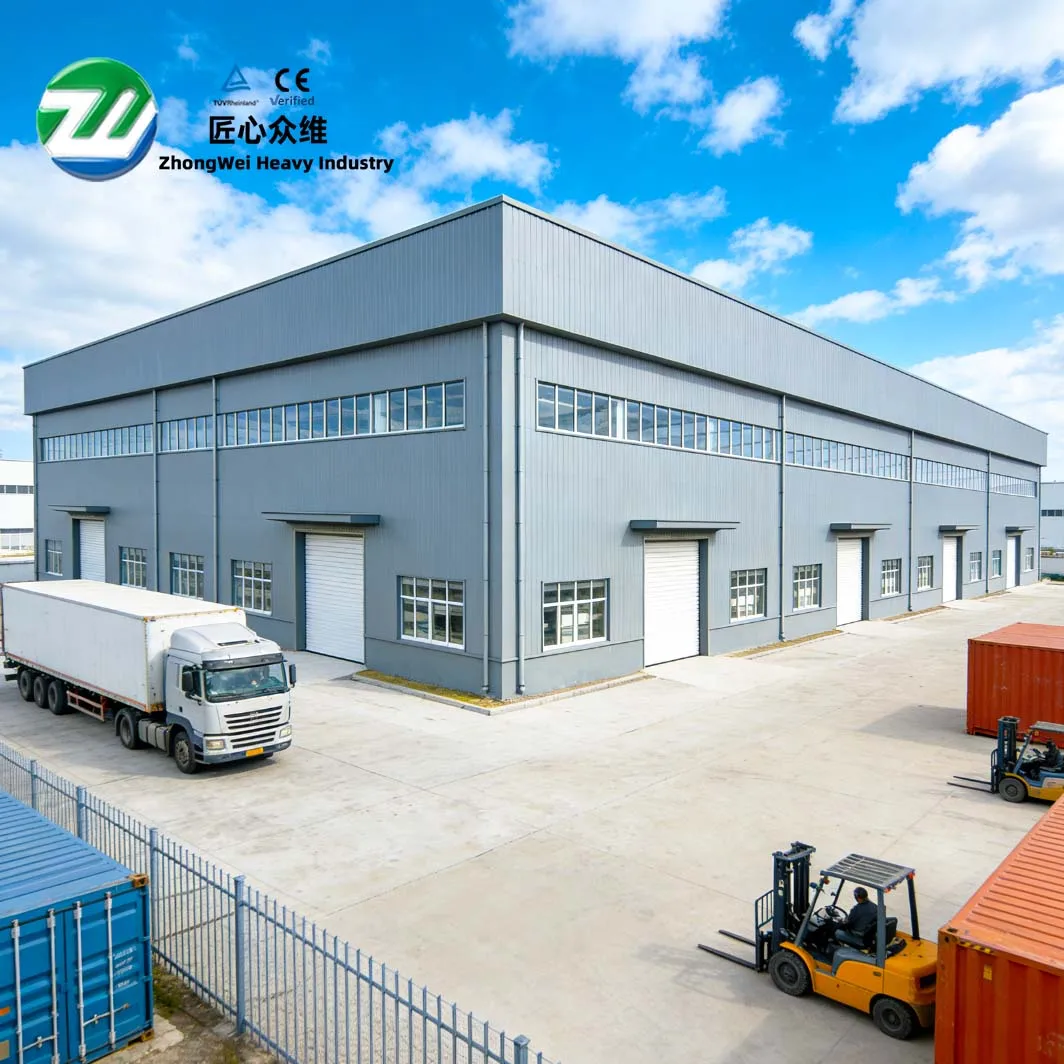
Figure 2. Standardized connection design: node reuse, regularized hole patterns and component tracking improve consistency between manufacturing and installation.
2. Solution: Move Key Processes to the Factory and Move Uncertainty into the Model
The first core element of the system is standardized connection design. While meeting structural and connection requirements, the connection logic shifts from one-off project detailing to modular reusable design. By unifying axes, hole positions, end plates, stiffeners and connector rules, the system reduces dependence on individual experience during manufacturing and installation. Standardizing connections does not weaken customization; rather, it breaks complex customization into an engineering language of fewer specifications and more combinations, enabling factories, warehouses and office buildings to be rapidly adapted under one set of rules.
The second core element is integrated anti-corrosion and fire-protection processing. In traditional practices, component transportation, lifting, on-site touch-up painting and fire-protection treatment may belong to different processes, and quality can be affected by weather, site conditions and operator experience. The new system moves anti-corrosion and fire-protection related processing as far as possible to the factory for unified organization, reducing uncertainty caused by cross-construction and secondary treatment on site. Because the release materials do not disclose specific coating systems, fire-resistance limits or coating thicknesses, the relevant technical indicators should be confirmed against the company technical documents and original test reports before formal publication.
The third core element is BIM-based digital pre-assembly. Before components enter the site, the system uses the model to complete collision checks, hole matching, connection sequencing and transportation package verification, identifying potential deviations between design, manufacturing and installation in advance. The release materials state that BIM digital pre-assembly can control installation error within 2 mm. The value of this indicator is not only precision itself; it also transforms the process from discovering problems on site to solving problems in the model and factory in advance.
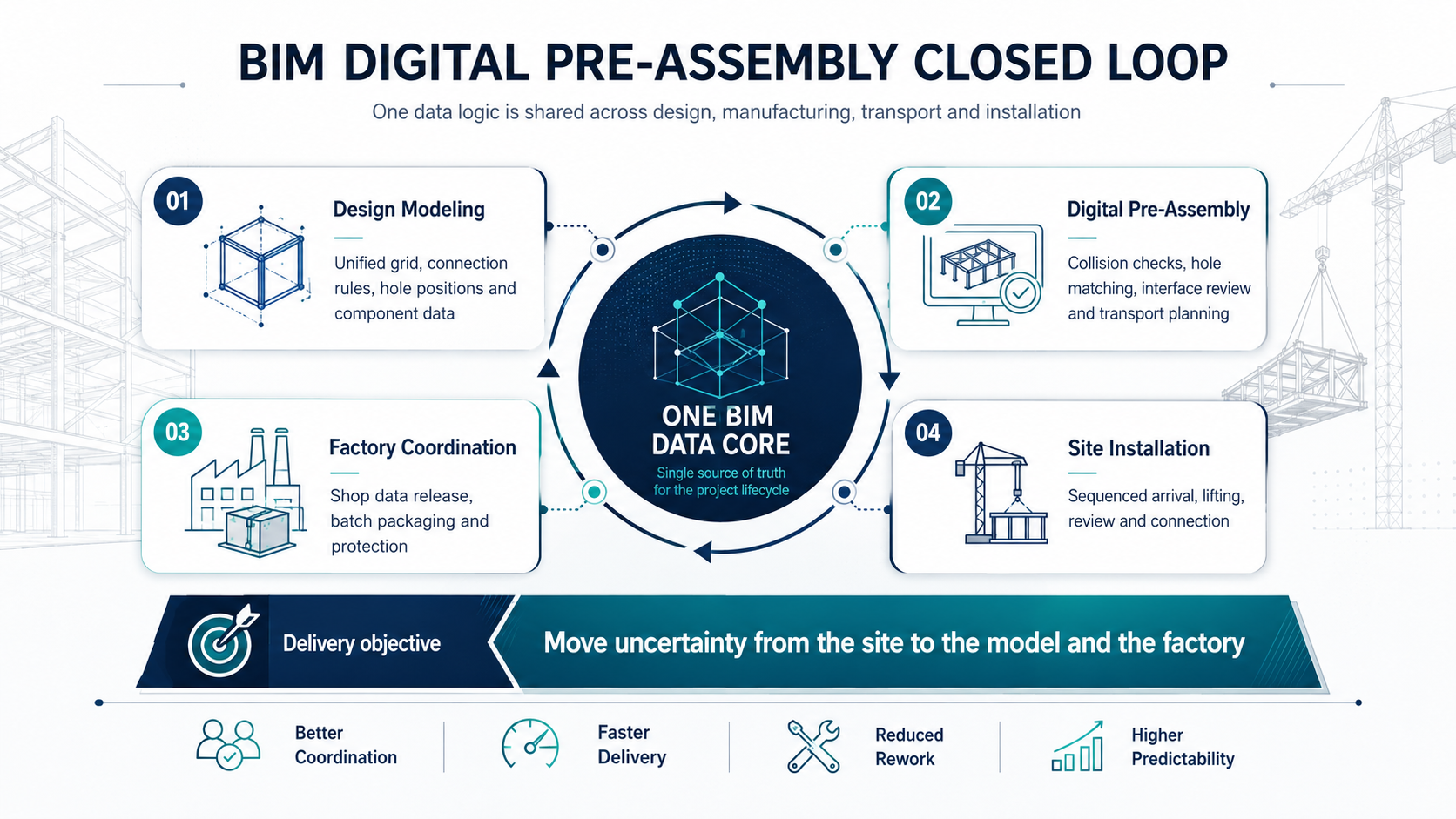
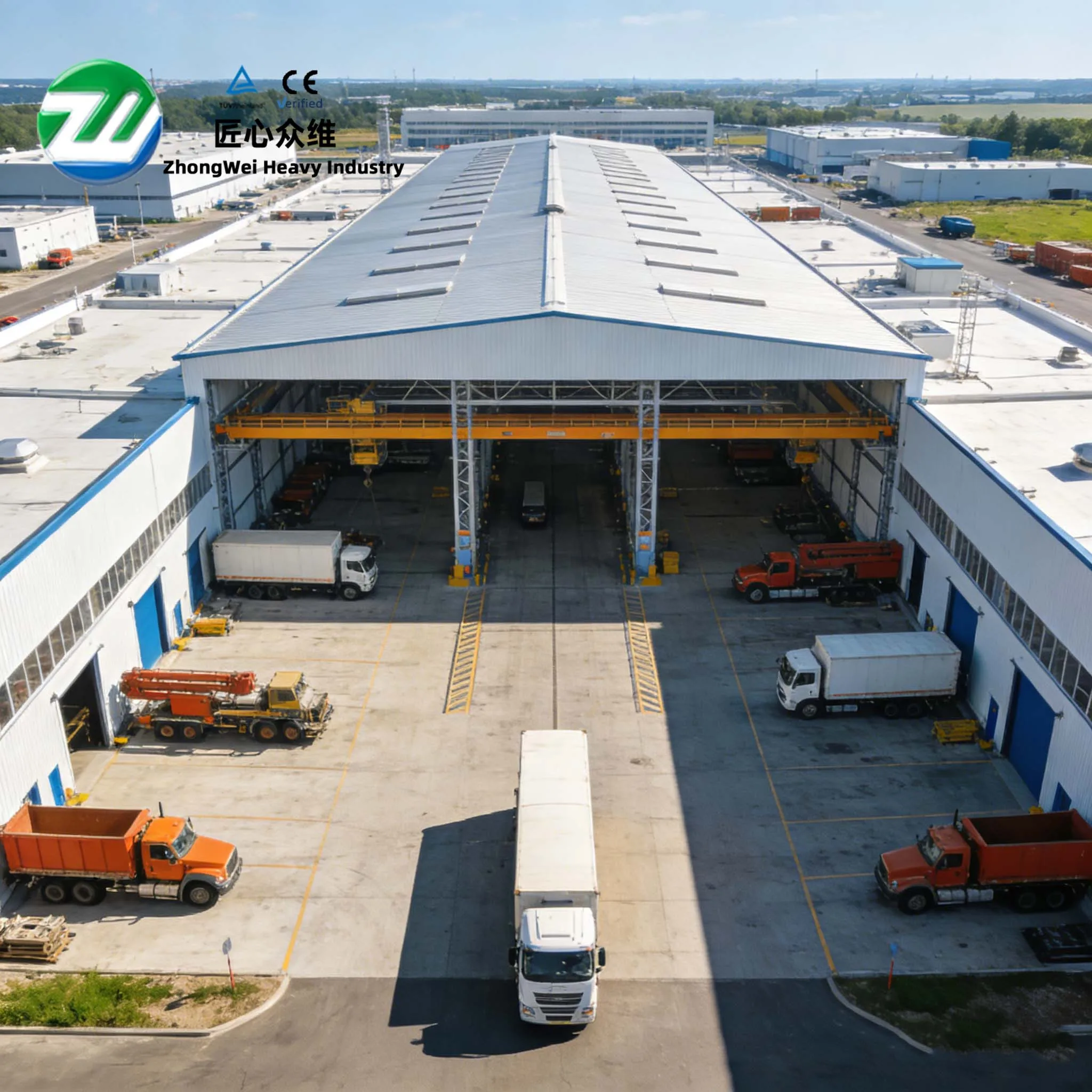
Figure 3. BIM digital pre-assembly process: design, manufacturing, transportation and installation share one data logic.
3. Core Parameters: Verifiable Data for Engineering Procurement Decisions
Around the delivery indicators that procurement teams care about most, Zhongwei Heavy Industry presents the key parameters of this system in verifiable engineering language:
Item |
Published Parameter / Conclusion |
Clarification Boundary |
Factory prefabrication rate |
More than 95% |
Based on the release materials; the calculation method should be supplemented for formal publication. |
On-site installation schedule |
40% shorter than conventional steel structure methods |
Project case releases should supplement the comparison baseline and statistical period. |
BIM digital pre-assembly |
Installation error controlled within 2 mm |
The model checking process, measurement method and sampling records should be supplemented. |
Applicable scenarios |
Industrial plants, warehouses, office buildings and others |
Different spans, loads, envelope systems and MEP conditions should be detailed by project. |
Testing and standards |
Tested by the National Steel Structure Engineering Technology Research Center and compliant with GB 50017-2017 |
Report number, test date, and sample/system identification should be confirmed. |
4. Practical Benefits: Visible Certainty for Design, Construction and Investment Decisions
For design institutes, standardized connections and BIM models can improve detailing efficiency and reduce repeated coordination and version deviations. At the scheme stage, designers can combine typical column grids, spans, purlin systems, envelope systems and MEP reservations to form design outputs that are easier to convert into construction drawings and manufacturing data.
For engineering companies, the value is concentrated in on-site organization efficiency. A factory prefabrication rate of more than 95% means that more components are processed, numbered, checked and protected under controlled factory conditions. On-site work shifts from processing plus installation to review, lifting and connection. When installation time is shortened by 40% compared with conventional steel structure methods, lifting equipment, site management personnel, temporary facilities and cross-operation coordination costs all have the potential to be optimized together.
For project owners, the key value of the modular system is more predictable return on investment. Industrial plants can support earlier equipment entry and production line commissioning; logistics warehouses can shorten the time to operation; and office support buildings can be delivered in parallel with production spaces in industrial parks. Compared with simply lowering steel or processing unit prices, shortening the construction period, reducing rework risk and improving adaptability for future expansion can have a greater impact on life-cycle cost.
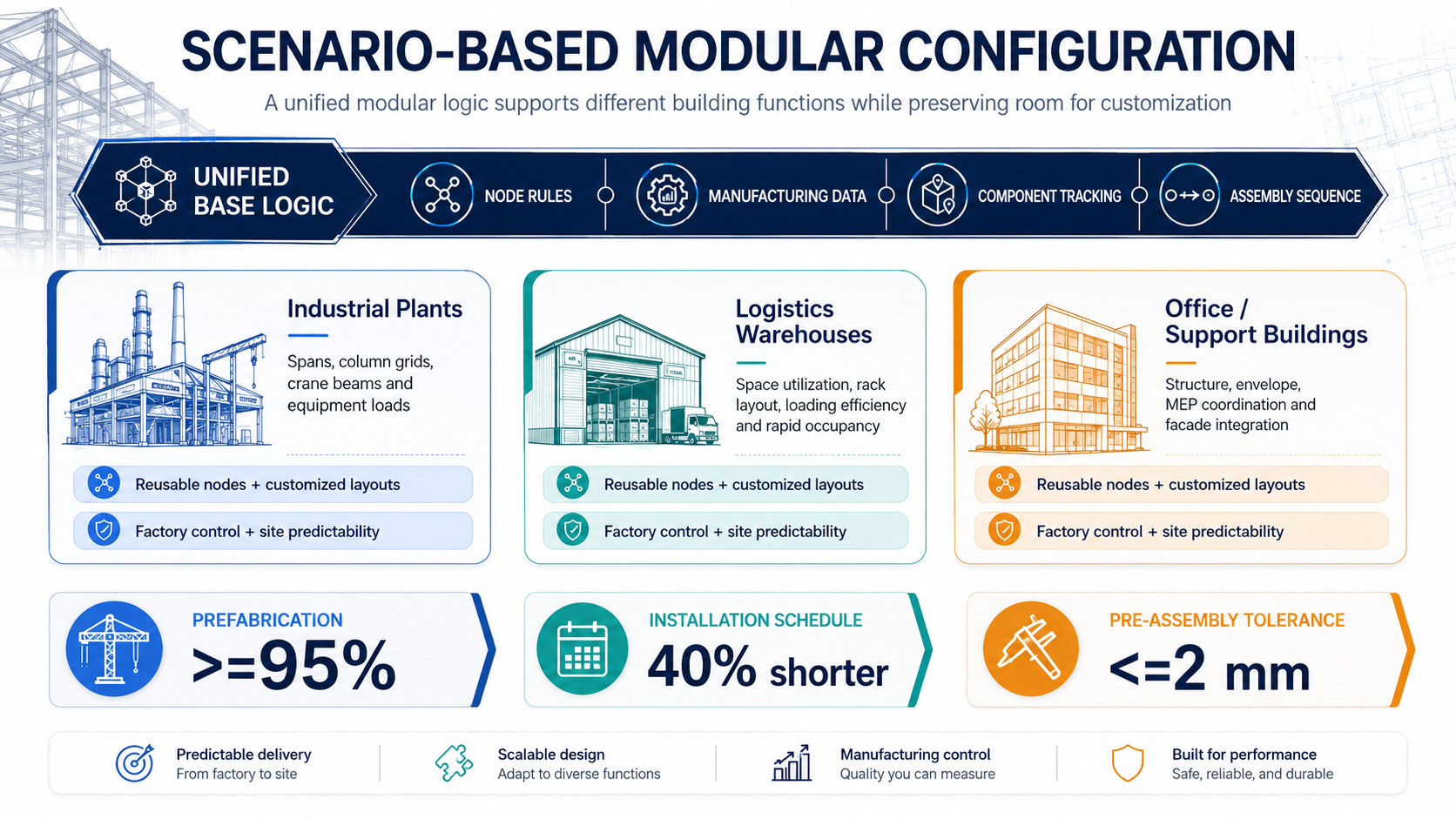
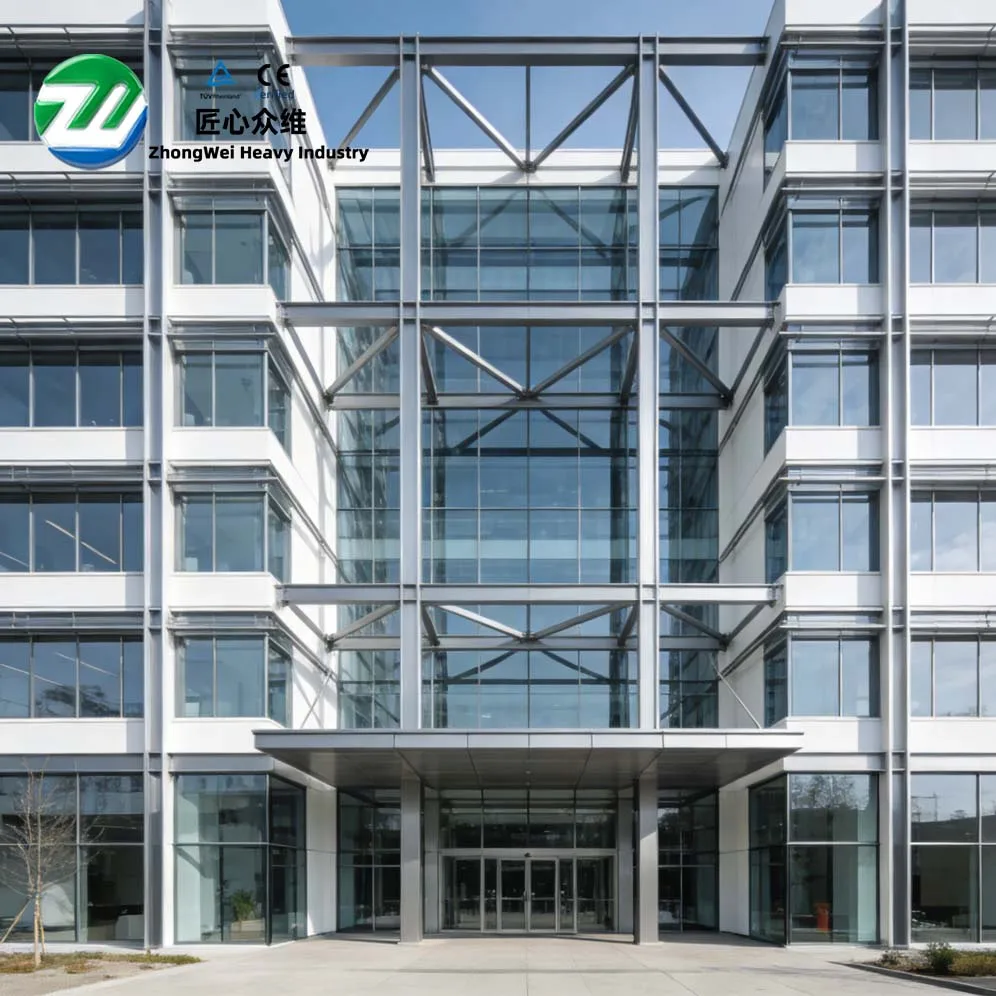
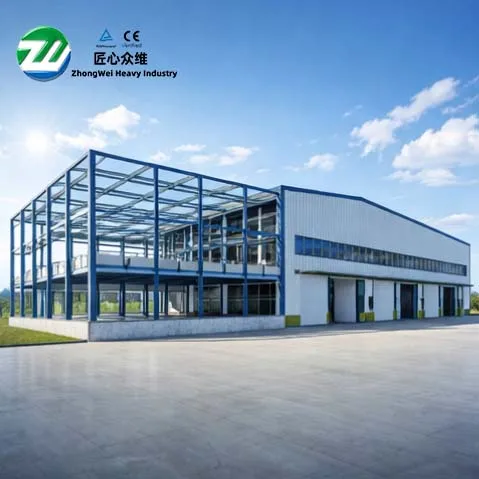
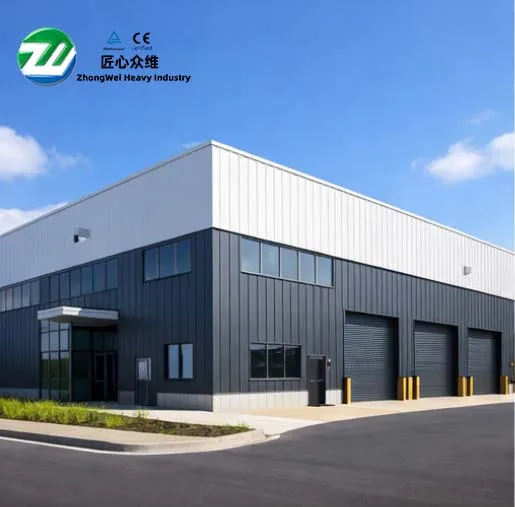
Figure 4. Multi-scenario adaptation: industrial plants, warehouses and office buildings can be configured under a unified modular logic while preserving differentiated functions.
5. Application Scenarios: From Production Space to Logistics Nodes and Industrial-Park Office Support
In terms of application scenarios, the system is intended for industrial plants, warehouses, office buildings and other building types. Plant projects typically focus on spans, column grids, crane beams and equipment load adaptability; warehouse projects focus on space utilization, rack layout, loading efficiency and rapid commissioning; and office or industrial-park support buildings place more emphasis on integrated coordination of structure, envelope, MEP systems and facade expression. The advantage of modular prefabricated steel structures is that they can reuse underlying connection and manufacturing logic across different scenarios while retaining room for functional and facade customization.
For cross-regional and cross-border engineering projects, the modular system also provides value in transportation and site management. Components can be coded, packaged by installation batch, pre-inspected and packed before leaving the factory. After arriving on site, lifting can be organized according to the installation sequence, reducing communication costs caused by differences in language, construction practices and site resources. Public information on Zhongwei Heavy Industry indicates that the company provides full-chain steel structure solutions from research and design to production, manufacturing, installation and operation and maintenance, and has built a service network for multiple countries and regions. This capability provides a foundation for applying the modular system to international projects.
Conclusion: Turning Factory Precision into Site Efficiency and System Capability into Delivery Certainty
In the steel structure building market, what truly convinces procurement decision-makers is not an abstract slogan of high quality, but delivery indicators that are explainable, testable and reviewable. A factory prefabrication rate of more than 95%, a 40% reduction in on-site installation time and BIM digital pre-assembly error control within 2 mm constitute the core value expression of Zhongwei Heavy Industry's new-generation modular prefabricated steel structure building system.
As industrial plants, modern logistics facilities, overseas industrial parks and integrated production-office projects continue to grow, competition among steel structure companies will increasingly depend on engineering standardization, digitalized manufacturing and on-site assembly capability. For design institutes, engineering companies and project owners, choosing a mature modular system is essentially choosing higher delivery certainty. With this system release as a starting point, Zhongwei Heavy Industry is turning the precision of factory manufacturing into the efficiency of project sites and providing a clearer path for steel structure buildings to support both green, low-carbon development and rapid construction goals.
 Hot News
2026-06-29
2026-06-29
2026-06-26
2026-06-26
2025-12-26
2025-08-24
 EN
EN