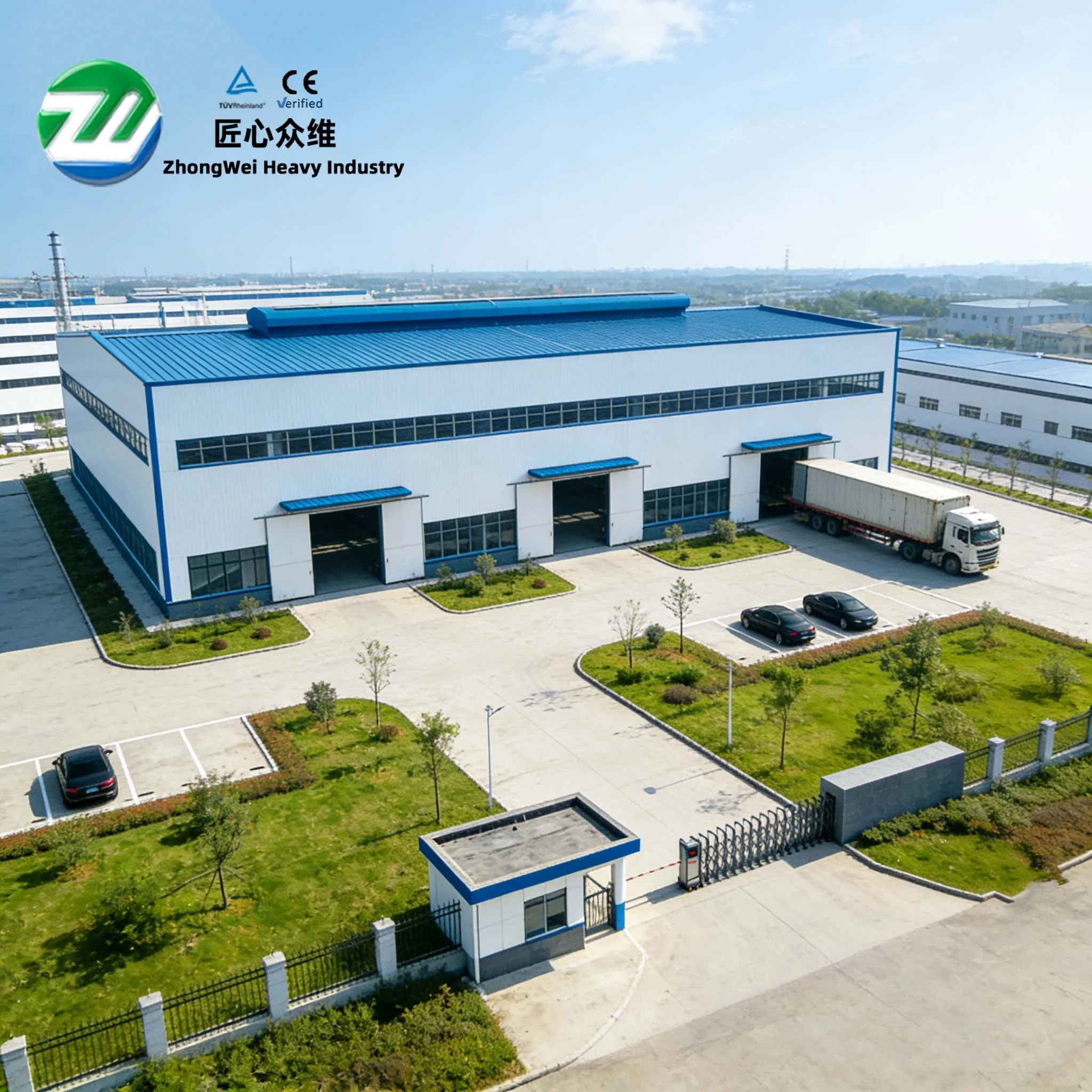
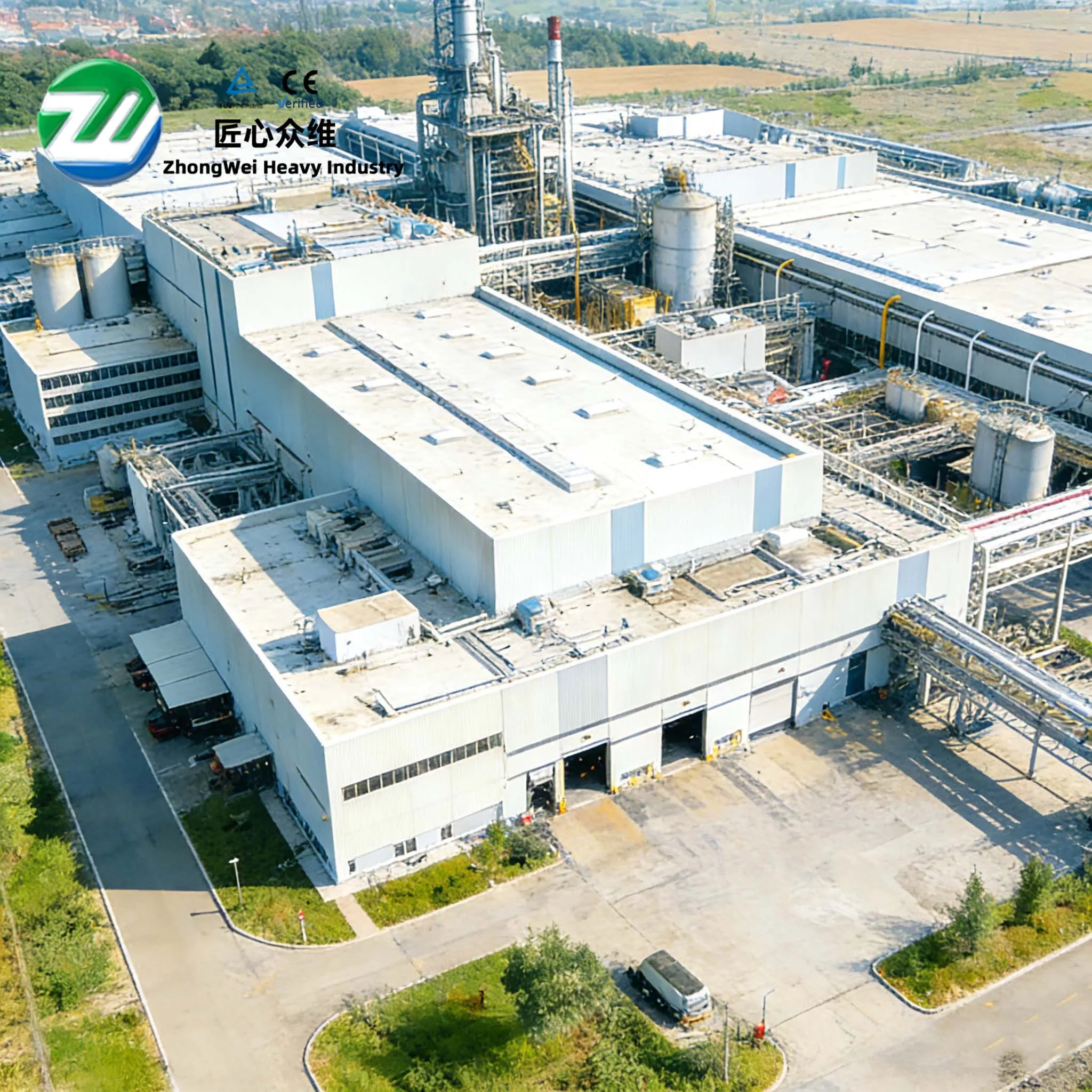
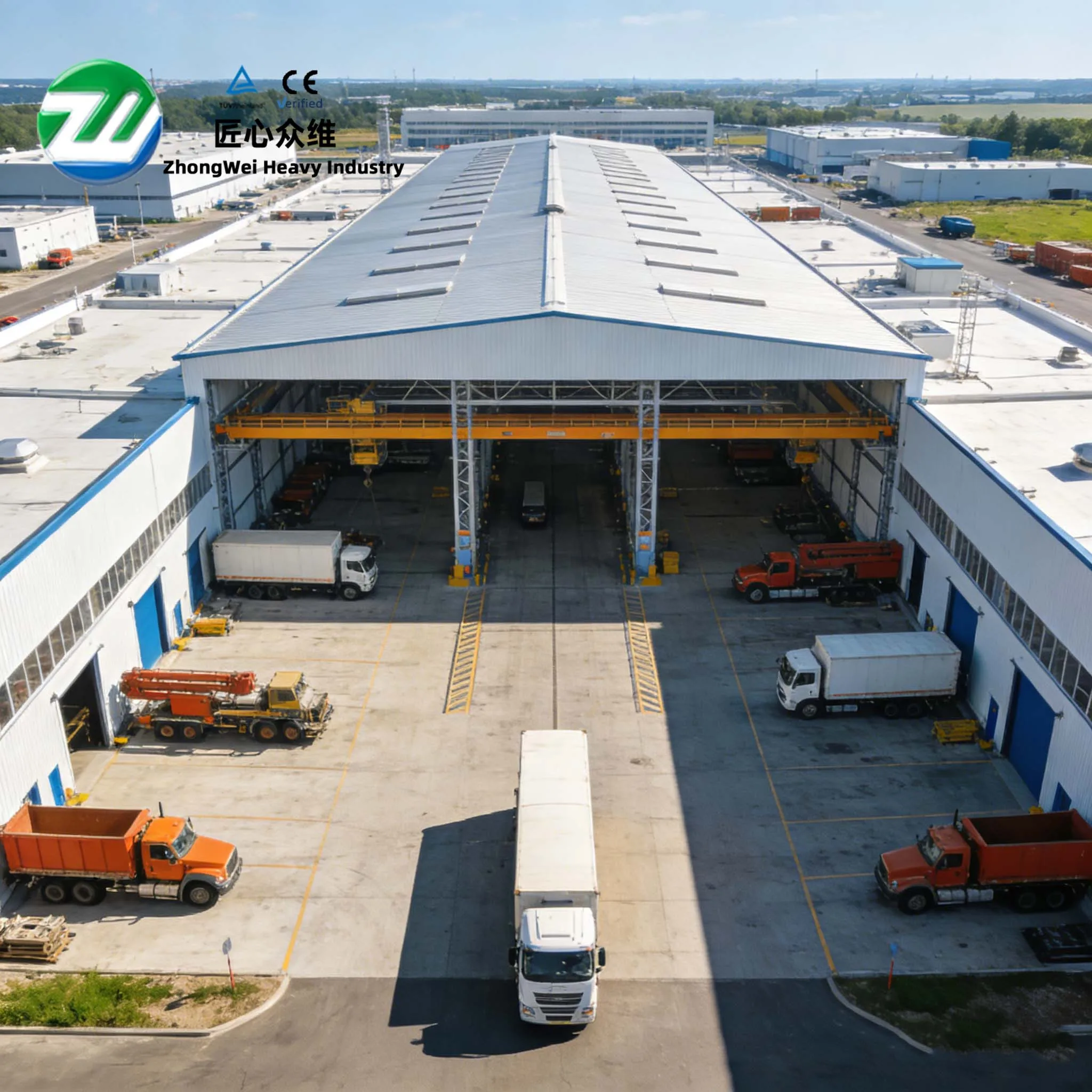
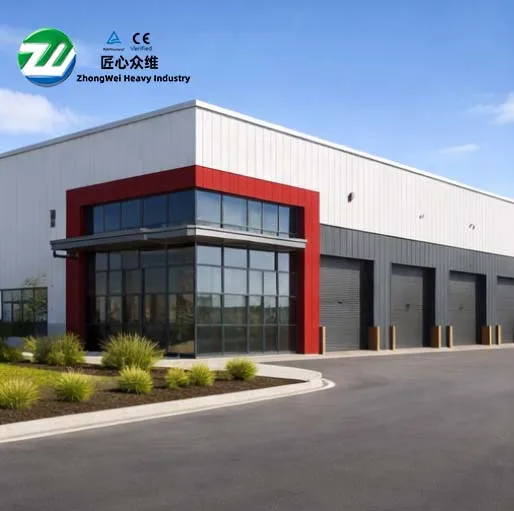
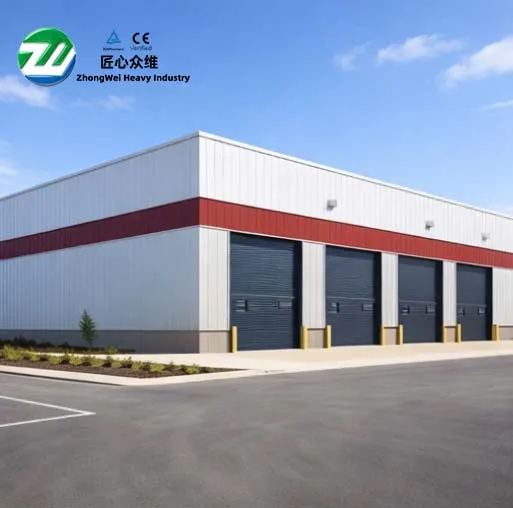
At 8:08 a.m. on August 8, 2026, as the first batch of steel columns was lifted, positioned, temporarily secured, and initially aligned, an approximately 10,000 m² industrial plant project undertaken by Zhongwei Heavy Industry officially entered the main steel structure erection stage. Rather than focusing on project background or a single construction milestone, this phase more directly demonstrates the technical coordination required in steel structure engineering. From connection detailing and factory fabrication to transport sequencing, site zoning, erection order, survey adjustment, and temporary stability, each step directly affects erection efficiency and the final geometric accuracy of the main frame.
1. From Foundation Completion to Frame Erection: Steel Column Installation Is a Key Construction Transition
When an industrial plant enters the steel column erection stage, construction organization shifts from primarily civil foundation work to the assembly of the main steel structure. Steel columns transfer vertical loads and also provide critical positioning references for beams, bracing, purlins, and subsequent building-envelope systems. Accumulated deviations in column-base gridlines, elevation, or verticality can significantly increase the difficulty of beam-to-column connections, bracing installation, and later adjustment of roof and wall systems.
For this reason, the significance of erecting the first steel columns is not simply to “raise the first column.” The purpose is to use the initial members to verify whether foundation handover conditions, fabrication accuracy, the lifting plan, the survey control network, and temporary securing measures can form a stable and repeatable erection process. Once the first-installation checks are completed, construction can proceed by erection unit, allowing site efficiency to be built on controlled accuracy rather than relying on concentrated corrective work at a later stage.
2. Pre-Erection Control: Resolve Site Issues as Far as Possible Before Lifting Begins
Steel structure erection efficiency depends heavily on the quality of pre-installation preparation. After members arrive on site, their identification marks, section sizes, connection-plate orientation, hole positions, column-base configuration, and surface condition after transportation should be checked and matched with the erection plan and lifting sequence. For relatively slender columns, lifting points and lifting posture must also be determined carefully to avoid unnecessary impact or additional deformation during turning, slewing, or positioning.
Foundation handover is another critical control point. Before erection, gridlines, elevations, column-base connection conditions, and the working surface should be rechecked to confirm that members can be placed smoothly in their design positions. Many cases of rework in steel structure projects are not caused by the lifting operation itself, but by inconsistent upstream information, incorrect member identification, foundation deviations that were not identified in advance, or an unreasonable erection sequence. Moving these checks forward can effectively reduce crane waiting time, repeated lifting, and high-level adjustment work.
3. Lifting and Alignment: Control the Geometric Reference for the Entire Frame, Not Just Individual Columns
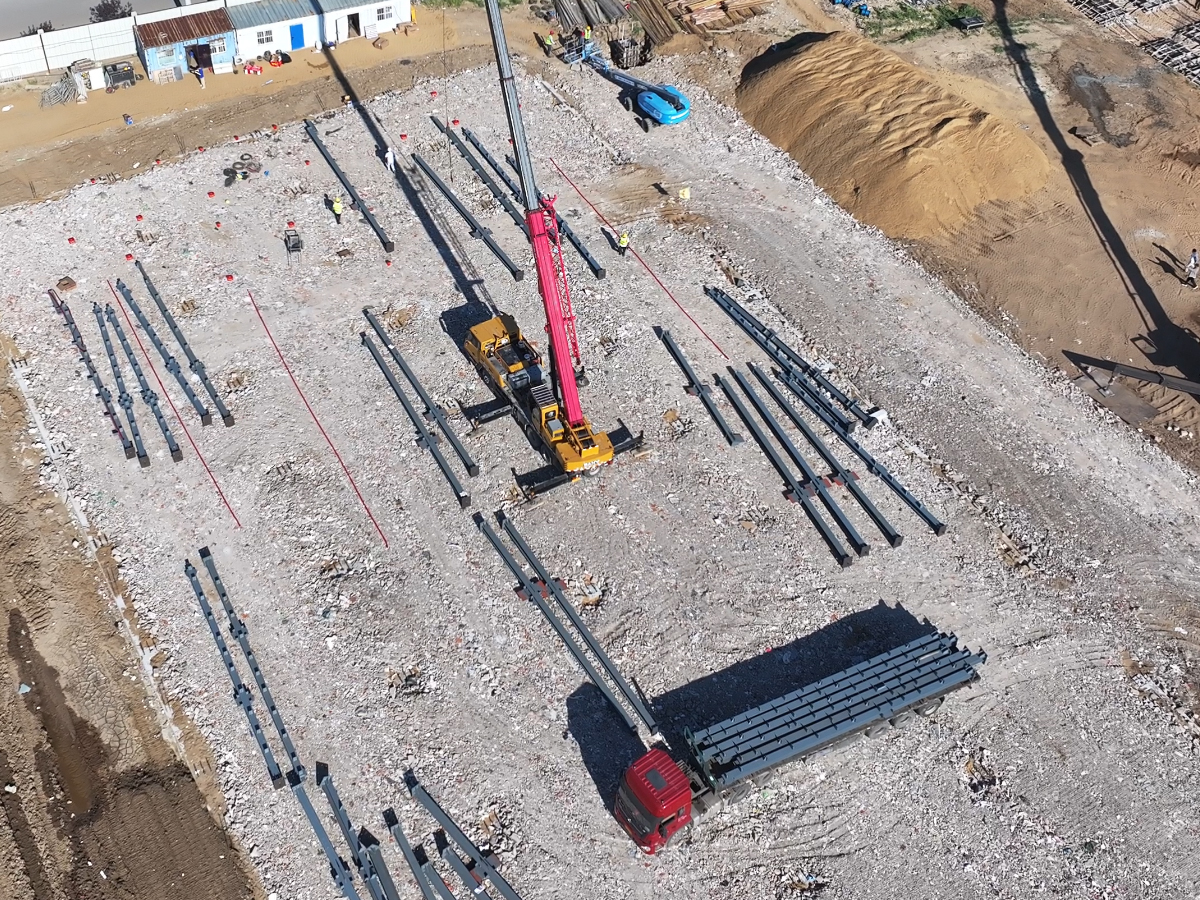
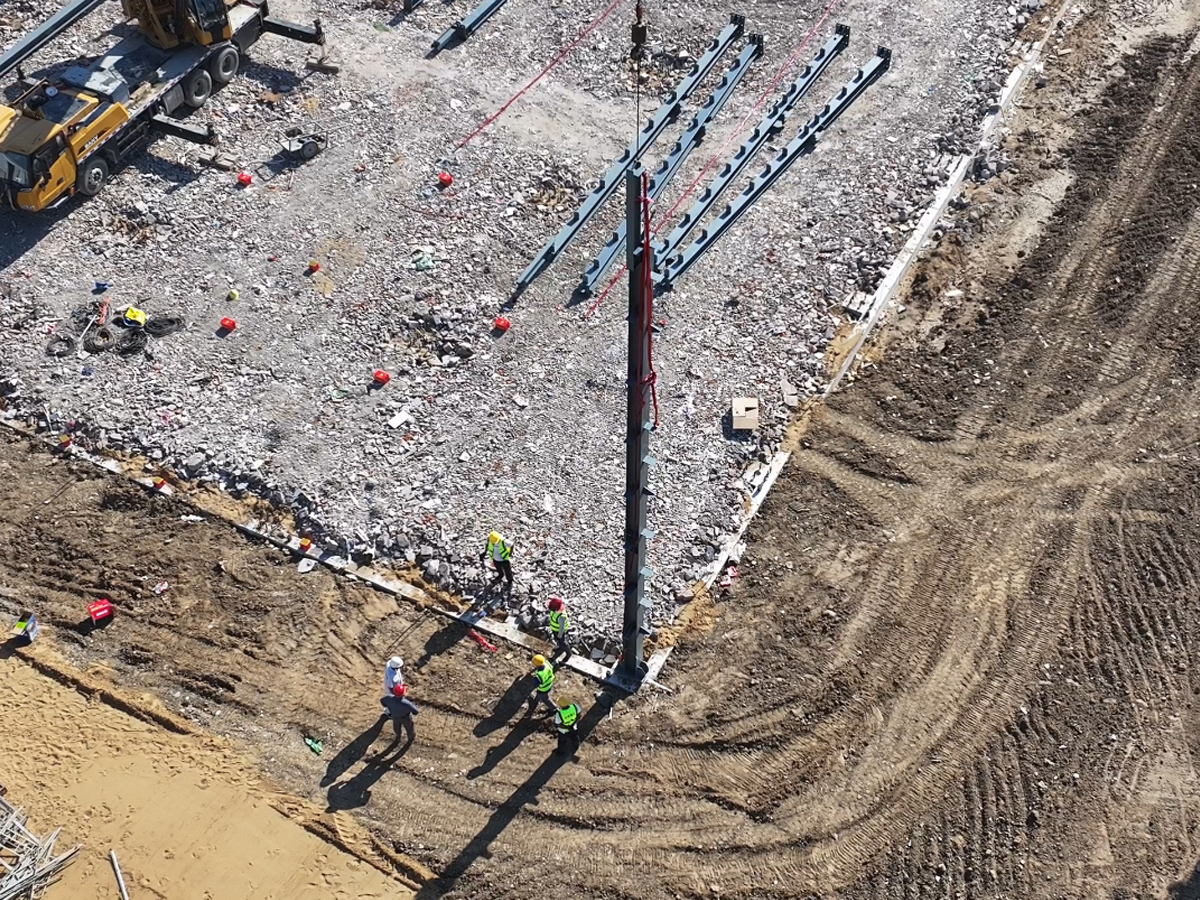
After a steel column is lifted, it should be slewed and lowered smoothly along the planned path, avoiding sudden starts and stops as well as collisions with nearby equipment or previously installed members. Once in position, the column should first be temporarily secured to establish basic stability, followed by initial adjustment of gridline position, elevation, and verticality. Measurements at this stage are used not only to determine whether an individual column meets erection requirements, but also to anticipate whether adjacent beams and bracing can be assembled smoothly into a stable erection unit.
As steel beams and bracing systems are progressively connected, the control focus must shift from “individual-column accuracy” to “overall frame accuracy.” Deviations of individual members that remain within allowable limits can still accumulate into an overall offset across multiple bays and frames when they occur in the same direction. Continuous zoned re-surveying is therefore required during main-frame erection so that corrections can be made while the structure still has adjustment capacity, preventing deviations from being transferred to purlins, envelope systems, and curtain wall installation.
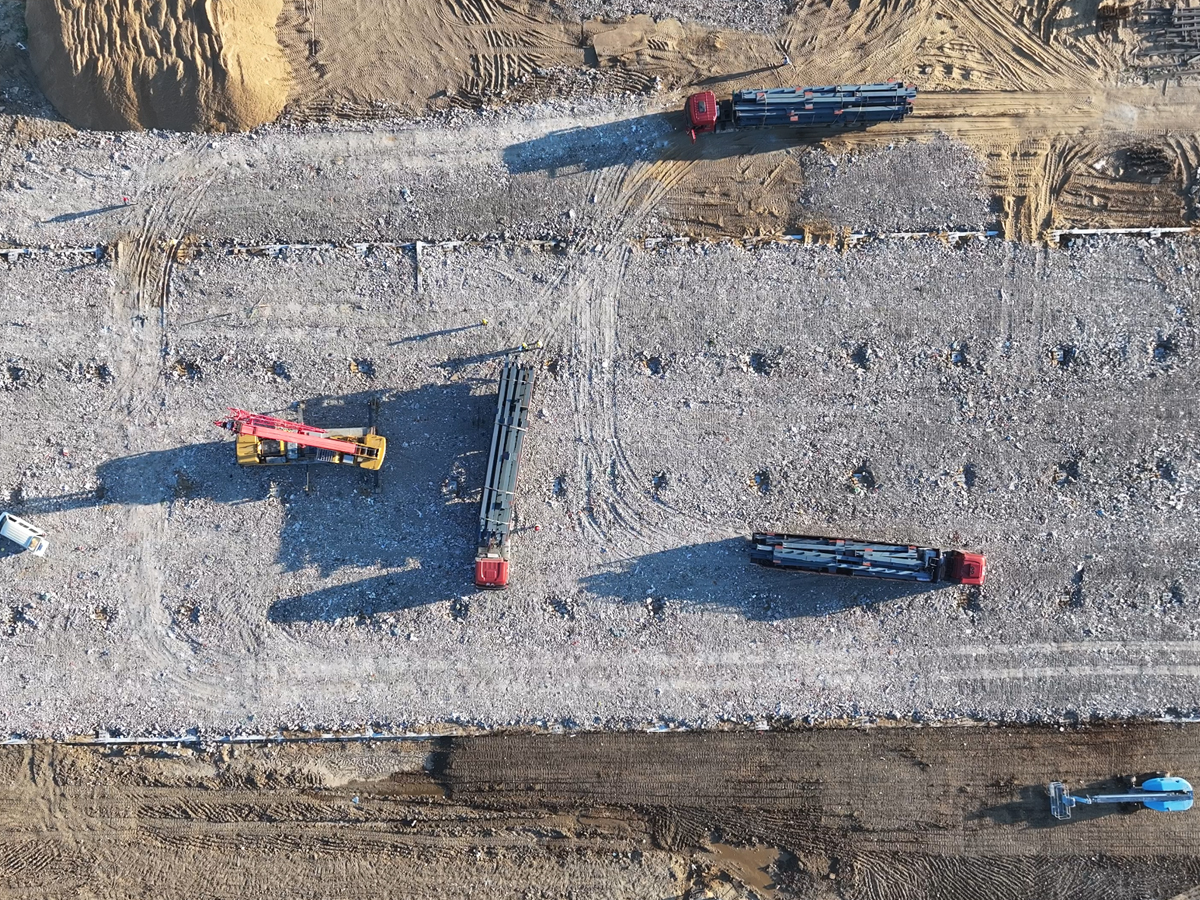
Site photographs show multiple lifting machines being coordinated with member storage areas while steel columns progressively form the vertical structural skeleton along the gridlines. By matching crane positions, member transport routes, and erection zones, interference between equipment can be reduced and the waiting time between unloading and lifting can be shortened.
4. Assembly-Based Construction: Factory Fabrication Accuracy Determines Site Connection Efficiency
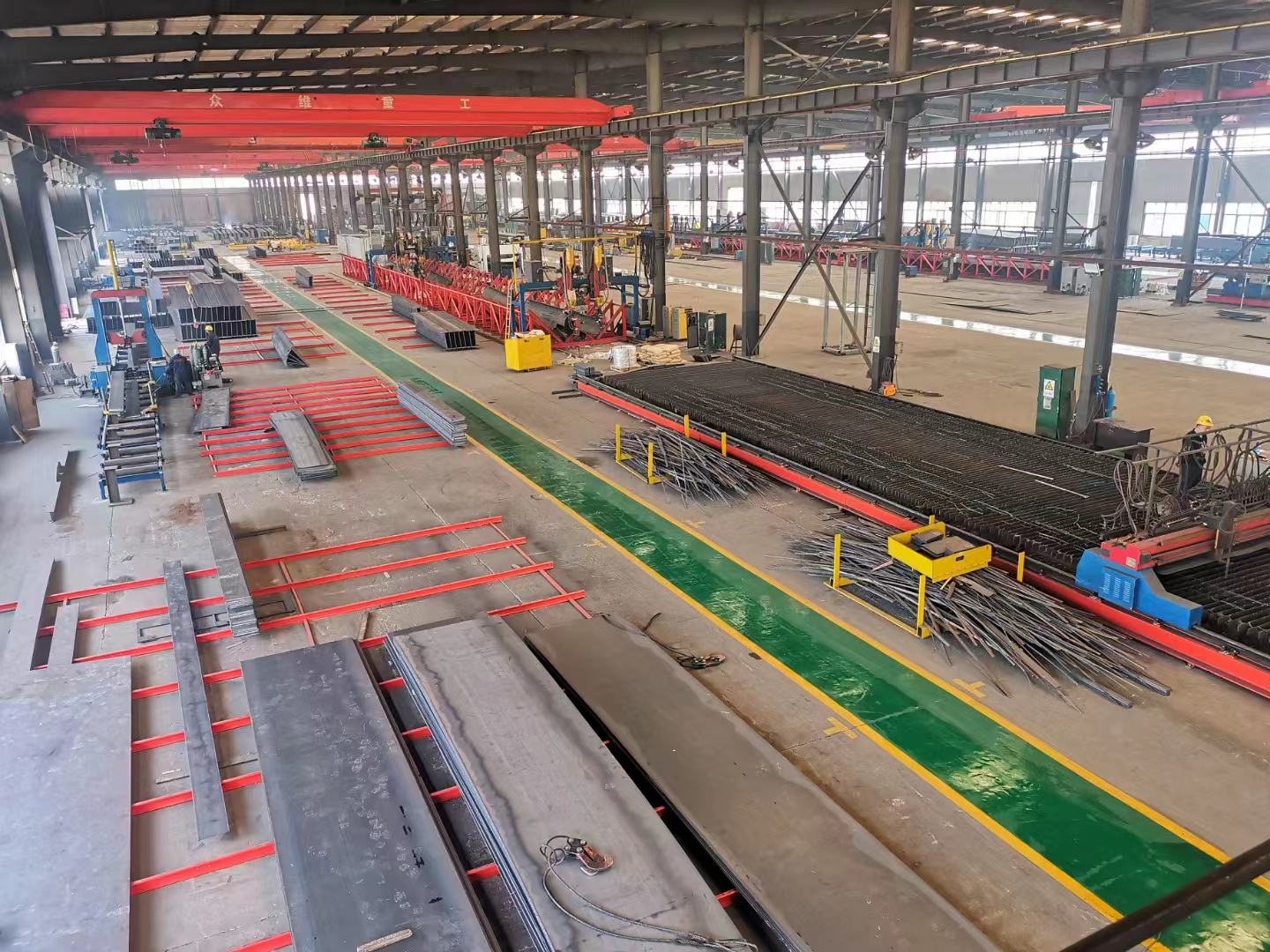
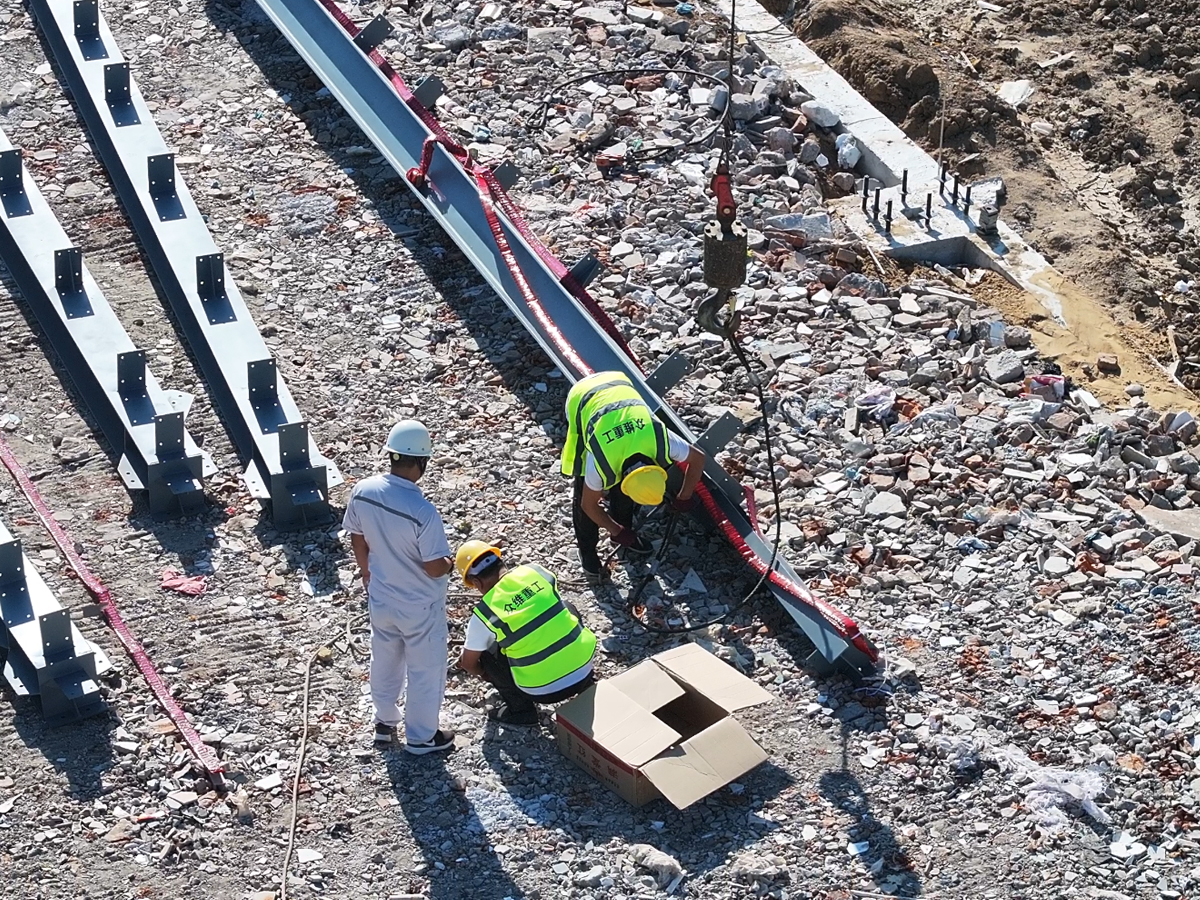
The high construction efficiency achievable with steel buildings is based on moving a large proportion of processing work into the factory. Steel columns, beams, connection plates, bracing, and other members undergo cutting, assembly, welding, straightening, hole making, surface preparation, coating, and identification before being dispatched in accordance with the construction sequence. The primary site task therefore shifts from “fabrication” to “positioning, connection, alignment, and inspection,” reducing wet trades and increasing the level of mechanized construction.
However, factory prefabrication and site assembly must follow the same technical baseline. End-plate dimensions, hole spacing, member length, gusset-plate orientation, and control of welding deformation all affect field assembly. For high-strength bolted connections, attention must also be paid to faying-surface treatment and transport protection to prevent contamination, damage, or geometric deviations from increasing erection difficulty.
For this type of industrial building, coordinating connection detailing, production scheduling, member identification, and the site erection sequence allows factory output to serve installation requirements as directly as possible. The objective is not simply to increase fabrication output, but to reduce non-value-added site activities such as searching for members, rehandling members, and modifying members in the field.
5. Curtain Wall and Façade Interfaces: Main-Structure Accuracy Influences Final Building Quality
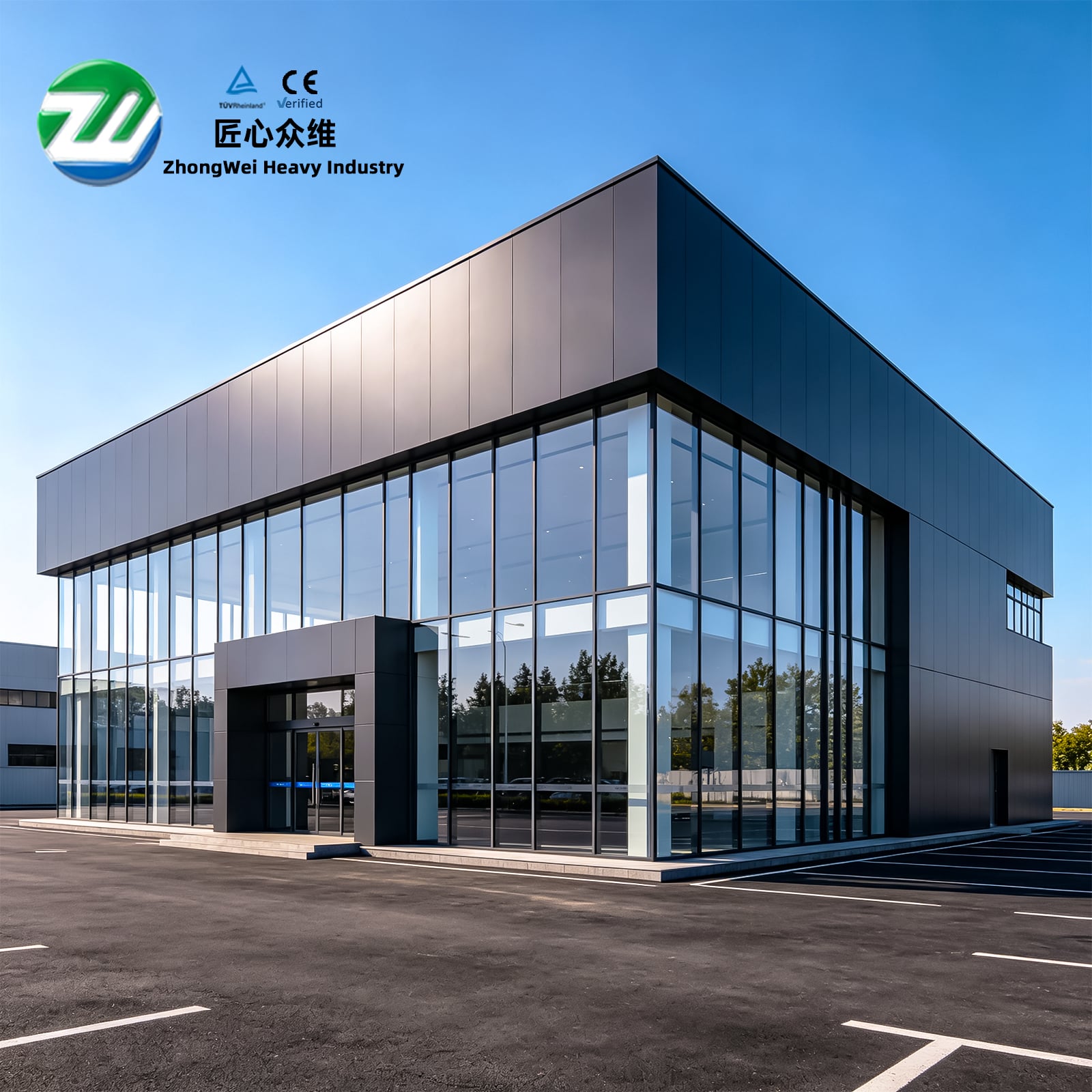
Industrial plant façades are evolving from a single enclosure function toward combined requirements for production, office use, display, and corporate presentation. Although curtain wall or metal cladding systems are installed after the main structure, their installation conditions begin to take shape during the steel structure phase. Edge-beam elevations, opening dimensions, connection locations, and overall structural deviations all influence subsequent framing, panel installation, and perimeter closure details.
The engineering value of a curtain wall system is not limited to appearance; it also includes wind resistance, airtightness, watertightness, durability, and maintainability. Steel structures undergo normal movement under temperature variation and loading, so curtain wall connection details must provide both reliable restraint and the necessary allowance for movement. Considering these interfaces during main-frame construction can reduce later cutting, repair welding, and repeated adjustment caused by mismatched structural conditions.
From an integrated-delivery perspective, the more accurately the main steel structure is erected, the easier it becomes to maintain consistent façade module divisions, clean visual lines, and reliable sealing at joints.
6. Roof Insulation and Waterproofing: Establish a Systematic Approach to Details from the Structural Stage
Industrial plant roofs are exposed over the long term to wind, rain, snow, temperature differences, and maintenance activities. Quality control therefore cannot begin only when roof panels are installed. The roof slope of the main steel structure, purlin elevations, gutter locations, and equipment-opening conditions all influence the final performance of the insulation, waterproofing, and drainage systems.
Subsequent work requires systematic control of insulation continuity, panel laps, fastener layout, sealants, ridges, eaves, gutters, flashings, and roof-penetration details. For industrial buildings in northern climates, thermal bridging and condensation risk should also be considered so that insulation, vapor control, waterproofing, and the metal roof form a continuous assembly rather than relying on local sealant repairs for compensation.
Roof quality is therefore not the result of a single isolated operation, but of the combined effects of main-structure accuracy, envelope detailing, and detail execution. Controlling roof elevations and structural interfaces early in the steel structure stage provides the necessary conditions for a stable insulation and waterproofing system in subsequent work.
7. Site Organization: Safety, Survey Control, and Construction Efficiency Must Be Managed Together
The main erection stage typically involves concentrated mechanical equipment, a large number of structural members, frequent interface work, and an increasing proportion of work at height. Construction efficiency cannot be achieved at the expense of structural stability or survey verification. Lifting-zone planning, equipment positions, transport routes, member storage, temporary bracing, and personnel work areas should be coordinated as a whole to prevent equipment conflicts or repeated member rehandling.
Quality control and safety management are closely connected during steel structure erection. Inadequate temporary securing can affect structural stability; excessive survey deviation can increase adjustment work at height; and disorganized member storage can increase secondary lifting and personnel movement risks. Standardizing the sequence of “installation-condition confirmation—lifting—temporary securing—survey alignment—connection completion—zoned re-survey” can therefore improve safety, quality, and efficiency at the same time.
From a site execution perspective, sustainable progress comes from effective handoffs between operations. Members must arrive as planned, cranes must be able to operate continuously, installation crews must complete connections in a timely manner, and survey personnel must carry out rapid verification. Only then can a stable and repeatable main-frame erection rhythm be established.
8. Integrated Delivery: Applying “Innovation and Excellence” to Every Engineering Interface
The final quality of a steel structure project depends on continued consistency among design, fabrication, transportation, and erection. The detailing stage must reduce connection conflicts; fabrication must control member dimensions and welding quality; dispatch must match the erection sequence; and site work must use surveying, temporary stability measures, and connection inspections to control the final frame geometry. As envelope work begins, curtain wall, roof, wall, and perimeter closure details must continue to be coordinated so that structural quality is translated into building performance.
Zhongwei Heavy Industry follows the corporate philosophy of “Innovation and Excellence,” emphasizing engineering methods rather than promotional language as the basis for demonstrating brand value. For industrial plants, clients ultimately focus on whether production conditions can be established on schedule, whether the structure is stable and reliable, whether the envelope system can meet long-term service requirements, and whether future maintenance is convenient. Building whole-process quality control around these verifiable objectives is the core of integrated delivery capability.
The start of steel column erection marks a phased milestone within the main construction sequence. As steel beams, bracing, and envelope systems are subsequently installed, the project will continue to focus on fabrication accuracy, site erection accuracy, and coordination among specialist interfaces while advancing construction of the main structure and building systems.
Conclusion: Demonstrating Engineering Capability Through Construction Milestones and Creating Long-Term Value Through Process Control
The construction advantages of steel industrial buildings must ultimately be demonstrated through controlled fabrication accuracy, a clear erection sequence, a stable structural system, and reliable envelope performance. Steel column installation is only the starting point for forming the main structure; every subsequent connection, alignment operation, and detail treatment influences the building’s final in-service quality.
As subsequent construction progresses, site management will continue to focus on quality, safety, schedule, and coordination, applying “Innovation and Excellence” to the specific work of detailing, fabrication, transportation, erection, and envelope construction. By continuously improving the integrated steel structure delivery system, the company aims to provide more stable, buildable, and maintainable engineering solutions for manufacturing plants, warehousing and logistics facilities, and other steel buildings.
#steel structure #steel column erection #industrial steel building #steel frame installation #structural steel construction #steel structure fabrication #steel building construction #steel structure quality control #prefabricated steel structure #industrial plant construction
 Hot News
2026-06-29
2026-06-29
2026-06-26
2026-06-26
2025-12-26
2025-08-24
 EN
EN