Zhongwei Heavy Industry Supports Stable Delivery of Three-Story Steel Frame Projects Through Manufacturing Consistency
- Manufacturing Feature on the Zhengzhou Taiheng Machinery Equipment Standardized Factory Project -
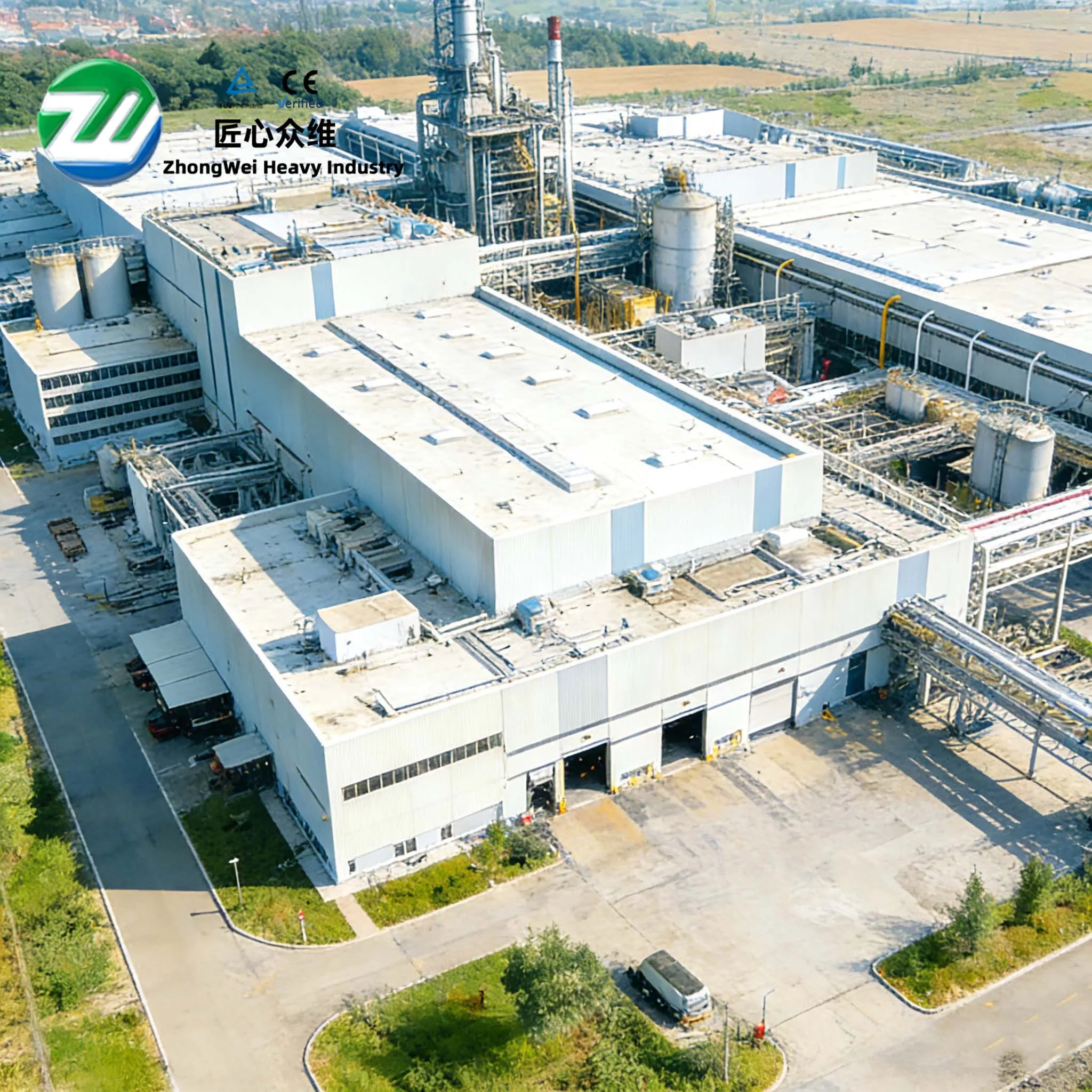
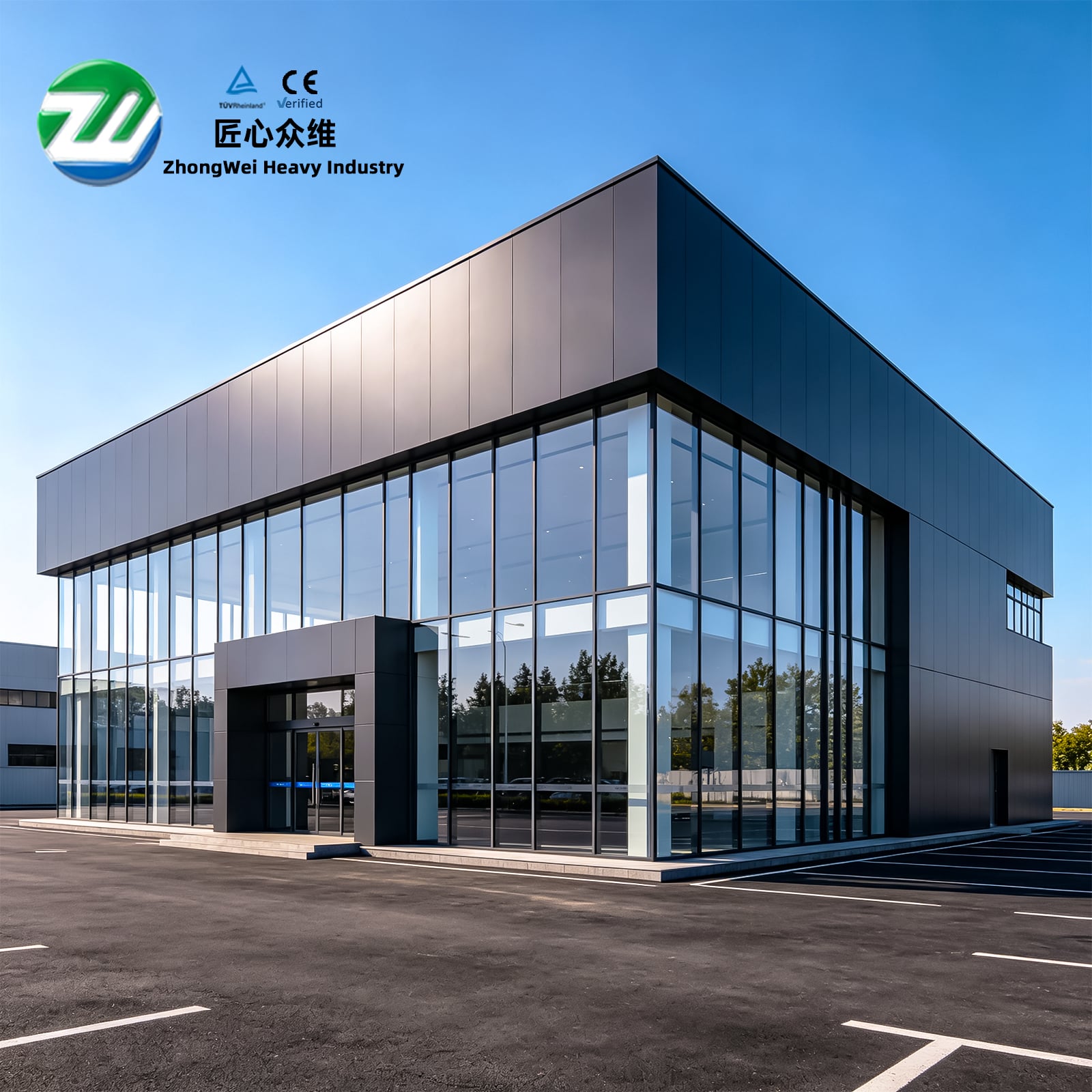
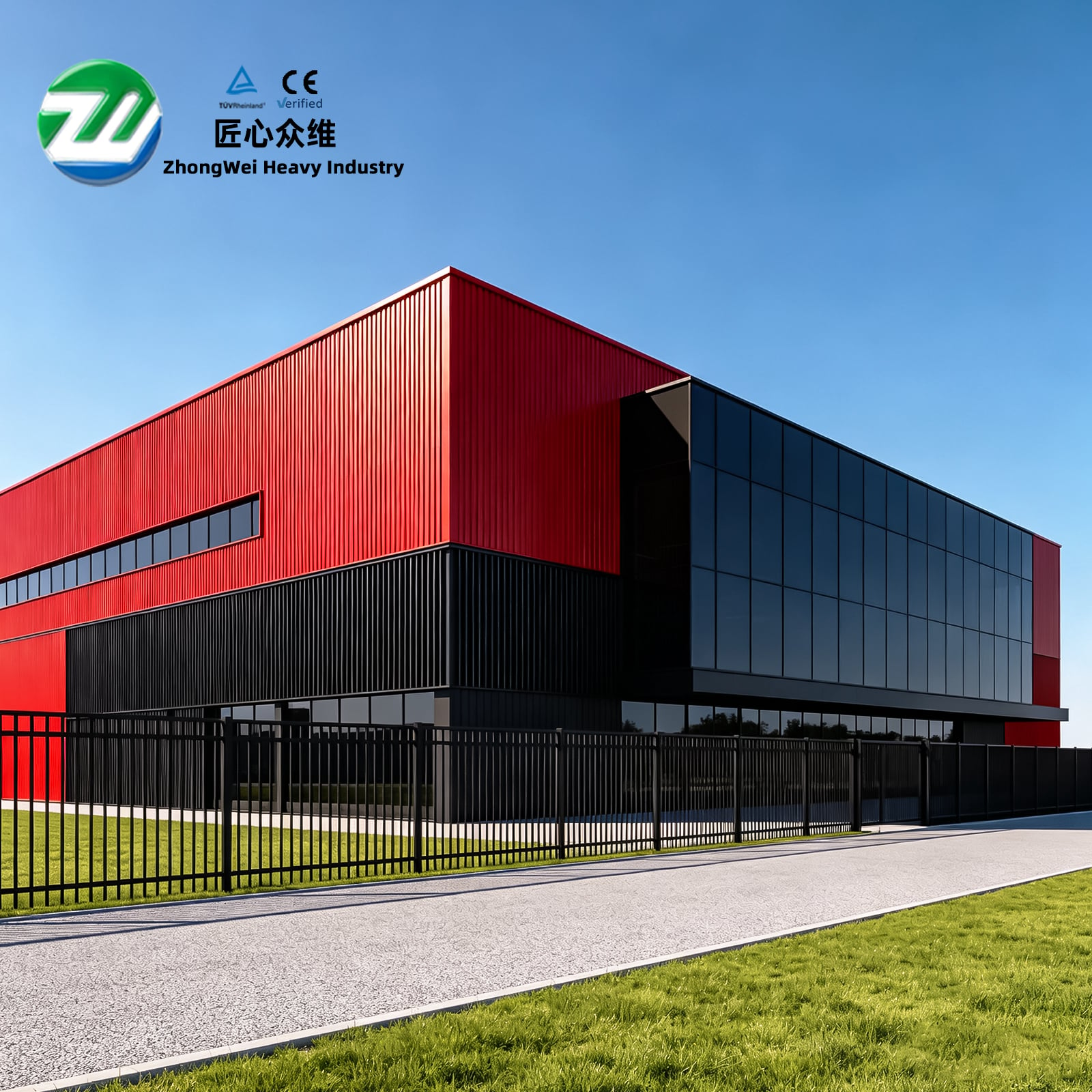
The Zhengzhou Taiheng Machinery Equipment Standardized Factory Project, undertaken by Shenyang Zhongwei Heavy Industry Steel Structure Engineering Co., Ltd. (hereinafter referred to as 'Zhongwei Heavy Industry'), has been completed. Located in Zhengzhou, Henan Province, the project has a total floor area of approximately 24,000 m2. Its main structure adopts a three-story steel frame system, with a steel consumption of approximately 3,527 metric tons. Compared with single-story industrial buildings, multi-story steel frames impose higher requirements on member dimensions, connection-hole positioning, welding deformation control, and batch-level component matching. The manufacturing logic demonstrated by this project is not about whether any single process can be completed 'faster,' but whether a large number of components can maintain continuous, stable, and traceable fit-up accuracy after entering the same structural system.
1. The Manufacturing Challenge in Multi-Story Steel Frames Is Not Simply 'More Components' - It Is That Errors Can Be Amplified by the Structural System
Steel structure fabrication is often understood as a series of independent operations such as cutting, assembly, welding, straightening, drilling, and coating. For a three-story steel frame, however, the real control target is the continuity between these processes. A length deviation in one steel column or a positioning deviation in one connection plate may appear to be only a local issue when viewed in isolation. Once large quantities of similar components are assembled into a multi-story beam-column system, however, deviations can be transmitted and accumulated along grid lines, floor levels, and connection points. The final result may be difficult beam-to-column fit-up, increased floor-elevation adjustment, misaligned connection plates, or additional site modification work.
For this reason, manufacturing evaluation for multi-story steel frames cannot stop at the question of whether an individual component falls within dimensional tolerance. More importantly, stable consistency must be established among members on the same grid line, at the same floor, within the same connection type, and within the same erection batch. This is also the fundamental reason why manufacturing management shifts from 'single-component inspection' to 'system-level matching' as standardized factory projects grow in scale.
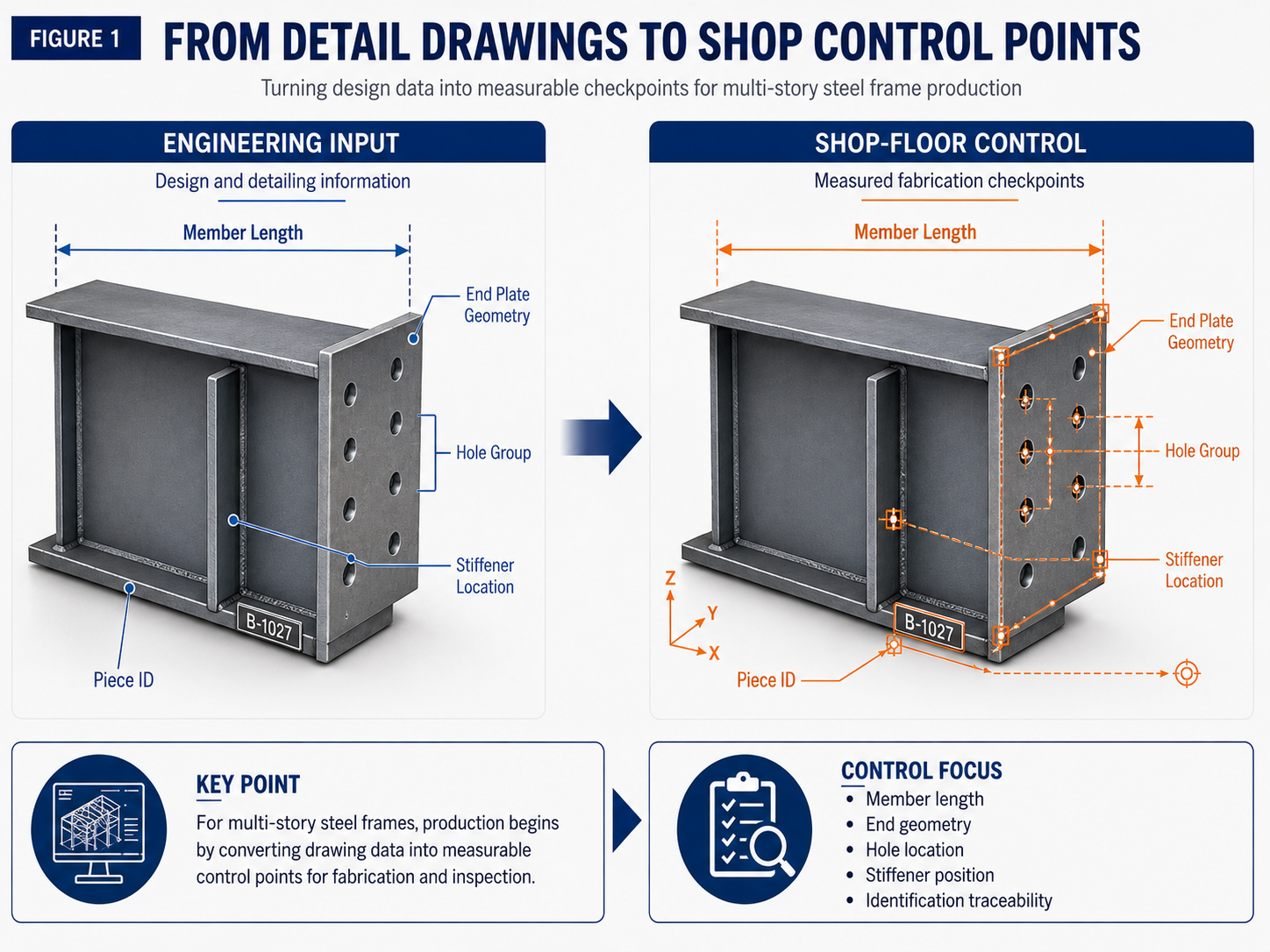
From an engineering perspective, large quantities of steel columns, beams, bracing members, connection plates, and supporting components must be fabricated, identified, and delivered according to a unified design datum. If earlier and later production batches use different fabrication references, or if dimensional control, hole-position control, and welding-deformation control lack continuity, the erection team may be forced to absorb fabrication deviations through hole enlargement, temporary cutting, forced alignment, or other corrective measures. Such work not only increases site labor, but also reduces the assembly efficiency that industrialized construction is intended to achieve.
2. The First Step in Production Preparation Is to Convert Design Information into Fabrication and Inspection Datums
For the workshop, detailed drawings are not merely a basis for material cutting; they are the first-level reference for manufacturing quality control. In multi-story steel frame projects, there are clear logical relationships among member sections, end configurations, connection-plate locations, bolt-hole groups, stiffeners, floor-elevation relationships, and member marks. If production preparation focuses only on fabricating each part according to an individual drawing, without understanding the relationships among components from the perspectives of grid lines, floor levels, and connection families, a common problem can occur: each individual component appears dimensionally correct, yet the assembled system does not fit smoothly.
Manufacturing organization therefore places greater emphasis on decomposing design information into a series of inspectable control points: which dimensions determine floor elevation, which hole groups directly affect high-strength bolted connections, which end plates control beam-column fit-up, which members belong to the same erection zone, and which similar components must be distinguished by identification marks to prevent mix-ups. This type of control does not depend on complicated promotional concepts. It depends on clear and stable production data and disciplined process handovers.
Zhongwei Heavy Industry treats customized design, prefabrication, quality control, and project delivery as important parts of its steel structure business, and uses digital management and factory-based manufacturing to improve fabrication consistency. For multi-story frame projects, the core value of this capability is not simply higher output; it is the continuous transfer of structural relationships defined by the design team into every workshop process.
3. Cutting and Drilling: The Most Basic Geometric Relationships Often Determine Whether Site Erection Proceeds Smoothly
During steel structure erection, the most direct assembly interfaces are usually concentrated at member ends and connection nodes. The fabrication stage must therefore prioritize the relationship among member length, end geometry, connection-plate positioning, and bolt-hole group locations. This is particularly important at beam-column connections in multi-story frames. If bolt holes are systematically offset, the issue may prevent an entire group of bolts from passing through, rather than affecting only one bolt. If the beam-end length or end-plate position deviates, grid-line adjustment on site becomes more difficult.
From a production standpoint, CNC cutting and drilling equipment can improve repeatability, but equipment alone does not guarantee an accurate result. What truly determines batch consistency is whether the fabrication datum is unified, whether programs correspond correctly to the drawings, whether the first article is verified, whether subsequent batch production is continuously sampled and inspected, and whether changes in equipment condition can be identified in time. In other words, automation improves the stability of 'repetitive execution,' while quality management must ensure that what is repeatedly executed remains correct.
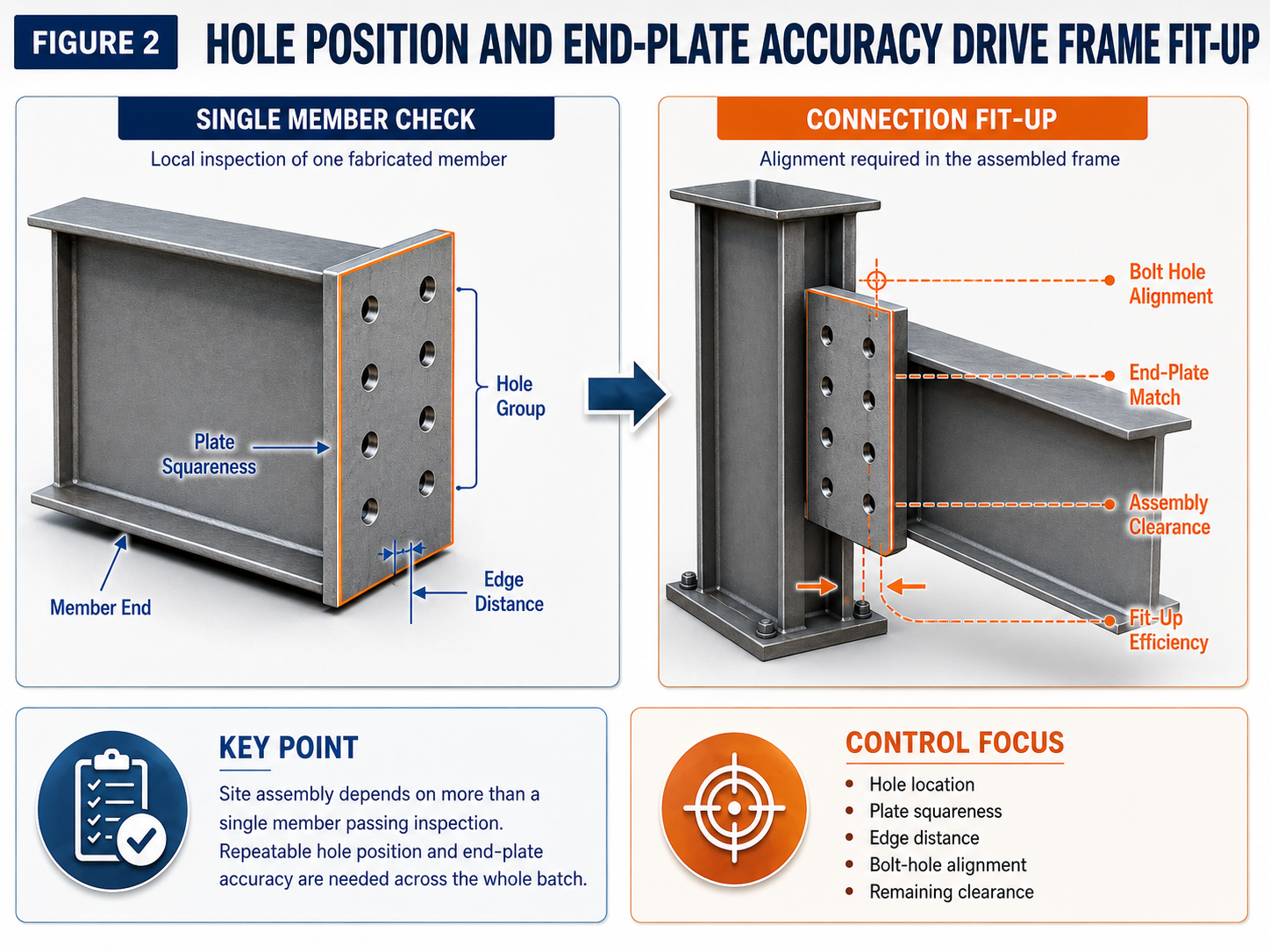
First-article control is particularly important for standardized factory projects with large quantities of components. The same connection form may be repeated across multiple grid lines and floor levels. If the datum for the first article is wrong, the error can be rapidly replicated throughout the batch. Conversely, if the geometry, hole locations, and assembly interfaces of the first article are thoroughly verified, batch fabrication can proceed from a more reliable reference.
4. Welding Control Is Not Only About the Weld Itself, but Also About the Post-Weld Geometry of the Component
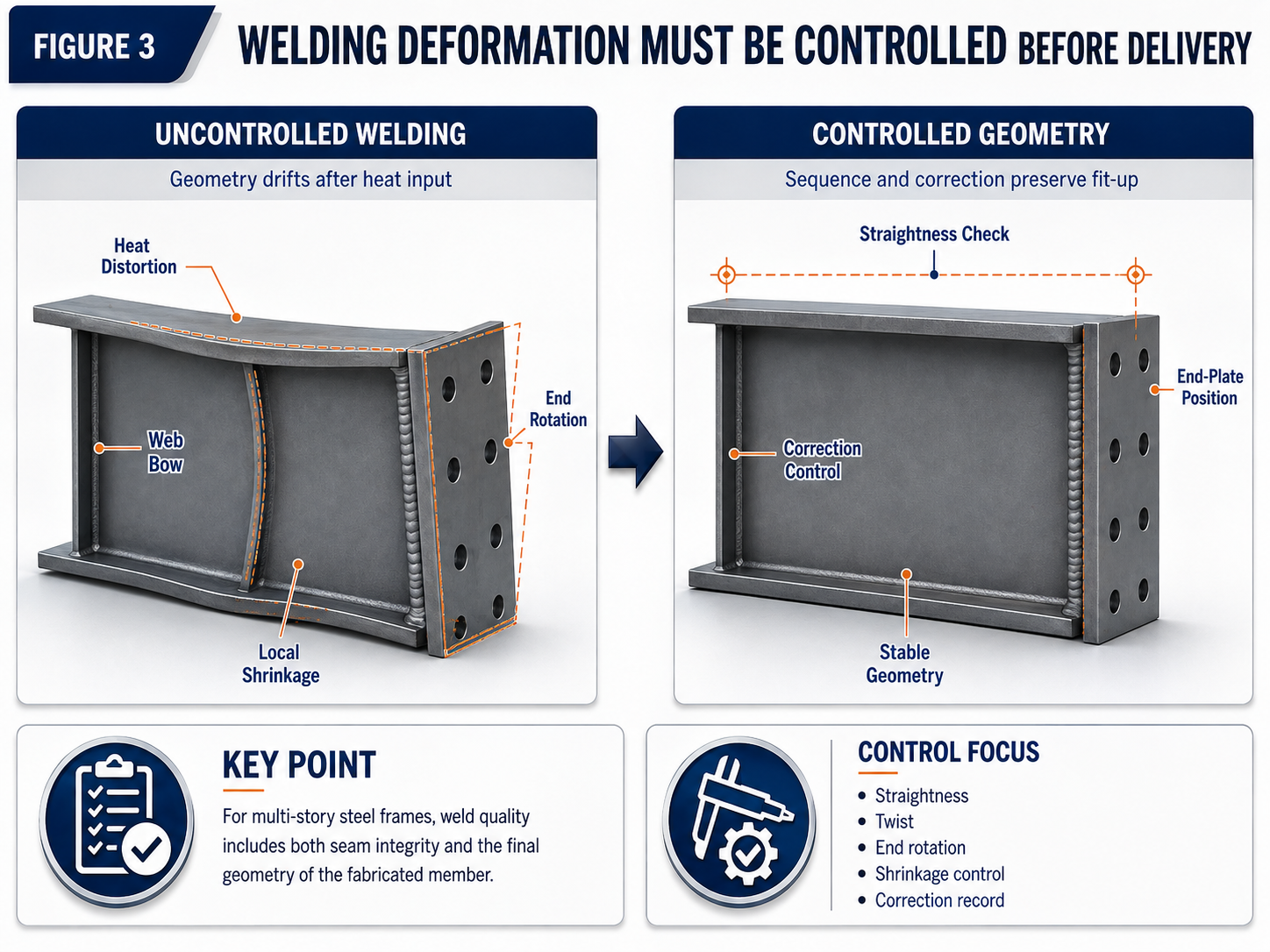
Welding quality is one of the core elements of steel structure fabrication, but in a multi-story steel frame it is not enough to focus only on whether the weld is complete and acceptable. Welding heat input changes the local temperature field of a member and may cause bending, twisting, angular distortion, or other geometric changes. If such changes are not identified and corrected in the factory, they can ultimately affect beam-column connections, floor elevations, and overall grid-line control.
Reasonable welding sequences, assembly positioning, jig and fixture restraint, and post-weld straightening are therefore all intended to preserve the design geometry of the component. For steel columns, attention must be given to member straightness, end relationships, and connection-plate positions. For steel beams, beam curvature, torsion, and end-condition geometry must be controlled. For complex members with multiple stiffeners and connection plates, localized weld accumulation must also be managed to prevent section distortion.
This is also one of the aspects of fabrication experience that is most difficult to quantify with a single index. Even with the same drawings, materials, and equipment, different assembly sequences, welding paths, and process transitions can produce very different geometric outcomes. Mature fabrication management does not wait until obvious deformation appears before responding. Instead, likely deformation trends are incorporated into the process arrangement during assembly and welding.
5. Moving from 'Inspecting One Component' to 'Inspecting a Group of Components' Is a Key Change in Quality Control for Large-Batch Projects
When a project reaches a scale of several thousand tons, quality control must answer more than the question, 'Is this beam acceptable?' It must also answer: 'Does this batch use the same datum?' 'Does the same connection family remain consistent?' and 'Can member marks be matched to drawings and production records?' The inspection object therefore expands from an individual component to a family of components, a family of connections, and an erection batch.
For example, two members may each fall within the permitted tolerance when measured separately, yet this does not necessarily mean that the pair will achieve the best fit when assembled. If one member's deviation approaches the upper tolerance limit and the mating member accumulates deviation in the same direction, the combined assembly may require significantly greater adjustment. Fabrication control must therefore consider the direction of error and the stability of the batch, rather than relying only on whether a measurement exceeds the permitted limit.
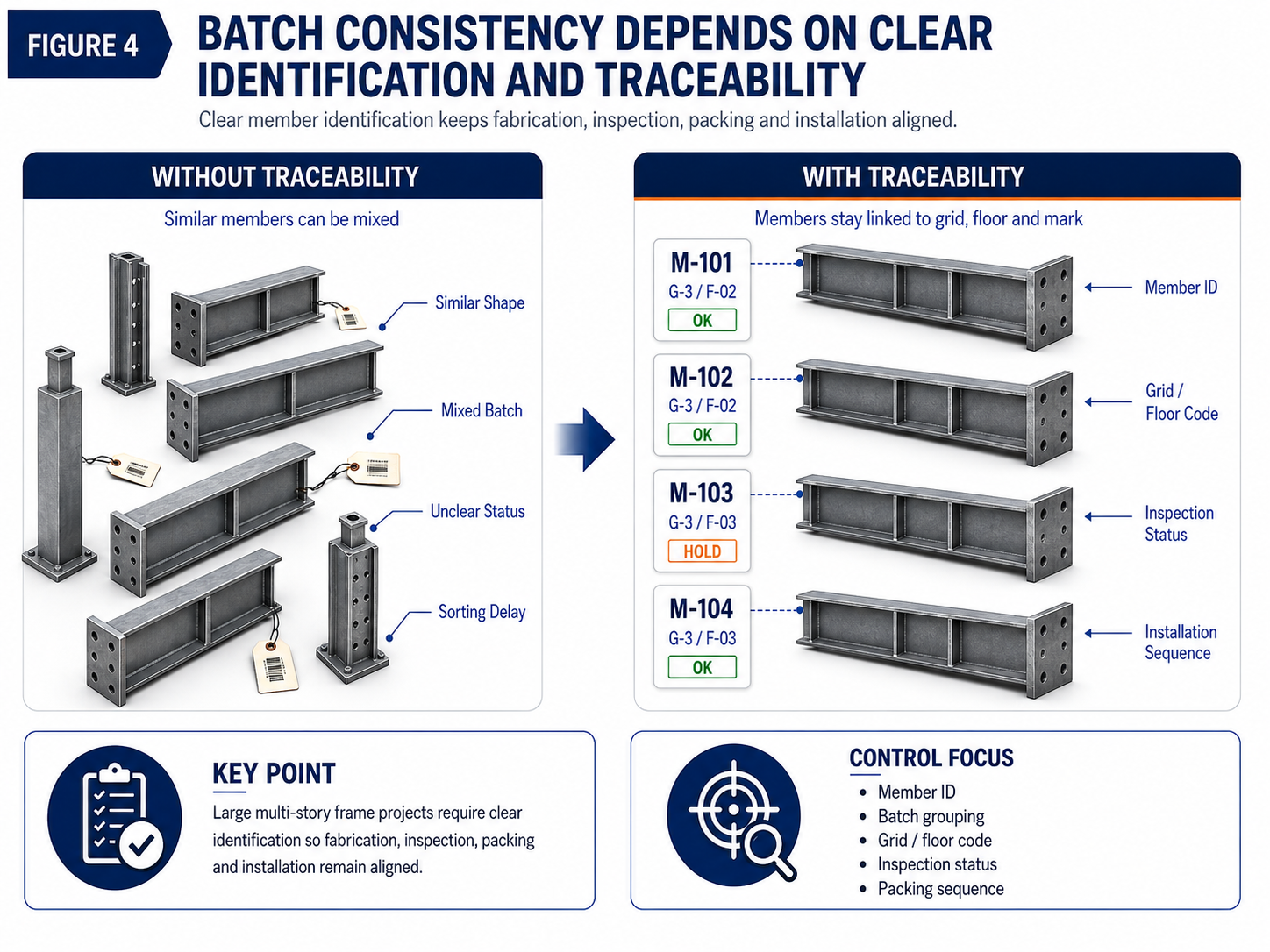
For multi-story frames, member identification is also part of quality control. A mark is not simply a code painted on a component. It establishes the relationship between the component and its detailed drawing, grid line, floor level, production batch, and final erection position. When large numbers of similar members are involved, a clear identification system can reduce the likelihood of incorrect erection, mixed loading, and repeated searching, turning traceability from an abstract record into practical site information.
6. The Ultimate Value of Manufacturing Accuracy Is to Restore Site Work to 'Assembly' Rather Than 'Re-Fabrication'
One of the main reasons steel structures are prefabricated in a factory is to complete as much high-precision work as possible in a controlled manufacturing environment. If members still require frequent cutting, hole enlargement, repair welding, or forced correction after arriving on site, the benefits of factory-based construction have not been fully realized. For the owner or main contractor, such additional work means longer periods of work at height, more complicated trade interfaces, and less predictable schedule performance.
The value of fabrication therefore cannot be measured only by daily tonnage. Production capacity determines whether the project can maintain the planned supply rhythm, while consistency determines whether the components arriving on site are genuinely ready for assembly. The two are not substitutes for one another. In large standardized factory projects, stable output must be built on stable fabrication datums, welding quality, geometric condition, and identification systems.
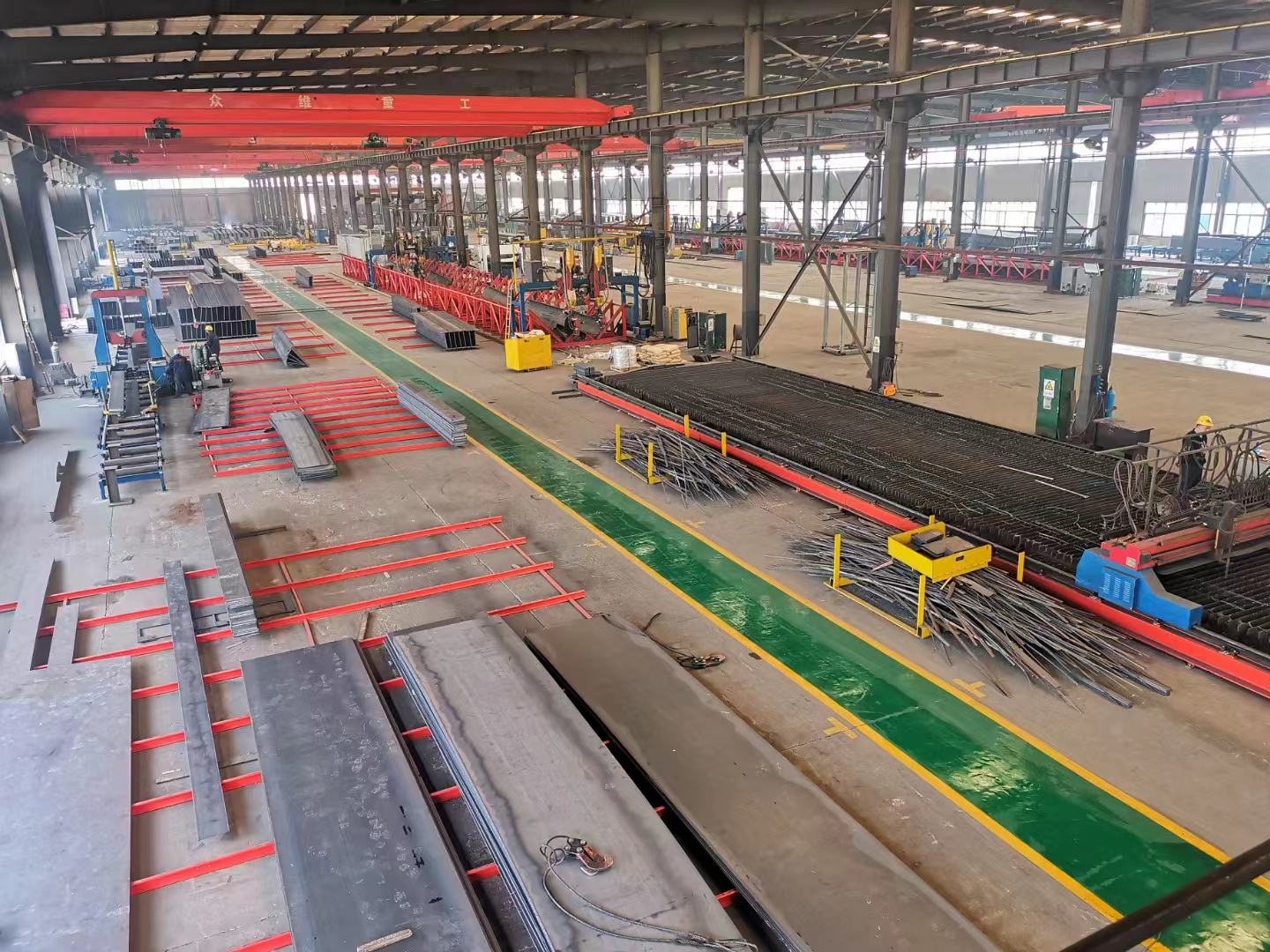
Zhongwei Heavy Industry operates approximately 50,000 m2 of production facilities, with an annual production capacity of approximately 40,000 metric tons, and integrates design, prefabrication, quality control, logistics, and on-site technical support into a coordinated service system. From the perspective of this manufacturing feature, the significance of scaled production capacity is not simply higher processing volume. It is the ability to use standardized processes, digital information, and quality inspection to maintain stable consistency across large batches of components under continuous production conditions.
7. After Project Completion, the More Valuable Outcome Is a Replicable Manufacturing Method
The Zhongwei Heavy Industry multi-story steel frame manufacturing program provides another practical engineering reference. Beyond the scale of the completed building, the project carries greater industry value in the manufacturing question it represents: when a three-story frame, several thousand tons of steel components, and a large number of repetitive connections are produced simultaneously, how can the design datum be continuously transferred through cutting, assembly, welding, drilling, straightening, marking, and inspection, and ultimately become a complete set of erection-ready components?
This capability must be accumulated project by project. It includes the fundamental capability of equipment and production lines, but also the technical team's understanding of connection relationships, the workshop's practical judgment of welding deformation, the quality team's sensitivity to batch consistency, and production management's ability to organize component matching. Truly mature steel structure manufacturing does not leave complex problems to the construction site. It eliminates as much uncertainty as possible before the components leave the factory.
Guided by its principle of 'Innovation and Continuous Refinement,' Zhongwei Heavy Industry will continue to treat manufacturing accuracy, process stability, and engineering constructability as important components of steel structure product quality. For standardized factories, multi-story industrial buildings, warehousing and logistics facilities, and other steel structure applications, the company will continue to improve manufacturing consistency through factory-based, standardized, and digital methods, providing a more stable industrialized foundation for subsequent project construction.
#ThreeStorySteelFrame #MultiStorySteelStructure #SteelStructureManufacturing #SteelFabrication #ManufacturingAccuracy #SteelStructureFactory #SteelFrameFabrication
 Hot News
2026-06-29
2026-06-29
2026-06-26
2026-06-26
2025-12-26
2025-08-24
 EN
EN